
Since Brexit, Daphne du Maurier’s final novel, Rule Britannia, has been seen as a prescient warning about the UK cutting itself adrift from Europe. After joining and then leaving the EU’s predecessor, the Common Market, in a referendum, Du Maurier imagined the UK facing such economic instability that its prime minister submits to a US takeover. Britain is occupied by US forces, sparking an uprising that eventually forces them to leave. Sir Keir Starmer’s defence investment plan (Dip) would not belong in Du Maurier’s novel, but has the same nightmare logic: a Britain adrift from Europe told that fiscal necessity and national security require deeper incorporation into American power.
It shows the strain inside Sir Keir’s government that the plan took a year to move from strategic defence review to partial funding plan. John Healey, the former defence secretary, resigned after deciding that the Treasury’s offer could not fund the strategy. His successor, Dan Jarvis, told MPs that the plan was worth £298bn over four years, which is £15bn above last year’s spending review settlement. Mr Jarvis said that he had secured £1.5bn more than was on offer when he arrived. Against the defence ministry’s demands, that looks less like a breakthrough than proof of why Mr Healey walked.
Ed Balls, the former Labour shadow chancellor, called for war bonds to fund the Dip. That makes sense: if defence is the imminent national priority, borrow to fund it. Germany, fearing a European land war with Russia and a wayward America, has effectively done so. Britain instead is choosing a form of austerity: cutting public sector capital budgets to fund a posture that binds the country more tightly to American aircraft, bases and strategic priorities. This is not Rule Britannia’s satirical annexation. It is a more plausible plot of sovereignty surrendered through Treasury orthodoxy.
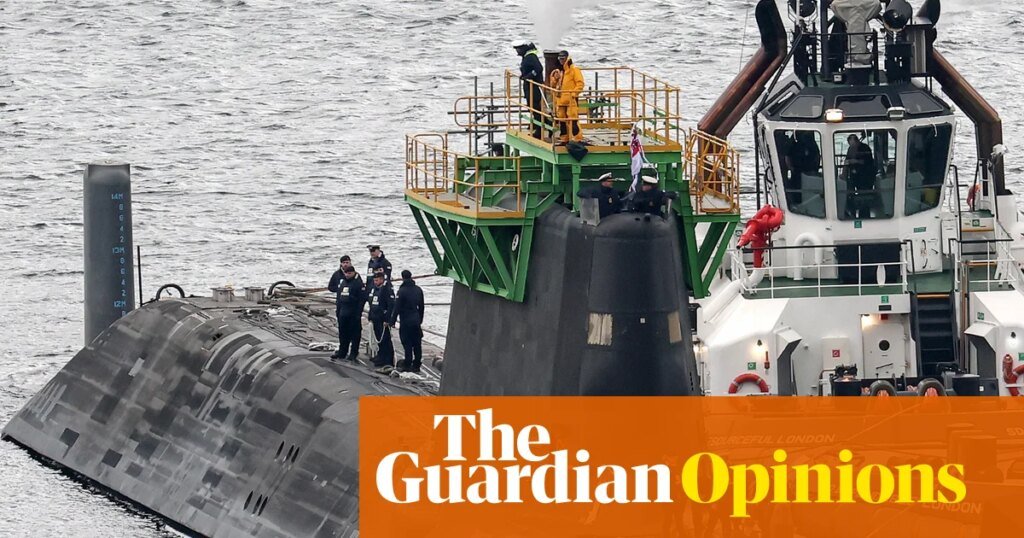
On a strategic level, the plan seems out of step with the threats that the UK is most likely to face. Britain is clearly in a hybrid war with states such as Russia, but the Dip’s centre of gravity remains nuclear-backed global force projection. The plan talks about national resilience, but the money is overwhelmingly in US alliance capability – surely a worry with Donald Trump as president. Less than £10bn over four years is set aside for homeland defence in areas such as cyber, air and missile defence and undersea infrastructure. Compare this with the roughly £100bn in nuclear submarines and jet fighters, Aukus subs and cruise missiles.
This is a defence-industrial strategy, not sovereign reindustrialisation. It will support UK jobs. But Britain can build submarines, warships and aircraft components while still binding its force structure to an American-led posture. A real industrial policy would ask why warships, not clean energy, get the state’s backing.
Within a month, Andy Burnham is likely to replace Sir Keir in Downing Street. His speech on Monday shows where the coming argument will go. He does not reject the Dip; he seeks to turn it into a procurement-led industrial strategy. Public money, he says, should no longer chase the cheapest global supplier, but build sovereign capacity in defence. That echoes the current plan’s language, but also exposes its weakness. The challenge for Mr Burnham is whether defence spending really can rebuild UK productive strength – or whether “back British” is merely a slogan disguising deeper dependence on an increasingly authoritarian America and its corrupted foreign policy.