
Britain’s glass manufacturing sector has warned that up to 120,000 jobs across its wider supply chain could be at risk, as foreign investors reportedly delay or redirect billions of pounds in planned UK investment amid growing policy and cost pressures.
British Glass, a trade body, said the Government’s extended producer responsibility scheme — a levy requiring manufacturers to contribute to recycling costs — is already discouraging investment at a critical moment in the industry’s transition to lower-carbon production.
The organisation warned that the policy risks pushing manufacturing capacity overseas, increasing reliance on imported packaging and weakening Britain’s industrial base.
Nick Kirk, director of British Glass, said the UK must remain competitive in attracting international capital, warning that investor sentiment is shaped by both economic conditions and policy stability.
The glass sector contributes more than £2 billion annually to the UK economy and produces up to four million tonnes of glass each year, but remains heavily exposed to foreign ownership, with five of the six major packaging manufacturers controlled overseas.
Under the extended producer responsibility framework, producers of glass bottles and jars are required to fund a greater share of local authority recycling costs, in line with the “polluter pays” principle. Critics have branded the measure a “stealth tax”, warning it could add around 10p to 12p per packaged item.
Industry figures argue that glass is being placed at a disadvantage compared with alternative materials such as plastic and aluminium, which they say do not face equivalent financial burdens despite environmental concerns over recyclability and emissions.
Manufacturers say the timing is particularly damaging, with several UK plants considering multi-million-pound upgrades to modernise facilities and cut carbon emissions. Around 20 sites are reportedly weighing investment plans of up to £100 million each, many of which could now be reconsidered or relocated.
The sector is also facing intensifying global competition, particularly from lower-cost imports from countries such as Turkey and China, and is burdened by some of the highest industrial energy costs in Europe.
A British Glass briefing paper warned the policy risked encouraging firms to source cheaper imports rather than invest domestically, potentially increasing overall emissions due to longer supply chains.
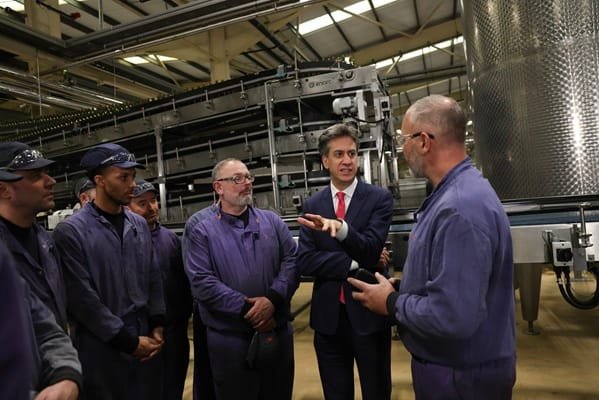
The strain on the industry has been underscored by industrial action at Encirc, the Cheshire-based glass manufacturer owned by Spanish firm Vidrala. Workers at the Runcorn-area plant have staged strikes over redundancies and cost-cutting measures, raising concerns about supply disruption for major drinks brands.
Encirc supplies packaging for products including Jacob’s Creek wine, Budweiser and Coors beers, Jameson whiskey, and Baileys liqueur.
Unite the union has criticised the job cuts, pointing to the company’s profitability, while industry figures say the dispute reflects wider pressures across a sector caught between environmental policy, global competition and rising domestic costs.
British Glass warned that unless policy is recalibrated, investment in UK glass production could continue to drift abroad — leaving the industry increasingly exposed during a period of rapid industrial change.