

Young tradies are becoming accidental investors.
Australia’s housing crisis has forced a new generation of tradies into “accidental investing” in the property market.
Michael Wentworth, Managing Director of Apprenticeships Are Us Ltd, said more young Australians were using property ownership as a practical strategy to avoid being permanently locked out of the market.
According to Mr Wentworth, many younger Australians, including apprentices, tradies and working households, were increasingly turning to approaches such as ‘rentvesting’, modest investment property ownership and low-deposit lending arrangements simply to gain a foothold in the housing market.
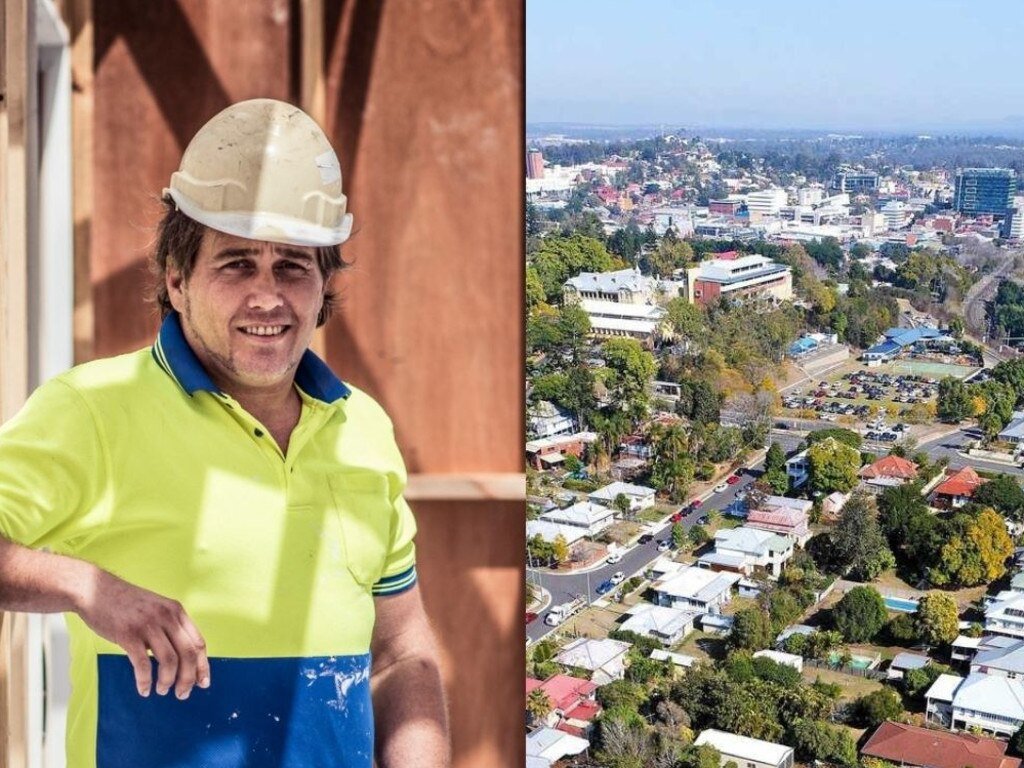
Aerial view over Brisbane river and South Brisbane. Picture Lachie Millard
These affordability pressures have created a new generation of younger buyers.
These affordability pressures have created a new generation of younger buyers whose property decisions are often driven by necessity rather than wealth accumulation, Mr Wentworth said.
“There is a tendency to talk about investors as though they are a single group of established or high-net-worth property owners,” Mr Wentworth said.
“But many younger Australians entering the market today do not fit that profile.
“Some are apprentices, electricians, mechanics, plumbers and younger working Australians who are using whatever pathway they can find to achieve some form of financial stability.”
MORE NEWS: ‘It won’t be enough’: Shock warning for Millennials
He meets sellers – and tells them not to sell
$387m Gold Coast tower tops out on beachfront
Mr Wentworth said many younger Australians had adopted “rentvesting” strategies — purchasing property where they could afford while continuing to rent closer to employment.
Mr Wentworth said many younger Australians had adopted “rentvesting” strategies — purchasing property where they could afford while continuing to rent closer to employment or remain living with family for better lifestyle convenience.
Importantly, many purchased existing dwellings rather than new builds for practical financial reasons.
“For many younger buyers, particularly those on modest incomes or early-career wages, servicing a mortgage on a property under construction while simultaneously paying rent simply is not realistic,” Mr Wentworth said.
“Existing dwellings often provide immediate rental income to help support repayments, which can make the difference between entering the market and missing out entirely.”
Many younger buyers have also entered the market through five per cent deposit schemes and low-deposit lending arrangements heavily promoted in recent years.
Existing dwellings often provide immediate rental income to help support repayments, which can make the difference between entering the market and missing out entirely.
However, Mr Wentworth said these pathways could create heightened vulnerability if housing conditions soften.
“When someone enters the market with very limited equity, even relatively modest price declines can create significant pressure,” Mr Wentworth said.
“That can mean higher loan-to-value ratios, reduced refinancing flexibility, greater financial stress and less mobility at a time when younger Australians are already operating in an exceptionally difficult affordability environment.”
At the same time, rental affordability continues to deteriorate nationally, with advertised rents increasing substantially over the past decade.
Affordability pressures have created a new generation of younger buyers whose property decisions are often driven by necessity rather than wealth accumulation.
Mr Wentworth said this created another layer of complexity for younger Australians trying to navigate housing decisions.
“Many apprentices and younger workers are already delaying independence and remaining at home longer because of training wages, rental costs and broader cost-of-living pressures,” Mr Wentworth said.
“If rental supply tightens further or rents continue rising, that pressure does not disappear.
“It often shifts onto family households already managing stretched budgets.”