
Unlock the Editor’s Digest for free
Roula Khalaf, Editor of the FT, selects her favourite stories in this weekly newsletter.
Shares in Australia’s banking sector have come under pressure following a reformist budget that introduced measures aimed at property investors.
The Labor government said in Tuesday’s statement it would scrap longstanding tax incentives that had fostered speculative property investment for almost three decades.
It justified the move to rebase the tax system by arguing that it would open the market to first-time homebuyers struggling to get on to the property ladder.
The changes to capital gains tax and the “negative gearing” system — under which tax losses are created when mortgage costs outweigh rental income — will not apply to newly built properties.
UBS said in a note that the budget would reduce the appeal of leveraged property investment by established buyers, which would slow mortgage growth. It said such buyers accounted for a fifth of Australia’s housing system but 40 per cent of mortgages by value.
The budget changes, combined with deteriorating economic conditions, as well as both higher inflation and interest rates, hit shares in the country’s biggest banks on Wednesday.
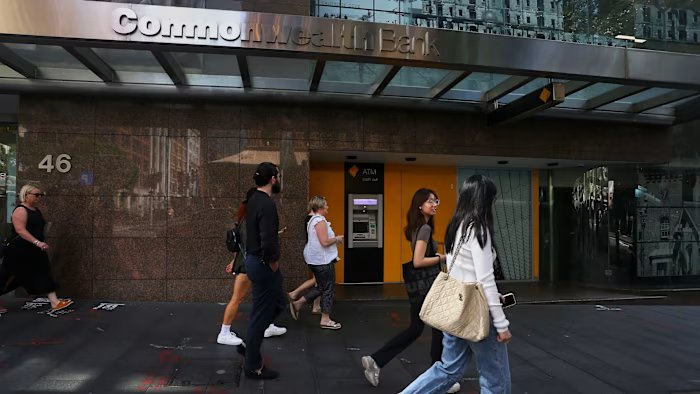
Shares in Commonwealth Bank of Australia, the second-largest company after miner BHP, fell more than 10 per cent after it issued a third-quarter trading update that missed expectations.
Analysts pointed to a loan impairment expense of A$316mn ($229mn) that reflected heightened geopolitical and macroeconomic uncertainty as driving the investor disappointment.
Matt Comyn, chief executive of CBA, said the bank was closely monitoring the effects of the Middle East conflict. “The Australian economy continues to demonstrate resilience, but supply chain disruptions, higher prices and interest rates are expected to weigh on household spending and business activity.”
Thomas Strong, an analyst with Citi, said that the strength of CBA’s share price along with higher bad-debt provisions had hit investor sentiment towards the bank under the shadow of the policy changes.
Rival lenders ANZ, Westpac, NAB, and Bendigo and Adelaide Bank all fell between 1 per cent and 3 per cent on Wednesday. Shares in Macquarie Group, which has grown rapidly in the Australian mortgage market, were slightly higher.
Strong noted that the impact of the government intervention could be more profound than previous policy resets as it came at a time of rising interest rates and supply chain pressure for the construction industry.
He said the moves would “damp investor activity” and he expected growth in the housing credit market to reach 5 per cent in the 2027 financial year, down from 7 per cent this year.