
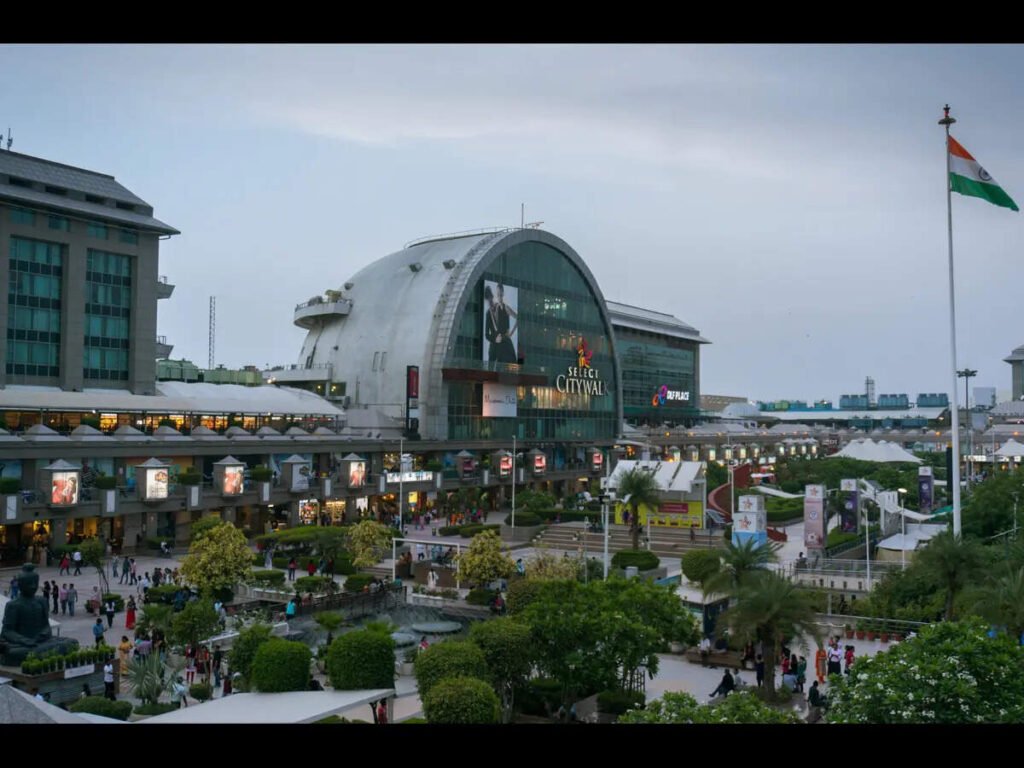
According to a recent report titled ‘Leasing Trends in Malls Across Top Metropolitan Cities in India’ by Anarock, a property consultancy, vacancy rates in Delhi’s key assets have dropped to 0–2%, while Mumbai has recorded the sharpest rental appreciation in the country at 15–20% year-on-year.
Anuj Kejriwal, CEO, Retail & CEO, EMEA, ANAROCK Group, says: “On a year-on-year basis, Delhi-NCR’s Grade A+ malls have witnessed a stronger rental appreciation of 8–12%, outperforming Grade A assets at 6–8%, indicating a widening gap driven by superior footfalls, tenant productivity, and asset positioning.”
Kejriwal says that many international retailers and entertainment stores are aggressively expanding in Grade A and A+ malls, boosting the demand for space.
Kejriwal says: “Notable recent transactions include Zara and Levi’s at Pacific Mall (Tagore Garden) and the entry of Foot Locker at DLF Mall of India, Noida. In Mumbai, the Phoenix Palladium and Jio World Drive continue to set benchmarks, with premium monthly mall rents reaching as high as Rs 777 per sq. ft.”
The report also highlighted another key trend shaping the industry: The growing maturity of lease structures, with about 74% of transactions now following hybrid revenue-linked models and nearly 75% of leases locked in for 3–7-year tenures.
For all those who want to make investment in commercial malls, REITs can be a good choice. There is at present only one listed mall REIT in India but more are expected to come.
Nirzar Jain, President – Leasing, Nexus Select Malls, told ET Wealth Online that in organised retail today, success is not defined by occupancy alone, but by how actively a mall curates its brand ecosystem.
Jain says: “The strongest malls are those that continuously refresh their tenant mix and stay ahead of evolving consumer demand.”
According to Jain, over the past year, rental trends across India’s organised retail landscape have remained largely stable for Grade A malls, with some positive movement in destination-led properties where vacancies are low and demand for retailers still high.
He also points out there is a growing preference for Grade A destination malls, where brands benefit from high footfalls, strong trading densities and a curated retail environment.
According to Jain, the growth in retailers in malls remains broad-based across categories, led by fashion and apparel, beauty and personal care, jewellery and watches, along with experiential segments such as food & beverage and family entertainment centres.
What risks should REIT investors consider while investing in the malls
While retail REITs that include malls in their portfolio provide a great opportunity for investors to participate in institutional-grade retail real estate, combining the stability of long-term leases with the growth potential of India’s consumption economy, there are some risks associated with it too.
From an investor’s perspective, the most important factor is still the asset quality. Jain says destination malls located in dense urban catchments with strong connectivity and curated tenant mixes consistently outperform through different market cycles, as they stay relevant to both consumers and brands.
Another critical factor is active asset and tenant management. According to Jain, retail environments evolve quickly, and malls that proactively refresh their brand mix, introduce new categories and continuously enhance consumer experience are the ones that sustain footfalls and tenant productivity over the long term.
Well-managed REIT portfolios benefit from this dynamic. They are typically anchored by dominant malls with strong retailer demand, high occupancy levels and disciplined capital management, which together support stable and predictable income streams.
Why go for REIT instead of direct investing in malls?
For investors, retail REITs also offer several structural advantages compared to direct real estate ownership.
Jain says: “These include stable distribution yields typically in the 6–7% range, a largely tax-efficient income stream, liquidity through listed units, and high levels of transparency through regulatory oversight.”
In addition, long-term leases, contractual rental escalations and prudent leverage help ensure predictable cash flows, making retail REITs an accessible and relatively lower-risk way to participate in India’s organised retail growth story.
Abhishek Kumar, SEBI RIA and founder of Sahaj Money, says that mall REITs are an ideal option for individual investors who want to take exposure to the retail sector without the massive capital requirements and intensive management burdens of owning physical property.
According to Kumar, REITs offer high liquidity through public exchanges and provide instant diversification across dozens of shopping malls, which is difficult to achieve through direct ownership.
Kumar says: “This structure is particularly beneficial for those prioritising passive income and professional management over physically owning the real estate asset.”
Some risks of investing specifically in mall REITs
According to Kumar, the most significant risk to mall REITs could be the growth of e-commerce, which could threaten the long-term viability of physical stores and traditional anchor tenants.
Kumar says: “These investments are also highly sensitive to economic cycles, as a dip in consumer spending often leads to tenants vacating the store, thus reducing the rental income for the REIT.”
Kumar highlights that rising interest rates can increase the cost of debt for property developments, making REIT dividends less attractive compared to safer fixed income assets such as FDs.
Mall REITs are essentially Indian consumption and shopping investment theme
According to Jain, the revenue model of modern malls is anchored in a combination of consumption-led retail and experience-driven formats, both of which play a critical role in sustaining footfalls and tenant productivity.
Jain says: “Fashion and apparel continue to anchor leasing demand across organised retail markets, supported by strong growth in adjacent categories such as beauty and personal care, jewellery and lifestyle retail.”
Additionally, Jain points out that malls have evolved into destination ecosystems, with cinemas, family entertainment centres and specially curated dining areas that greatly increase the time spent by visitors and encourage repeat visits, which in turn boosts across-the-board retailer sales.
From a REIT investor’s perspective, Jain says income growth is typically driven by a few structural levers.
- First, consistently high occupancy levels in dominant Grade A malls ensure stable base rentals.
- Second, tenant sales growth translates into revenue-share upside, typically contributing incremental income beyond contracted rents.
- Third, contractual rental escalations, generally around 5% annually, provide built-in growth visibility.