
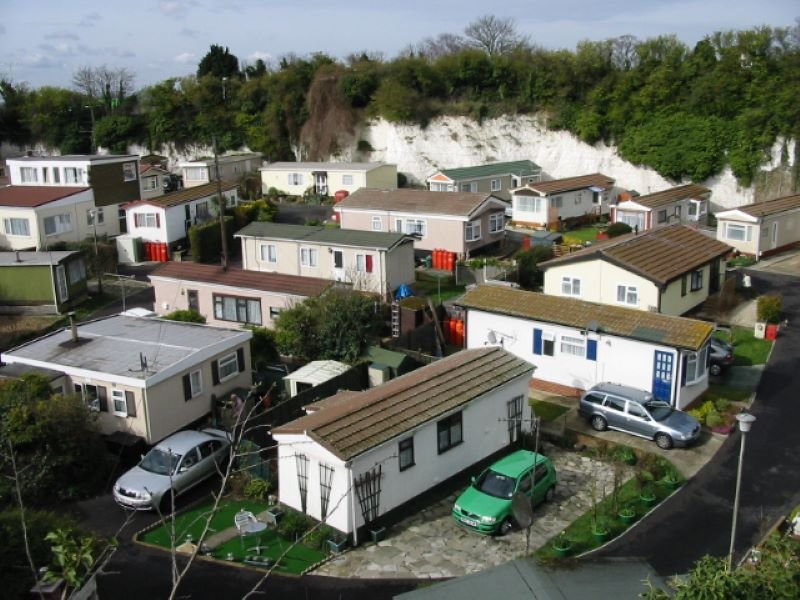
PARK homes weren’t always taken seriously. For decades, they carried the image of a temporary arrangement, something you’d stay in over a bank holiday weekend, not somewhere you’d put down roots.
Today, that perception has completely changed, and the sector now attracts buyers who are making considered, deliberate choices about how and where they want to live. Stay with us until the end to find out how the industry got here, and what today’s park home actually offers.
From Holiday Parks to Permanent Addresses
The origins of the modern park home lie firmly in the holiday trade. Post-war Britain saw a boom in static caravan sites catering to working families who couldn’t afford traditional holidays. Over time, a portion of residents started staying year-round, and park operators began developing sites specifically for permanent occupancy.
By the 1970s and 1980s, the distinction between holiday and residential parks was becoming clearer, but the product itself was still basic. Homes were small, lightly insulated and built to a standard that reflected their origins. The sector had a loyal customer base, but it wasn’t drawing in buyers who had other options on the table.
How Regulation Gave the Sector a Foundation
Mobile Homes Act 1983
One of the most significant turning points came with the Mobile Homes Act 1983, which gave residential park home owners meaningful legal rights for the first time. Before that, residents had very little security of tenure. The Act changed the terms on which homes could be sold and gave owners far greater protection against eviction.
The 2013 Updates
Further reforms followed. The Mobile Homes Act 2013 tackled longstanding problems around site licence enforcement and the private sale process, making it harder for unscrupulous site owners to block or profit from transactions between residents. These changes fundamentally altered the risk profile of buying into the sector, and confidence among buyers grew steadily as a result.
British Standard 3632 Now Ensures High-Quality Developments
Build standards tightened in parallel. The BS 3632 residential specification became the benchmark for permanent park homes, covering thermal performance, structural integrity and year-round habitability. A home built to BS 3632 is engineered to be lived in through a British winter, which matters enormously when you’re making a permanent move.
The Final Boss: Luxury Residential Park Homes
This is when park bungalows became hard to ignore. A luxury residential park home today bears almost no resemblance to the static caravans of the 1970s. Developers are delivering detached bungalow-style properties with full-height ceilings, wide hallways, French doors and contemporary fitted kitchens that wouldn’t look out of place in a conventional new-build, brick-and-mortar development.
Interiors have kept pace with mainstream housing trends. Today, buyers can expect open-plan kitchen and living areas, integrated appliances, stone worktops and walk-in wardrobes as standard on higher-specification models. Some properties also include underfloor heating, bay windows and en-suite bathrooms, which would have been unthinkable in this sector twenty years ago.
The locations add another dimension entirely. Many premium parks are set in coastal or countryside settings, with professionally landscaped communal grounds, tree-lined roads and carefully considered plot spacing that gives residents genuine privacy. It’s a far cry from the tightly packed holiday sites the industry grew out of.
What Residents Actually Get Day to Day
Beyond the homes themselves, the community infrastructure at well-run residential parks has become a genuine selling point. Communal areas, maintained pathways, on-site management and organised social events all contribute to a lifestyle that appeals strongly to people who want less to manage, not more.
Council tax, utility bills and maintenance outgoings on a well-built park home tend to be meaningfully lower than on a comparable conventional property, which suits buyers working with a fixed income or those who simply want fewer financial surprises each month.
The social side shouldn’t be underestimated either. Residents consistently report that the community feel of a well-managed park is one of the things they value most. Neighbours tend to be at a similar life stage, the environment is typically quiet and well-kept, and the shared ownership of communal spaces creates a sense of collective pride that’s harder to find on a standard housing estate.
In a Nutshell
The park home sector looks nothing like it did even fifteen years ago. What was once a niche corner of the housing market, largely overlooked by anyone with a conventional mortgage within reach, has turned into a genuine alternative for buyers who want quality, community and lower overheads without compromising on how their home looks and feels.
The regulatory framework is stronger, the build quality has caught up with mainstream expectations, and the developers pushing the luxury end of the market are producing homes that force you to rethink what a park home actually is.
Article written by Lydia White