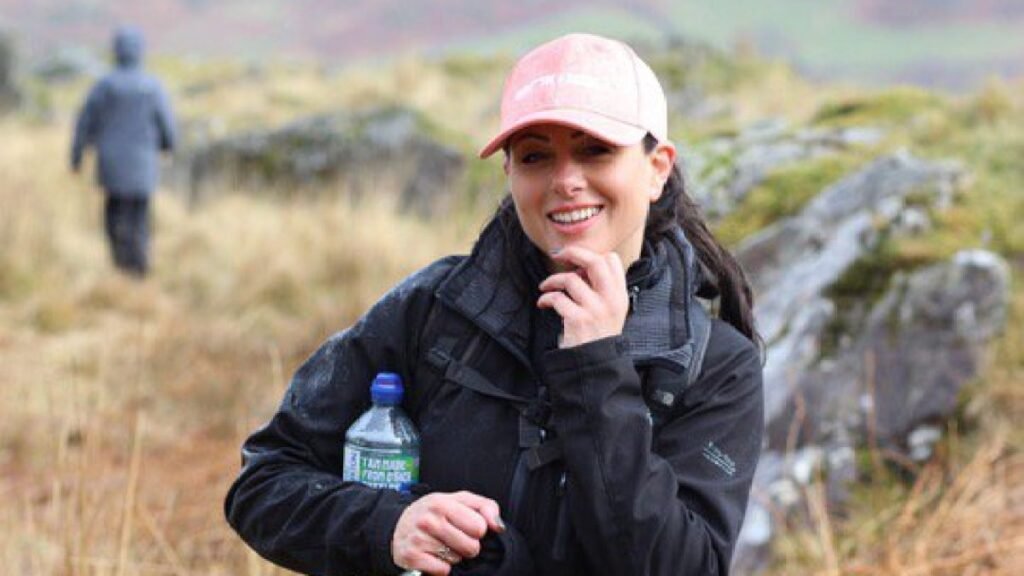
At 49, Nicola Goodlife moved from St Albans to the historic market town of Ruthin in North Wales. Here, she shares why she made the move and how it changed her outlook on life.Interview by Ellen Scott
I loved my life in St Albans. After growing up in Bushey, also in Hertfordshire, I moved to St Albans in my early twenties. My then-husband and I thought it would be a great place to raise our children, and that was correct. Over 28 years, I built an incredible community around me, raised my children, and made friendships that are still a huge part of my life today.
While many people in and around London talk about loneliness and disconnection, I was lucky enough to build a strong network of local people I could rely on. During Covid, some friends and I started a social Facebook group which quickly grew to more than 5,000 members. I was always organising ways for people to connect, from pairing people with walking buddies during lockdown to running free online fitness sessions to help support people’s mental wellbeing.
Shorts
Navigating hot and sticky weather is often a sensory and social nightmare
With summer approaching, Dr Adil Sheraz of the British Association of Dermatologists, explains why we sweat and what we can do about it.
Monica Garcia, 65, swelters in Madrid’s first heatwave of the summer (Photo: Isabel Infantes/ Reuters)
Why do we sweat?
Sweating is an important part of thermoregulation. When you sweat and it evaporates off the skin, it will take the latent heat with it.
We’re covered in three to four million sweat glands and the majority produce a sweat made up of just electrolytes and water. In other words, completely odourless.
These eccrine glands function from birth to keep us cool.
When does sweat smell?
Oil in our sweat can suck in microplastics posing a health risk (Photo: Tom Williams/Getty)
Glands in the armpit, groin and scalp operate differently.
They’re under the control of hormones and the glands contain lipids and potentially fatty esters.
The bacteria on our skin will feed off these fatty acids and lipids and cause the odour.
LIFESTYLE
6 min read
Are we sweating more now?
It is not just the weather impacts how we sweat…
The bigger you are (in height, weight or muscle mass), the more surface area you will need to sweat on in order to cool down.
This is why men tend to sweat more than women and why you sweat more when you gain weight.
Medical conditions like diabetes and thyroid problems will also cause increased sweating.
Certain dietary items, including caffeine, processed foods and spicy foods can also trigger the chemicals in our body which cause us to sweat more.
When does it matter?
If it’s impacting your daily life, you will likely have some form of hyperhidrosis and need to speak to a doctor to determine further.
Primary hyperhidrosis is excessive sweating with no underlying cause.
Secondary hyperhidrosis means there’s a condition or illness causing the sweating.
There are two main ways to tell the difference.
Sweating with secondary causes tends to happen all over the body rather than just localised to your palms or armpits.
Primary hyperhidrosis tends to switch off when you’re sleeping as the neurons stop firing. This doesn’t happen with secondary hyperhidrosis.
How to manage sweat
Caption: Relaxed young woman in bright summer clothes is sitting on a bench on a city street with her eyes closed enjoying music through headphones from a smartphone. Photographer: Tanja Ivanova Provider: Getty Images Source: Moment RF
Clothing
Wear natural or wicking fabrics that prevent sweat patches, or clothes that are cooling for the skin.
Antiperspirant
One that contains aliminimium is advised as it’s well known for blocking and plugging our sweat ducts.
Caption: Woman applying deodorant roll on under armpit Photographer: wing-wing Provider: Getty Images Source: iStockphoto
Britain’s best coffee shops have been revealed – spanning from the tip of Scotland to the bottom of England. (Photo: William Lailey / SWNS)
Dietary changes
Where possible reduce dietary causes like caffeine and spicy foods.
Can I save money without giving up fun?
Kasia Delgado
Chief Features Writer
When it comes to financial planning, I’ve always lived month to month, but recently I’ve wanted to be slightly more serious.
So I spoke to a range of financial experts for the easiest, idiot-proof ways to be savvier with money – without just hibernating.
The expert tips
Print out your bank statements
“This is the hardest step but you’ve got to know what’s coming in and out, down to the pound,” says financial coach Ian Dempsey. You’re more likely to remember what’s on there, and pay attention to it on paper.
Caption: Kasia Delgado reads old letters from her childhood. A professor of happiness at Bristol University taught Kasia how adults can train themselves to be happier and find more joy, like when they were unencumbered children.
Photographer: mail@teripengilley.com Provider: Teri Pengilley / i News Source: Teri Pengilley
Caption: Kasia Delgado, Chief Features Writer, i News. Photographer: Teri Pengilley Provider: Teri Pengilley / i News Source: Teri Pengilley
Draw an image of what you’re saving for
“Anything that requires discipline is much easier to achieve when you [can picture] the end goal,” says Ruth Power, from the Financial Management Bureau.
The expert tips
Experts are arguing that the UK should make greater use of existing government data Photographer: Andrzej Rostek Provider: Getty Images Source: iStockphoto Copyright: andrzejrostek@gmail.com
Go on a money date
If you’re in a relationship, for 30 minutes once a month, take a notebook to the pub/cafe and talk about money with your partner.
Delete shopping apps…
They are designed to be compulsive. Removing them gives you an extra layer of resistance.
Close up of an unrecognizable woman shopping online with credit card via mobile phone – stock photo. (Photo: Getty)
An image of a hand that quickly sends an email – stock photo. (Photo: Getty)
…and unsubscribe
Marketing emails are designed to reach you when you’re likely to spend money.
How it went when Kasia followed the expert advice
I delete Vinted and only re-download it when I actively want to replace something for my son that he’s grown out of.
I’m no longer buring my head in the sand. Sections of my bank statement flash into my mind when I go to use the Uber app.
Money dates have been uncomfortable. We did have a small argument about buying own-brand beans versus Heinz for example, but scribbling down numbers we want to save has also been exciting.
I have found it easier to be mindful about spending and broke some unhelpful habits, like associating walks with always getting a coffee.
How the UK currently saves
The average person in the UK has £16,067 in savings in 2025.
39%
However, 2 in 5 Britons have £1,000 or less in savings. A quarter have £200 or less.
1 in 6 UK adults (16 per cent) have no savings at all, equating to around 8.4 million people.
82%
Men are estimated to have 82 per cent more in savings than women.
Almost three in 10 (28 per cent) of adults state saving money is a habit.
The final verdict
The truth is, I’m never going to be someone with five side hustles and the financial savvy to become a bitcoin billionaire. But I’m no longer thinking, “where did my salary go?”. The small changes have, over time, made a difference to my bank account, but also my mind and self confidence.
KASIA DELGADO
‘I’ve found greater joy in spending money in an active, more conscious way – on things that felt worth it such as a massage, a cocktail with a friend, a comedy gig, a tricycle for my son,’ says Delgado (Photo: Teri Pengilley/The i Paper)
Six easy swaps to increase your fibre intake
We asked the experts why it’s so important to include enough fibre in our diets, and how to do it without totally overhauling our diets…
Why fibre is important
Fibre isn’t a fad nutrient. It’s been consistently linked to better health outcomes for decades. Unlike protein, which the majority of people already get enough of, fibre is something most of us (96 per cent) are significantly lacking.
NICHOLA LUDLAM-RAINE, SPECICIALIST REGISTERED DIETITIAN AND AUTHOR
The small diet tweaks to make
Beans, lentils and chickpeas are fibre powerhouses, with around 6-8g per half-tin. If you find beans tricky to digest, start with microdosing them for a week and gradually build it up to half a can at a time.
Bread is the category of food that is most thrown away, survey finds (d3sign Provider: Getty Images)Caption: Green vegetable salad with chickpea, spinach, cucumber, red onions, and greens on a wooden table. Top view Photographer: Qwart Provider: Getty Images/iStockphoto Source: iStockphoto
One of the simplest changes you can make is to switch to wholegrain versions of everyday carbs. Swapping two slices of white bread for wholemeal adds around 3g of fibre.
How to add fibre to your diet
When you cook potatoes the right way they go from being a health burden to a health hero (Photo: Getty)
Keep some skin
The skin of some foods can contain up to 50 per cent of the total fibre. Just make sure it’s safe to eat.
Level up the snacks
Berries, raw vegetables with hummus, or a small handful of nuts are all easy fibre wins.
Yoghurt and frozen berry crunch in a glass jar – stock photo. (Photo: Getty)
Breakfast cereals can be swapped out for overnight oats (Photo: Jogy Abraham/ Getty Images)
Don’t skip seeds
Ludlam-Raine adds a spoon of mixed seeds to porridge, cereal, yoghurts, soups and salads.
A few extra handfuls of fibre-rich ingredients might be all that’s needed to take your meals from average to fibre-full.
Small changes are key because they’re more sustainable and better tolerated by the gut. Increasing fibre too quickly can cause bloating or discomfort.
One in four people in the UK is living with mould and/or damp in their home…
David Prince, a leading damp surveyor who travels across the country treating mould, spends the day with The i Paper writer Eleanor Peake.
Surveyor David Prince warns people are being overcharged by rogue companies for unnecessary treatment (Photo: Teri Pengilley)
The UK
Britain’s damp problem is one of the worst in Europe.
45%
Private renters are disproportionately affected, with 45 per cent currently battling symptoms of damp.
30%
From 2015 to 2024, British winters were 16 per cent wetter than in previous years.
By 2070, UK winters are projected to be up to 30 per cent wetter.
The house I visited with David Prince – a private rental
Renters are desperate for a resolution to their ongoing damp issue.
David notes that although the bathroom has an extractor fan, the room wasn’t being ventilated efficiently.
The hot air from the bathroom was floating towards the coldest part of the building (the bedroom) and turning into water as it hit the cold bedroom walls.
This was an internal ventilation issue, other houses have an external issue. When the guttering is overgrown the water has to go somewhere else, sometimes seeping back into the brick.
The houses most at risk
Victorian terraces, or those built in the 1910s, are more likely to have rising damp – where the water seeps through the foundation of the house.
Caption: David Prince, Director of Abbott Property Care Ltd. For a feature on damp by Eleanor Peake, Senior Features Writer at The i Paper. Photographer: Teri Pengilley Provider: Teri Pengilley / The i Paper Source: Teri Pengilley Caption: David Prince, Director of Abbott Property Care Ltd. For a feature on damp by Eleanor Peake, Senior Features Writer at The i Paper. Photographer: Teri Pengilley Provider: Teri Pengilley / The i Paper Source: Teri Pengilley
Modern houses are often built with concrete ring beams, one of the coldest materials to build with. The damp turns to condensation just by hitting the walls.
Damp specialists
Caption: Eleanor Peake, Senior Features Writer at The i Paper, meets David Prince, Director of Abbott Property Care Ltd, to examine the issue of damp in rental properties. Photographer: Teri Pengilley Provider: Teri Pengilley / The i Paper Source: Teri Pengilley
Only a small number of damp specialists – around 250 – are registered with the Property Care Association (PCA) in the whole of the UK.
This means that a majority of people in the UK are receiving quotes and recommendations about damp from building surveyors who aren’t qualified to give a diagnosis, says Prince.
The golden rules for managing damp
The most common issues can be solved by simple tweaks.
Start with the outside. When it’s raining, have a walk around your building to see if the gutters are pouring water down the wall, or water is being trapped in some way.
Make sure you have good ventilation in key wet rooms: kitchen, bathroom, utility, and toilets.
Open all your windows every day for a short period of time to force natural ventilation – even on cold days.
Never place furniture, or even pictures, on an external wall if it suffers from mould. It helps retain moisture.
Woman awaking after sleeping well in a nice sleeping room. – stock photo. (Photo: Getty)
SLEEP
How to reset your sleep
Irregular sleep has been linked with poorer cardiovascular health, metabolic disruption, inflammation and mood imbalances.
If your sleep has fallen out of whack, this is what the experts recommend.
From personalised ‘sleep windows’ to unhelpful bedtime routines.
Consistency in bedtimes
It helps the brain feel safer and more predictable around sleep, which is important for people with insomnia. When sleep and wake times are consistent, that clock stays well aligned. When sleep timing is all over the place, the body clock becomes confused…
dr ZOE GOTTS, CONSULTANT CLINICAL PSYCHOLOGIST AT THE LONDON SLEEP CENTRE
Couple sleeping in bed – stock photo. (Photo: Getty)
The changes to make
Sleep tourism in hotel. Exhausted woman sleeps sweetly in bed in the morning – stock photo. (Photo: Getty)
Find your sleep window
When do you naturally start to feel tired? Aim to allow your body to sleep within that timeframe most nights.
Wake at the same time
Pick a wake-up time you can stick to and anchor everything around that, says Dr David Garley, sleep expert.
Sleep doesn’t have to be so complicated (Photo: Olga Pankova/Getty)
Caption: TOPSHOT – NASA’s Artemis II Space Launch System (SLS) rocket is seen at sunrise at the Kennedy Space Center in Cape Canaveral, Florida on April 1, 2026. On Wednesday three men and one woman are set to embark on the first crewed journey to the Moon since 1972, a landmark odyssey that aims to launch the US into a new era of space exploration. The NASA mission dubbed Artemis 2 has been years in the making after facing repeated setbacks, but is finally scheduled to take off from Florida as early as April 1 at 6:24 pm (2224 GMT). (Photo by Gregg Newton / AFP via Getty Images) Photographer: GREGG NEWTON Provider: AFP via Getty Images Source: AFP Copyright: AFP or licensors
Get out into sunlight
Exposing yourself to daylight soon after waking helps to sync your circadian rhythm, says Dr Garley.
How to reset your sleep
Regulate your nervous system
Many people are running on exhaustion but still in a state of high alert, so might not be able to rest when needed, says Dr Gotts.
Gentle routines, reduced evening stimulation, and calming the body can make a huge difference.
Sleep tourism in hotel. Exhausted woman sleeps sweetly in bed in the morning – stock photo. (Photo: Getty)Senior bed woman problem pain headache home elderly mature pain bedroom upset unhappy female caucasian adult relationship retirement old difficulty ache head sick migraine hangover sleep – stock photo. (Photo: Getty)
Don’t spend too long in bed
If you cannot sleep within 20 minutes, get out of bed, ideally out of the bedroom, and find a relaxing and distracting activity to do while you wait for the natural urge to return.
The tweaks to make to reset sleep
(Photo: AzmanL/Getty/E+)
Look at your bedtime
Don’t presume earlier to bed (ie. more time in bed) equals better sleep. The timing needs to fit you.
It might mean going to bed later
Set an alarm to anchor the wake-up time, then choose a bedtime that allows you to fall asleep easily and aim to sleep solidly within that time.
Woman in bed at night having trouble sleeping. – stock photo. (Photo: Getty)
A mature woman lies in bed and reads a hardback book – stock photo. (Photo: Getty)
Don’t overdo it
Too much preparation can increase pressure around sleep so a short and consistent routine is far more effective.
Weight training has a host of benefits, but only if it’s done correctly.
We asked personal trainers the common mistakes that people make when lifting – especially for the first time or early on in their strength journey – and how to avoid them.
Woman lifting barbell with heavy weights in cross training gym – stock photo. (Photo: Getty)
Priotising weight over form
When the load is too heavy, form usually breaks down, the wrong muscles take over, and the risk of injury goes up. If you can’t control the lowering part of the movement, keep good posture, or move through the full range, you’re compromising.
CELEBRITY TRAINER AND PT AIMEE LONG
The mistakes you could be making
Close up of male athlete gripping heavy green kettlebell during strength training exercise in cross training gym – stock photo. (Photo: Getty)
Not progressing
If you’re reaching for the same pair of dumbbells each week you’re likely just maintaining muscle, not building.
The wrong trainers
You need adequate support for your ankles, without overly cushioning your arches.
Find the best shoes for you (Photo: Xavier Lorenzo/Getty/Moment RF)
Woman at the Gym – stock photo. (Photo: Getty)
Not timing your rest
PT Nancy Best’s advice is to take 90 seconds of downtime before picking your weight back up.
Research has found that strength training can help slow bone loss (Photo: FJ Jimenez/Moment RF via Getty)
Neglecting recovery
Progress does not happen during the workout itself; it happens afterwards when your body repairs and rebuilds.
Poor sleep, not eating enough calories or protein, or training the same muscles hard every single day can hinder recovery and leave you constantly exhausted, says Long.
Not choosing the right exercises
An effective programme is built around variety.
Ensure your training includes each movement for the upper and lower body.
PT Luke Worthington recommends a push/pull programming.
Upper body push targets the shoulders or chest and upper body pull typically works the back.
Lower body push includes squats and leg press whereas pulls include deadlifts and hinges.
What to do
Perfect the movements before increasing the weight.
Best recommends Nike Metcons or Converse for a flat, stable surface.
Aim to eat 1.4-2g of protein per kilogram of bodyweight if you’re regularly exercising.
When you’re comfortable you can increase the weight, number of sets or reps, or range of motion to progress each lift.
LIFESTYLE
6 min read
The eight biggest mistakes we make when retiring
Psychologist and author Dr Denise Taylor says we shouldn’t sleepwalk into retirement, nor stop walking, just because everyone else has.
Denise Taylor’s marriage ended at 60 as the structure of the working day faded away (Photo: Mihai Zsigmond)
The mistakes we make when retiring
The man is currently drawing a small defined benefit (DB) pension (Photo: SimpleImages/Getty)
Hoarding money
Many clients tell me their biggest regret was spending too little when they were healthiest and most able to enjoy it.
Planning to rest
Boredom in retirement is misunderstood. It’s rarely about having nothing to do. It’s about having time without meaning.
Naps before 1pm can lead to better cognitive performance in the following hours (Photo: Lord Henri Voton/Getty Images)
People prepare financially and practically, but don’t do the psychological work of leaving well.
Waiting to plan what’s next
Once the structure of work disappears, people can slip into a narrower way of being. Start sketching out possible paths at least two years ahead. Even rough ideas about what you might want to explore – creative projects, volunteering, learning.
DR DENISE TAYLOR
Denise Taylor has worked with many clients who moved into ‘purposeful’ roles expecting to feel better, only to be more depleted than before (Photo: Ilona Gierach)
Common mistakes she sees
‘I know it’s a minor thing but it makes me feel unheard and ignored’ (Photo: PonyWang/Getty)
Not preparing as a couple
Discuss how much time you want together, and what kind of lives you’re moving towards, rather than assuming it will naturally align.
Trying to stay busy
Without noticing what drains your energy, activity becomes a way of bypassing the deeper adjustment.
Remember to care for your lawn (Photo: RHS / Tim Sandall)
Senior bed woman problem pain headache home elderly mature pain bedroom upset unhappy female caucasian adult relationship retirement old difficulty ache head sick migraine hangover sleep – stock photo. (Photo: Getty)
Treating it as an ending
People can find themselves psychologically stranded. Days begin to blur into one another.
Retiring because everyone else is
For a generation raised to expect retirement at a certain age, default timing can feel normal.
The timing is personal.
Portrait of senior man at desktop computer in home office – stock photo. (Photo: Getty)
The mistake is retiring without questioning whether that timing actually fits your own life. It ignores your relationship with work, your health and your finances.
Agony Uncle
5 min read
What to do
1For some a gradual shift is best like working fewer days or changing role, slowing down.
2Experiment before you leave. Taking a sabbatical or reducing hours can show you how retirement might feel.
3Prioritise a small number of meaningful anchors: one regular commitment, one place where you feel known and one activity.
4Slow it down psychologically – question default timing, resist expectations and ask yourself what kind of transition you are actually stepping into.
Sir David Attenborough is estimated to have travelled almost two million miles in his career, and has visited 90 countries and all seven continents in his quest to enhance our understanding of nature (Photo: Shirlaine Forrest/WireImage)
SIR DAVID ATTENBOROUGH
The national treasure has celebrated his centenary
For all the inspiring insight into nature that Sir David Attenborough has given us, he has also shown us how to age well.
Here, Chief Features Writer Kasia Delgado looks into his lifestyle, and the tips he’s shared to live to 100.
Caption: Programme Name: Africa – TX: n/a – Episode: The Future (No. 6) – Embargoed for publication until: n/a – Picture Shows: SIR DAVID ATTENBOROUGH WITH A THREE MONTH OLD BLIND BLACK RHINO ??? LEWA WILDLIFE CONSERVANCY, KENYA – (C) BBC/David Chancellor – Photographer: David Chancellor Photographer: David Chancellor Provider: BBC/David Chancellor Source: 6 Copyright: WARNING: Use of this copyright image is subject to the terms of use of BBC Pictures’ Digital Picture Service (BBC Pictures) as set out at www.bbcpictures.co.uk. In particular, this image may only be published by a registered User of BBC Pictures for editorial use for the purpose of publicising the relevant BBC programme, personnel or activity during the Publicity Period which ends three review weeks following the date of transmission and provided the BBC and the copyright holder in the caption are credited. For any other purpose whatsoever, including advertising and commercial, prior written approval from the copyright holder will be required.
LOREM IPSUM
Never retiring fully
Putting your feet up is all very well, but it’s very boring, isn’t it?
In the last two years alone, Attenborough has done voiceovers on a number of projects, including Wild London, and a National Geographic Disney film, Ocean.
Although his workload has remained high, he did acknowledge in 2017, that as he ages, he sometimes finds it harder to recall correct words as quickly as he did before.
Improving his diet
In his 90s, Attenborough has cut back on red meat, and begun eating an increasingly vegetarian diet.
Whether as he said, he “simply lost the taste” for meat, or whether it was an environmental or health reason, the NHS advises that eating a lot of red and processed meat increases your bowel cancer risk at any age.
Caption: Fox Cub BBC Wild London 2026 Attenborough Screenshot
Big Read
7 min read
Keeping active
Caption: Sir David Attenborough visits the London Wetland Centre in west London where he launched his new campaign to raise public awareness to help reverse the butterfly decline, urging the public to plant butterfly-friendly flowers in their garden to help reverse declining numbers of the insects. Photographer: Stefan Rousseau Provider: PA Source: PA Archive
Attenborough has previously said he has “never done exercise” in an official capacity.
But he has kept active by going for walks in Richmond, where he lives.
Interviewers who have been to his home have also mentioned him practically skipping down the stairs of his house.
TELEVISION
8 min read
Avoiding becoming isolated
When Sir David’s wife Jane died in 1997, the couple’s adult daughter Susan moved in with her father. He said at the time: “I’m quite used to solitude in the wilds but, no, an empty house is not what I enjoy.”
Caption: TELEVISION PROGRAMMES: THE QUEENS GREEN PLANET Monday 16th April 2018 on ITV Sir David Attenborough joins Her Majesty the Queen in the gardens of Buckingham Palace This unique, landmark documentary follows Her Majesty the Queen and an ambitious legacy project to create a global network of protected forests, spanning the 52 countries of the Commonwealth. This project, called the Queen’s Commonwealth Canopy, brings together Her Majesty’s deeply held commitment to the Commonwealth and her little-known love of trees. At the heart of the film is a conversation between the Queen and Sir David Attenborough filmed in the gardens of Buckingham Palace last summer. In a rare opportunity to see the Queen talking informally to Sir David, the conversation ranges from climate change, to conkers and birthday gifts. The film follows members of the Royal Family involved so far in making the Queen?s Commonwealth Canopy a reality, including Prince Harry planting trees in the Caribbean, and Prince William and his family in Canada’s Great Bear Rainforest. (c) ITN Productions For further information please contact Peter Gray 0207 157 3046 peter.gray@itv.com This photograph is ? ITV and can only be reproduced for editorial purposes directly in connection with the programme THE QUEENS GREEN PLANET or ITV. Once made available by the ITV Picture Desk, this photograph can be reproduced once only up until the Transmission date and no reproduction fee will be charged. Any subsequent usage may incur a fee. This photograph must not be syndicated to any other publication or website, or permanently archived, without the express written permission of ITV Picture Desk. Full Terms and conditions are available on the website www.itvpictures.com
Provider: From ITN Productions Copyright: ITV
Sir David Attenborough during the event marking his 100th birthday today at the Royal Albert Hall (Photo: BBC Studios Natural History Unit/Buckingham Palace)
He’s also been known to respond personally to fan letters and maintain relationships with people who admire him. He has no iPhone or email address and instead prefers to communicate by handwritten letter.
Appreciating small things
It seems to me that the natural world is the greatest source of excitement; the greatest source of visual beauty; the greatest source of intellectual interest. It is the greatest source of so much in life that makes life worth living
Caption: Veteran broadcaster and naturalist Sir David Attenborough with an Australian bearded dragon after receiving an honorary degree from Queen’s University in Belfast for exceptional services to science and broadcasting. Photographer: Paul Faith Provider: PA Source: PA Archive
St Albans gave me so much. I loved the people, the energy and the lifestyle there. And the area is beautiful. A friend owned a farm in Bricket Wood, so I spent a lot of time surrounded by nature and horses, which has always been important to me. Life in St Albans was wonderful.
So why, in September of 2024, after 28 years of building a place to call home, did I pack everything up and move to Ruthin, a town in North Wales where I knew absolutely no one?
Finances played a huge part. As a single mother, there was no way I could afford to keep living in the place I loved. I worked incredibly hard for many years to keep life going for myself and my two children after my fashion business collapsed. Later, my plans to retrain and launch a new business as a personal trainer were heavily disrupted by Covid.
For 15 years, I kept up the mortgage payments on our family home while trying to rebuild life professionally and personally. At one stage, I even rented my home out and temporarily moved back in with my parents while I went back to college to retrain in health and fitness.
By 2024, I was exhausted. Even as I got stable work and my children grew up and moved out, the stress always remained. There was just never enough money. I knew I needed to sell the house and move… but where?
Initially, I had been looking around Chester, where my partner of five years, a personal trainer, lived. During that time, some of his running clients suggested he visit the Ruthin and Moel Famau area because of how beautiful it was.
The first time we drove into Ruthin, we completely fell in love with it. My partner and I arrived on a sunny day and drove through the valley into the town below. It felt calm, picturesque and full of character, with beautiful historic buildings, independent shops and a strong sense of identity and community. We went to Ruthin castle, saw the peacocks, wandered around town, and it just felt magical.
I knew I wanted to move there. Strangely, the idea of shifting my life to a place where I knew no one didn’t scare me at all. I was just excited to start a new chapter.
Four months later, I sold my home in St Albans for £425,000. That allowed me to buy a three-bedroom townhouse in Ruthin for around £200,000 outright – no mortgage necessary.
On her first trip to Ruthin, Nicola says she felt a strong sense of community
My new home needed a lot of renovation and wasn’t at all what I originally imagined. I’d dreamed of a detached house with land, horses and a huge driveway. Instead, I ended up with a townhouse spread across four floors, neighbours either side, a long narrow garden and no driveway at all. But there was something about both the house and the town that simply felt right. And the lower costs of housing in Wales was definitely a draw.
Not long afterwards, my partner also decided to leave Chester and move into the house with me, which helped the move feel even more like a fresh new chapter for us both.
I was nervous to move, but I quickly knew it was the right decision. One of the biggest things I noticed after moving to Wales was the friendliness of the people and the strong sense of community. I was welcomed with open arms. In England, especially down south, you could easily go days without speaking to anyone. Here, you walk into a shop and people stop to chat with you. Local businesses genuinely support one another. There’s a warmth and connection that feels very natural.
I also love how strongly Welsh culture and heritage are preserved and celebrated here. There’s a real sense of identity and belonging, and Welsh is spoken everywhere alongside English. I’ve even started learning a little Welsh myself on Duolingo.
While my accent might reveal me as English, I haven’t had a single experience of someone Welsh reacting negatively to that. My experience has simply been that people in North Wales have been incredibly friendly and welcoming. I’ve personally found it a very warm and community-oriented place to live.
I have noticed that local political campaigning in Wales felt very different to what I’d been used to in England. In Ruthin, there seemed to be a particularly strong local presence from Plaid Cymru, alongside campaign material from other parties, which was interesting to see.
I don’t follow politics particularly closely, but I understand Plaid Cymru became the largest party locally, Reform UK also performed strongly, and Welsh Labour lost a significant number of seats. During the elections, I noticed a lot of campaign leaflets and garden boards locally, particularly from Plaid Cymru. But in my socialising, politics hasn’t come up socially. Most conversations I’ve had locally are far more centred around community, lifestyle, wellbeing and everyday life than politics.
Financially, moving to Wales hasn’t necessarily been dramatically cheaper in terms of day-to-day living costs. Bills and general living expenses feel fairly similar to parts of northern England. What has changed more is the pace of life and people’s relationship with work and money.
And while I’ve seen reports about waiting times for NHS treatments being worse in Wales, I’ve experienced the opposite. I’ve found services here more responsive and respectful. I recently broke my toes and had no issue getting seen.
I don’t personally use public transport very often, but my understanding is that local bus connections are generally good. Ruthin no longer has its own train station, the nearest one is around 16 miles away, which can make rail travel less convenient.
There’s far less hustle culture here. People seem to genuinely value balance, family time and wellbeing. Some local businesses even choose not to open at weekends because they prioritise lifestyle alongside work. That mindset was completely different to what I’d become used to after years of constantly pushing myself.
I’ve always loved hiking, health and wellbeing, so living in North Wales has allowed me to focus much more on the type of work that feels meaningful to me. I now host women’s retreats centred around wellbeing, hiking, menopause support and reconnecting with nature.
In February, I hosted a retreat for 12 women, which included hiking in the local hills and Snowdonia, campfire cooking and time away from the stress of everyday life. Seeing women relax, open up and reconnect with themselves was incredibly rewarding.
I haven’t lost the community I built in St Albans. I still return regularly, still run my badminton and table tennis club there, and remain deeply connected to many of my closest friends. At the same time, I’ve slowly started building a new community for myself in North Wales too. I’ve met people involved in yoga, sound healing, hiking and wellbeing, and I’m now creating local hiking groups and networking events myself.
I think moving here has taught me the importance of slowing down. For years, I measured life through productivity and constant pressure. Wales has reminded me that wellbeing, connection, nature and community matter just as much.
I’ll turn 50 this September and, honestly, I feel excited about this next chapter of life. My children have grown up, I’m focusing on work that feels purposeful, and I finally feel like I’m creating a life that is healthier, calmer and more aligned with who I am now.
If you wish to unsubscribe from our newsletter and promotions emails, please click here
We use cookies on our website to give you the most relevant experience by remembering your preferences and repeat visits. By clicking “Accept All”, you consent to the use of ALL the cookies. However, you may visit "Cookie Settings" to provide a controlled consent. View more