
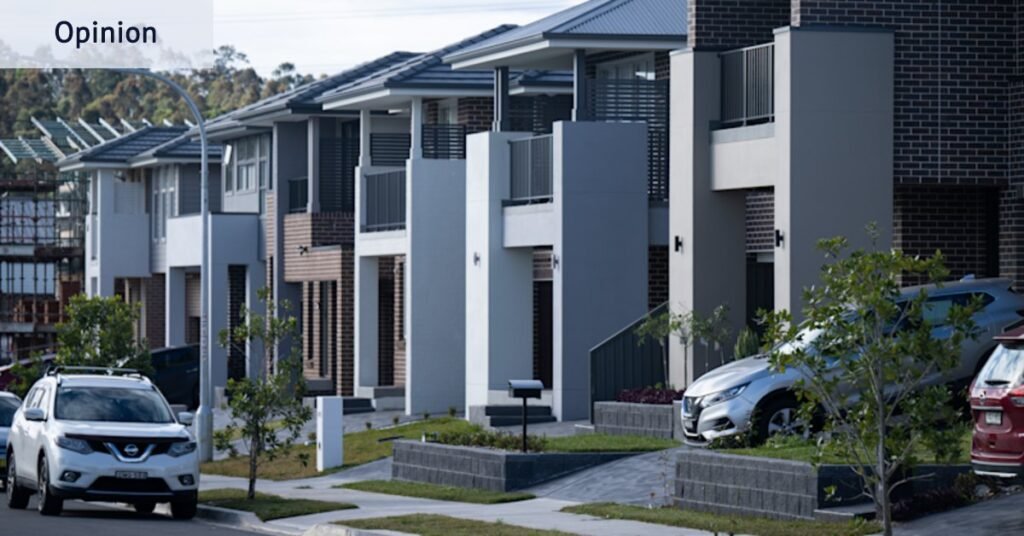
Another week of anaemic auction clearance rates across Sydney and Melbourne remains a harbinger for house prices to decline – a movement that will be negatively turbocharged by the tax-unfriendly changes for property investors outlined in the federal budget.
There is little dispute about whether property prices will cool this year – however there is a range of views on whether the change will be arctic or just chilly.
A wave of sellers has been hit by a buyers’ strike – a toxic recipe for house prices. According to Domain’s calculations, almost half the properties under the auction hammer last week went unsold.
At the more extreme end, some investment banks like Morgan Stanley are predicting property prices will experience the largest correction in 40 years and fall by up to 10 per cent.
The major banks are acknowledging the additional pressure on investors will be a negative for home prices, but the two largest, the Commonwealth Bank and Westpac, are currently still forecasting some growth this calendar year – albeit weak.
And CBA has already called out downside risks to its current prediction if sentiment receives a hit in the stomach.
So it won’t be a surprise to see these projections revised down as the year progresses.
Property data group SQM’s managing director Louis Christopher expects Sydney prices to fall by 9 per cent and Melbourne prices to decline by 7 per cent this year and that other capital cities that have stronger prices in 2026 to have now peaked.
The elimination of negative gearing on established homes will increase the upfront cost for property investors by the equivalent of a 90 basis point to 155 basis point increase in interest rates, according to CBA economists.
This comes on the heels of weaker investor loan approvals numbers in the first three months of the year, before property investors were effectively sidelined.
Add to that this year’s three interest rate rises and the potential for another before December, and it’s easy to understand why buyers have been spooked.
The Sydney and Melbourne property price trajectory had already turned negative before the budget further removed incentives and therefore enthusiasm for residential market investors.
The removal of negative gearing and the replacement of the 50 per cent capital gains tax discount with inflation indexing will eat into the affordability for investors and the amounts banks will be able to lend to investors. Estimates vary but say it will reduce borrowing capacity of investors by between 10 and 20 per cent.
Already two major banks have alerted mortgage brokers that the proposed changes will need to be factored into new investor loans.
And history has shown that when investor home lending was crimped, as it was when macro prudential measures were put in place in 2014 and 2017, house prices reacted negatively.
The aim of the government’s policy was to squeeze out investors to make way for first home buyers who have been unable to get a foot on the bottom rung of the housing ladder.
But for some younger buyers who already used the government’s 5 per cent deposit scheme to get into the market, a decline in house prices could land them in a very destabilising negative equity position (where their loan is larger than the value of their home).
Less than a year ago it was unimaginable that a market with an acute shortage of housing could experience a price decline.
But the Australian housing market has been hit by a barrage of negative shocks, Christopher explains.
As recently as October last year borrowers were hoping/expecting that 2026 would see a continuation of a rate cutting cycle that began in 2025.
Instead, we got a series of interest rate rises, a war in the Middle East that caused petrol prices to spike, capped off by a tax-unfriendly federal budget.
Not even our home-ownership obsessed nation could sustain the combined onslaught.
The Business Briefing newsletter delivers major stories, exclusive coverage and expert opinion. Sign up to get it every weekday morning.