
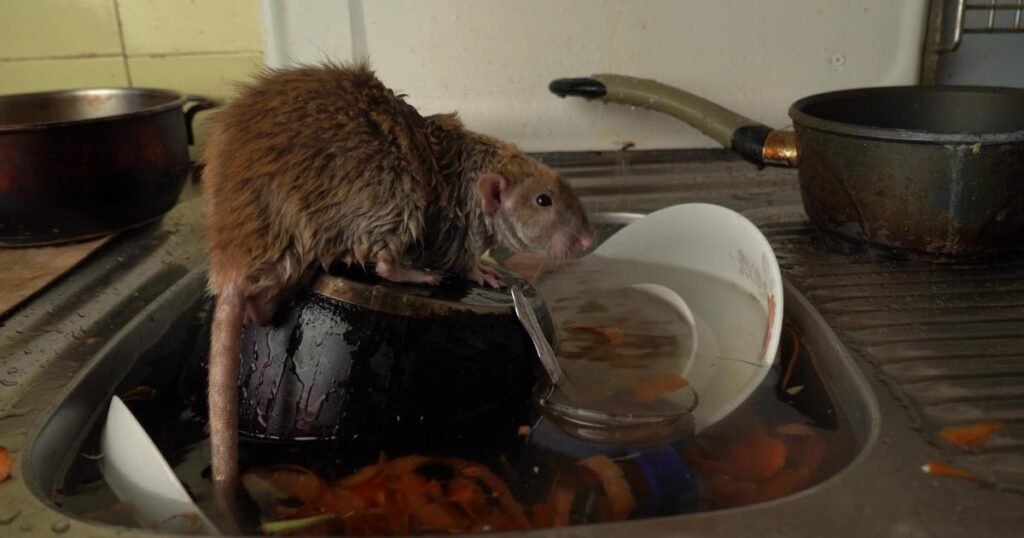
The rise has been linked to unusual weather patterns, combining last year’s warm summer with heavy winter rainfall.
According to Rentokil Pest Control, which recorded a 10 per cent increase in rodent sightings compared to the previous year, the spike has been most pronounced in Northern Ireland and northern England.
Northern Ireland saw the biggest rise at 26 per cent, followed by Yorkshire at 20 per cent and the north west at 19 per cent.
The West Midlands reported a 16 per cent increase, while Scotland recorded 14 per cent.
Pest control experts say the UK’s record-breaking warm weather in 2025 may have extended the rats’ breeding season, leading to larger populations.
Rentokil has also warned that the record-breaking wet start to 2026 could intensify the problem.
Sustained rainfall can flood burrows and drainage systems, displacing rats and driving them into homes and businesses as they seek higher, drier ground.
Paul Blackhurst, from Rentokil, said: “Rats are highly capable swimmers.
“They can navigate strong currents, enter exposed pipes and sewers, and swim considerable distances in open water.
“However, what they cannot tolerate is prolonged submersion.
“When burrow systems and sewer networks flood, rats are forced to seek higher, drier ground, increasing the risk of infestations in properties.
“Early prevention and professional support are key.”
Mr Blackhurst said simple steps such as proofing entry points, managing waste, and acting quickly at the first sign of activity can reduce the risk of an infestation.
After heavy rain or flooding, property owners are advised to clear debris around their property, as branches and leaves can create ideal nesting sites for rats.
It’s also important to seal any gaps in walls or foundations and to keep outdoor bins tightly closed and away from the building.
Rentokil advises seeking professional pest control if the problem becomes unmanageable.