
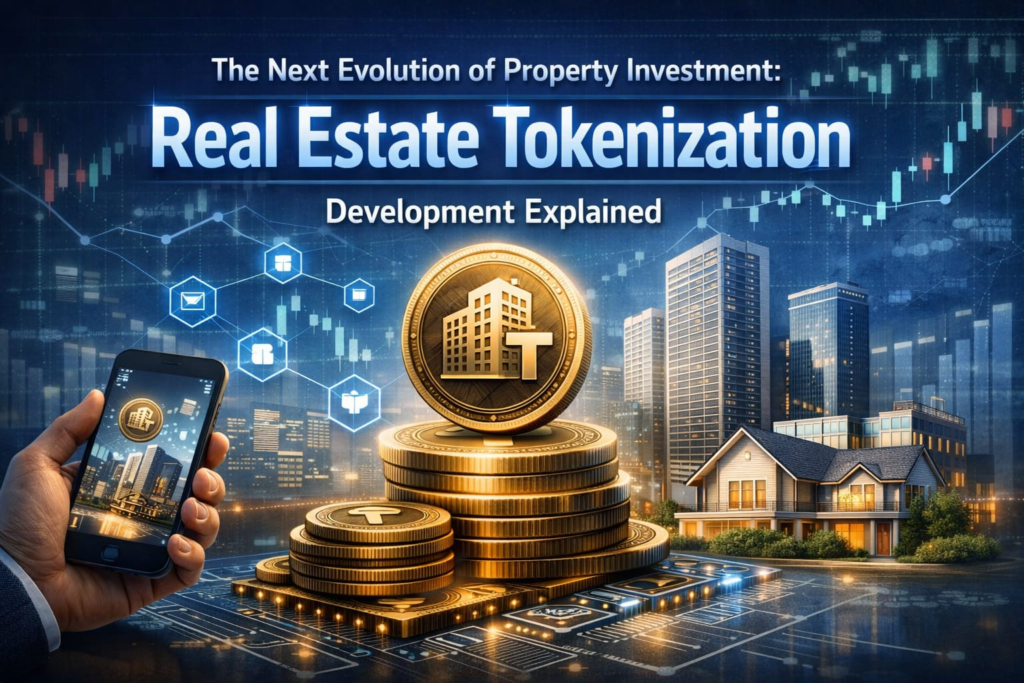
The real estate sector has traditionally been one of the most valuable yet least liquid asset classes in the global investment ecosystem. High entry barriers, lengthy transaction cycles, fragmented ownership structures, and limited accessibility have historically restricted participation to institutional investors and high-net-worth individuals. However, the emergence of blockchain-powered tokenization is introducing a new framework for property ownership and capital formation.
Real estate tokenization represents the process of converting ownership rights in a physical property into digital tokens recorded on a blockchain network. These tokens can represent fractional ownership, allowing investors to purchase and trade portions of a real estate asset rather than acquiring an entire property. As digital asset infrastructure matures, tokenization is increasingly being viewed as the next evolutionary phase of property investment.
Understanding the Foundation of Real Estate Tokenization
At its core, real estate tokenization combines traditional property rights with distributed ledger technology. Instead of relying exclusively on conventional ownership documentation and intermediaries, ownership interests are represented through programmable digital tokens.
Each token corresponds to a predefined share of an underlying asset, creating a transparent ownership structure that can be verified on-chain. Smart contracts automate administrative processes such as ownership transfers, investor distributions, compliance checks, and governance mechanisms.
This approach creates a digital representation of physical assets while maintaining legal ownership frameworks and regulatory compliance requirements. The result is a more efficient and accessible investment environment capable of supporting both institutional and retail participation.
Key Drivers Accelerating Adoption
Several market factors are contributing to the growing interest in tokenized property investments:
- Increased demand for fractional ownership opportunities.
- Growing institutional acceptance of blockchain-based assets.
- Enhanced transparency through immutable transaction records.
- Reduced operational inefficiencies associated with traditional property transactions.
Improved accessibility for global investors seeking diversified real estate exposure.
In addition, investors are increasingly looking for alternatives that offer liquidity without sacrificing exposure to stable, income-generating assets. Tokenization addresses this requirement by enabling smaller investment increments while maintaining a connection to underlying real-world assets.
As regulatory frameworks continue to evolve across various jurisdictions, confidence in tokenized investment models is expected to strengthen further.
The Technology Infrastructure Behind Tokenized Properties
The success of a tokenized real estate ecosystem depends on a sophisticated technology stack that integrates blockchain infrastructure, compliance systems, asset management tools, and investor portals.
A comprehensive Real estate tokenization platform development strategy typically includes digital identity verification, anti-money laundering controls, smart contract deployment, investor onboarding modules, token issuance mechanisms, and secondary trading capabilities.
Blockchain networks provide the foundational layer for recording ownership transactions, while smart contracts automate operational workflows. These programmable agreements reduce reliance on manual processes and minimize the risk of administrative errors.
Additionally, advanced reporting systems provide stakeholders with real-time visibility into ownership records, transaction history, and asset performance metrics, creating a higher degree of transparency than many traditional investment structures.
Benefits for Investors and Asset Owners
Tokenization creates value for multiple stakeholders across the real estate ecosystem.
For investors:
- Lower capital requirements enable broader market participation.
- Fractional ownership supports portfolio diversification.
- Enhanced transparency improves trust and decision-making.
- Potential secondary market trading can improve liquidity.
For property owners and developers:
- Access to a wider pool of investors.
- Faster fundraising and capital deployment.
- Reduced dependency on conventional financing channels.
- Streamlined asset management and ownership administration.
By digitizing ownership structures, asset owners can unlock previously inaccessible capital while investors gain exposure to opportunities that may have been beyond their financial reach in traditional markets.
Challenges and the Road Ahead
Despite its significant potential, real estate tokenization remains an evolving market. Regulatory uncertainty, jurisdiction-specific compliance requirements, asset valuation standards, and investor education continue to present challenges for widespread adoption.
Another critical consideration is interoperability between blockchain networks and traditional financial systems. The long-term success of tokenized property markets will depend on seamless integration between digital asset infrastructure, legal frameworks, and institutional investment processes.
However, industry momentum continues to grow as governments, regulators, technology providers, and financial institutions explore practical implementation models. Improvements in digital identity solutions, smart contract security, and regulatory clarity are steadily strengthening the foundation for broader adoption.
Looking ahead, tokenized real estate has the potential to reshape how property assets are financed, owned, managed, and traded. By introducing greater accessibility, operational efficiency, and liquidity into a historically illiquid asset class, tokenization is positioning itself as a transformative force in the future of global property investment. As blockchain infrastructure matures and regulatory ecosystems become more defined, tokenized real estate could emerge as a mainstream investment vehicle rather than a niche innovation.