
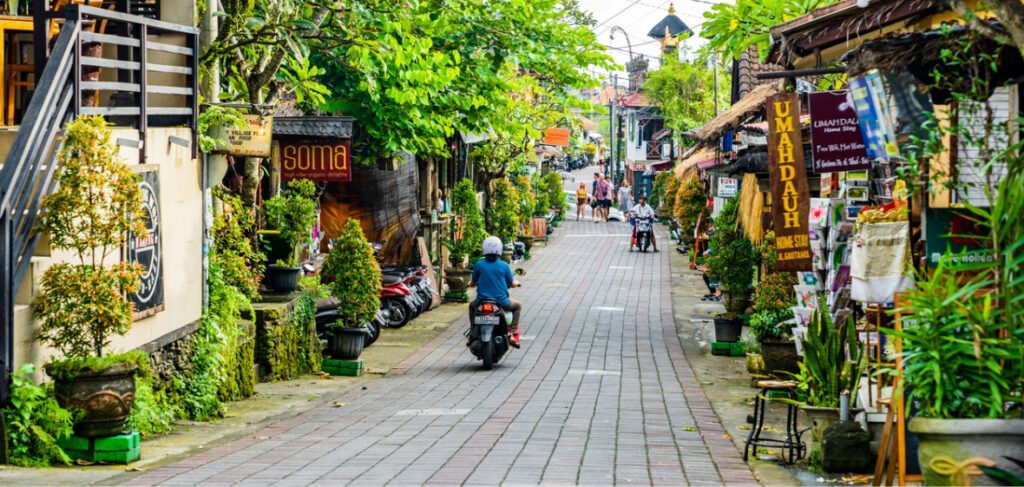
As property prices in Sydney and NSW more broadly, make home ownership and property investment unaffordable for many, there’s been a spike in the number of Australians purchasing property in Bali. The post-pandemic trend has seen Australians buying up villas and apartments in new developments, many of which are the projects of Australian owners and construction businesses. A number of development operations have started in places like Ubud and Uluwatu, offering luxury strata properties at significantly lower costs than in Sydney.
In media reports and anecdotally, Australians who have invested in housing in Bali have experienced delays, changing laws and regulations regarding zoning and tax, or unexpected faults resulting from the high humidity and comparatively less stringent building standards in Bali compared to NSW.
LSJ Online spoke with Lydia Santoso, Partner at Nicholas George Lawyers, National Vice President of the Australia Indonesia Business Council, and Board Chair of the Australia-Indonesia Institute (part of DFAT). Santoso was born in Indonesia and grew up in Cessnock, in the Hunter Valley. She has practised law in both Sydney and Jakarta and has extensive experience across Australian businesses with interests in Indonesia.
Santoso gives the disclaimer that she is an Australian qualified lawyer that specialises in Australian and Indonesian law, however any Indonesian Legal advice must be obtained from an Indonesian qualified lawyer. She adds that her responses cannot be relied upon as legal advice.
Santoso explains that Nicholas George Lawyers regularly receives enquiries, particularly following school holiday periods, from people who have visited Bali, attended property presentations or have been approached directly by developers promoting investment opportunities.
“After discussing the proposed investment and undertaking some preliminary due diligence, many clients ultimately decide not to proceed with the purchase,” she says.
“In other cases, clients choose to pursue the transaction without our involvement. Where our due diligence identifies legal, structural or commercial concerns, we have frequently advised clients that, in our opinion, the risks outweigh the potential benefits and that they should reconsider proceeding with the investment.”
The firm’s role, she explains, is not to discourage investment in Indonesia, since there are many legitimate opportunities, but rather to ensure that clients fully understand the legal structure, the risks involved and exactly what rights they are acquiring before committing significant capital.
Critical to have expert legal advice
The laws in Indonesia and NSW, or Australia generally, are significantly different and Australian purchasers who are new to real estate buying or unfamiliar with buying property in Indonesia need to seek expert advice to ensure the contracts they’re reviewing, let alone signing, are comprehensive, genuine, and legal.
Indonesian legislation, and its Constitution, are based upon the principle that land is subject to the state’s right to control and will be utilised for the greatest benefit of the people.
In Law No. 5 of 1960 on Basic Agrarian Principles, as amended (“Indonesian Agrarian Law”), the primary framework of land rights, imposes limitations on foreign ownership.
The five key meanings of land rights are:
- Hak Milik (“Right of Ownership”);
- Hak Guna Bangunan (“Right to Build”);
- Hak Pakai (“Right to Use”);
- Hak Guna Usaha (“Right to Cultivate”); and
- Hak Pengelolaan (“Right to Manage”).
Each of these rights differs in terms of duration, transferability, and eligibility of the holders.
In terms of strata property, the strata title system, known as Hak Milik atas Satuan Rumah Susun (“HMSRS”), allows for individual ownership that also includes proportional rights over common elements, including common areas, common objects, and the underlying plot of land. The legal framework for HMSRS is primarily governed by Law No. 20 of 2011 on Apartments as amended by Law No. 6 of 2023 and its implementing regulations.
Santoso says, “I tend to err on the side of caution when advising clients on purchasing property in Bali.”
She explains that historically, many Australians acquired property through nominee arrangements, where an Indonesian citizen was registered as the legal owner on behalf of the foreign purchaser.
“Those arrangements are expressly prohibited under Indonesian law and expose foreign buyers to significant legal risk,” Santoso says.
“The market then shifted towards long-term leasehold structures, which, when properly documented, can provide a far greater degree of legal certainty. In fact, we have tested the enforceability of a leasehold arrangement in the Indonesian courts. In a property dispute involving a Bali property that was heard in the Surabaya courts, the court upheld the foreign purchaser’s lease agreement, demonstrating that a properly structured lease can be recognised and enforced.”
Nonetheless, Santoso explains that the market has evolved again, and many developments are now being structured in increasingly complex ways. Rather than simply purchasing a leasehold interest, buyers are often presented with a web of interrelated agreements—construction agreements, management agreements, leaseback agreements, shareholders’ agreements and other contractual arrangements.
She says, “While these documents may appear comprehensive, they do not necessarily provide the buyer with a direct legal interest in the underlying land or property. In some cases, the complexity appears designed to obscure the true nature of the transaction rather than protect the purchaser.”
Her advice is always to undertake independent due diligence rather than relying solely on the developer’s marketing material or legal advice provided by parties associated with the project. Many of the developers advertising online wrap sales, property management, finance and in-house legal teams into their offer.
“Understanding exactly who owns the land, what rights are being granted and whether those rights are capable of being enforced is critical.”
Santoso says, “Indonesian property law is complex for Indonesian nationals, let alone for foreign investors. It is common to encounter multiple layers of ownership, head leases, subleases and contractual interests sitting over the same parcel of land. Understanding exactly who owns the land, what rights are being granted and whether those rights are capable of being enforced is critical.”
Equally important is knowing who you are dealing with. There are many reputable developers operating in Bali, but there are also operators looking to capitalise on the current demand by selling products that are poorly structured or unsustainable.
“Buyers should carefully investigate the developer’s track record, the quality of previous projects, the financial standing of the developer and the reputation of the builder,” says Santoso.
Many of the investment property businesses in Bali promise returns based on 98 per cent occupancy for short-term tourism rentals throughout the year. This is an environment in which buildings are exposed to high humidity, intense monsoon rains, partnered with dubious drainage and flood protection, and coastal salinity. These factors can exacerbate wear on electrical, plumbing, and wooden structures. Common maintenance issues include mould and mildew, wood rot, leaky roofs, and termite damage.
Santoso says, “I would treat guaranteed rental returns with a healthy degree of scepticism. Guaranteed leaseback returns that appear exceptionally high often warrant closer scrutiny. In many cases, the promised returns are paid for the first one to five years, but once that guarantee expires, buyers can be left with a property that has been poorly constructed or inadequately maintained, requiring substantial remedial works and significantly reducing its long-term investment value.
“In short, my advice is simple: know your developer, conduct thorough due diligence on the land and its legal status, understand the ownership structure, know who is building the project, and avoid developments involving unnecessarily complicated layers of leases, subleases or contractual arrangements that obscure the rights you are actually acquiring.”
At the same time, changes to Capital Gains Tax (CGT) and negative gearing from 1 July 2027 have put the brakes on investors in NSW rental properties.
Santoso says, “We have observed a noticeable slowdown in the number of investors seeking to invest in property in NSW. We have seen a spike in investors who have owned investment properties for a significant period of time wanting to sell before the CGT laws changes in 2027.”
The rental yield in NSW is reportedly 2-4 per cent, whereas Bali developers are claiming an ROI of 10-15 per cent owing to tourist demand and high short-term rental rates.
Santoso says, “There are certainly quality opportunities in the Bali market. The continued growth of online accommodation platforms such as Airbnb and Booking.com has made it easier for well-located, well-managed properties to generate attractive rental returns and achieve high occupancy rates. However, strong returns are not guaranteed and should be assessed against the legal structure of the investment, ongoing management costs, maintenance obligations and the long-term sustainability of the projected income.”
Foreign owners can acquire rights over strata title apartments if eligible
Foreigners can, in certain circumstances, acquire rights over strata title apartments in Indonesia, but there are significant legal restrictions and eligibility requirements.
Santoso explains that under Indonesia’s property laws, including Government Regulation No. 103 of 2015 (as amended by subsequent implementing regulations), a foreign citizen must generally be lawfully domiciled in Indonesia and hold the appropriate immigration status, such as a KITAS or other qualifying residence permit.
“A tourist visa alone is not sufficient,” she says. “Foreign purchasers are also generally expected to demonstrate that they are contributing to Indonesia, for example by carrying on business, working or making an investment in the country.”

In her view, the reality is that there are relatively few strata title developments in Indonesia compared with Australia, and even fewer in Bali.
“The Indonesian strata system is fundamentally different from the Australian model and operates within Indonesia’s broader land law framework,” she says.
Eligibility and requirements for foreign ownership of apartment units is detailed in Government Regulation No. 18 of 2021 on Right to Manage, Land Titles, Apartment Units, and Land Registration. Foreign nationals are permitted to acquire both new and secondary apartment units, though these properties must meet the minimum price thresholds set by the government, which differ according to region and ultimately demand that higher-value properties are the only option.
“Even where a foreigner is eligible to acquire strata title rights, those rights are not held in perpetuity. They are tied to the underlying land rights and are granted for a fixed term. Typically, the initial term is up to 30 years, with the possibility of extensions and renewals subject to the applicable legislation in force at the time and the satisfaction of the relevant legal requirements. Those extensions are not automatic and should never be assumed when assessing the long-term value of an investment.”
“[I]t is essential to verify the title, ownership, zoning, planning approvals, land rights and the developer’s credentials.”
Over the years, Santoso has acted for clients who have relied solely on a developer’s representations. In one case, after they had committed funds, the purchaser found that the property was not located where they believed it to be. The land was subject to zoning restrictions that prohibited the proposed development.
“These issues highlight why independent legal and land due diligence is so important. Before committing to any investment, it is essential to verify the title, ownership, zoning, planning approvals, land rights and the developer’s credentials.”
On the other hand, Santoso says, “I have had clients obtain Indonesian retirement visas and enter into long-term lease arrangements directly with the property owner, for example a 30-year lease with an option to renew. For the right client, and where the lease is properly drafted and supported by due diligence on the land and owner, that structure has worked well so far.”
For Australian buyers, Santoso says investment in apartments or villas in Bali are generally better suited to people who have a genuine connection to Indonesia, understand the limitations of the Indonesian property system, have appropriate visa arrangements, and are not relying solely on the property as a speculative investment.
“They are less suited to buyers who expect the same protections, liquidity and certainty they would receive when purchasing property in Australia.”