
For decades, international property investment followed a familiar pattern. Investors selected a destination, purchased property, and relied on capital appreciation or rentals to generate returns. Success often depended as much on the owner’s ability to market, maintain and operate the property as on the quality of the real estate itself.
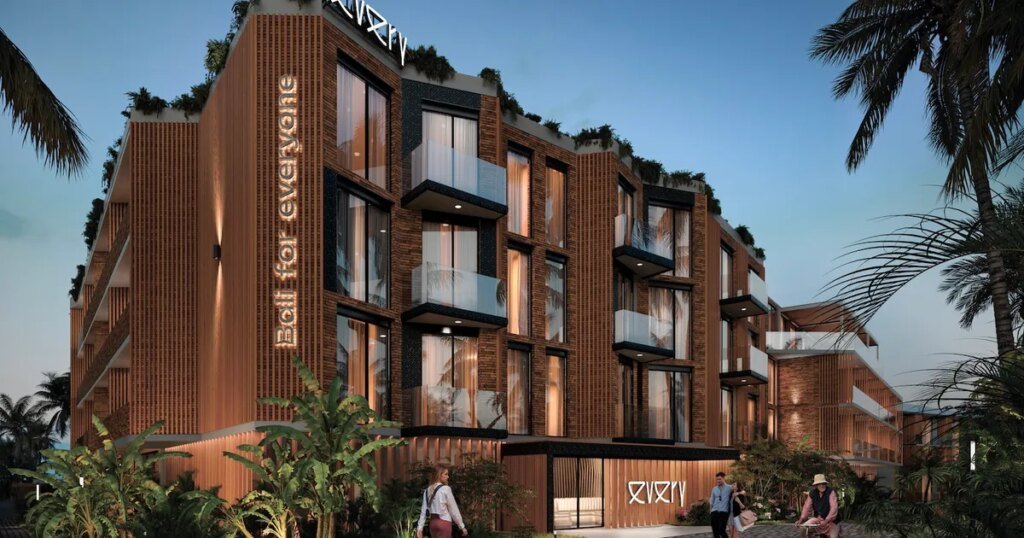
In Bali, projects such as EVERY Bali illustrate one example of how this model is evolving. Investors are increasingly looking beyond ownership alone and evaluating complete investment ecosystems, where professional management, integrated amenities, operational efficiency and long-term community planning work together to support both asset value and rental performance.
This shift is particularly visible in Bali, long one of Asia’s most desirable destinations and now a global hub for tourism, remote work, entrepreneurship and lifestyle migration. As investor interest continues to grow, professionally managed residential developments are emerging as an increasingly attractive proposition for those seeking passive income alongside long-term capital appreciation.
The trend reflects a broader transformation in real estate investing. Modern investors are asking not simply, “Is this a good property?” but “How effectively can this property perform over the next decade?”
Bali’s Investment Story Has Entered a New Phase
Bali’s popularity as a travel destination is well established, but the island’s investment appeal today extends far beyond tourism.
International arrivals have continued to recover strongly following the pandemic, supported by Indonesia’s economic resilience and renewed investment in tourism infrastructure. At the same time, the island has become one of Southeast Asia’s leading destinations for entrepreneurs, remote professionals, retirees and long-stay international residents, creating demand that extends well beyond traditional holiday accommodation.
According to the World Travel & Tourism Council (WTTC), travel and tourism remain among Indonesia’s most significant economic sectors, supporting millions of jobs while contributing substantially to national GDP. Meanwhile, the International Monetary Fund (IMF) continues to project resilient economic growth for Indonesia relative to many regional peers, providing a stable macroeconomic backdrop for long-term investment.
This combination of economic growth, international mobility and lifestyle demand has encouraged increasing interest in Bali property investment, particularly in residential developments designed specifically for both owner occupation and professionally managed rental operations.
Investors Are Buying More Than Real Estate
One of the most significant changes in international property investment is that buyers are no longer purchasing only buildings.
They are investing in experiences, communities and operational capabilities.
Modern developments increasingly incorporate features that were once considered optional: active lifestyle infrastructure, landscaped public spaces, co-working environments, restaurants, retail, recreational amenities and technology-enabled property management.
These elements are not merely lifestyle additions. They influence occupancy rates, tenant satisfaction, operational efficiency and ultimately long-term investment performance.
Research by JLL and Savills has highlighted how mixed-use and integrated developments are becoming more resilient investment assets, particularly in markets experiencing sustained international demand. This trend is echoed by PwC and the Urban Land Institute, which point to growing investor emphasis on operational quality and professionally managed assets as markets evolve.
For investors living thousands of kilometres away from their property, the surrounding ecosystem often becomes just as important as the individual unit itself.

The Rise of Managed Real Estate
Perhaps the biggest structural shift in overseas property investment is the growing role of professional management companies.
Owning rental property abroad traditionally required significant personal involvement. Owners frequently needed to coordinate bookings, arrange maintenance, manage cleaning, supervise repairs, oversee guest communication and navigate local regulations.
Today, professional management companies increasingly handle many of these responsibilities on behalf of investors.
Their responsibilities typically include:
● dynamic pricing strategies based on market demand
● marketing across online booking platforms
● reservation management
● guest services
● property maintenance
●financial reporting
● regulatory and tax administration
This approach can simplify ownership while allowing investors to participate in the rental market without becoming full-time operators.
EVERY Bali reflects this shift directly, combining private ownership with hospitality-led operations rather than the individually operated rental model that has long defined Bali’s residential market. The result positions the project within Bali’s emerging managed real estate segment.
Infrastructure Is Becoming an Investment Consideration
Reliable utilities, transport access, security systems, recreational facilities and environmental resilience all influence long-term property performance.
For international buyers, infrastructure also contributes to operational continuity. Developments capable of maintaining reliable services during periods of high demand or adverse conditions may provide greater confidence for both residents and rental guests.
The EVERY Bali development illustrates this broader direction. According to project documentation, the masterplan combines 88 villas with private pools and 140 apartments across approximately 3.5 hectares, alongside landscaped parks, retail services, children’s amenities, autonomous water and energy systems, and active living infrastructure. Planned facilities include a 1.5-kilometre running track, fitness and spa facilities, a semi-Olympic 25-metre swimming pool, retreat and recovery spaces, a yoga pavilion, co-working areas and dining venues designed to support both residents and visitors.
Wellness Has Become an Economic Driver
The growing emphasis on wellness is reshaping real estate markets worldwide.
The Global Wellness Institute estimates that the wellness economy continues to expand across multiple sectors, including residential communities specifically designed around healthier lifestyles.
Investors are recognising that these features are not just amenities but performance drivers. Walking paths, fitness facilities, meditation spaces, green landscaping and outdoor recreation contribute to the appeal of residential communities drawing a broader spectrum of tenants, from digital professionals and families to retirees and long-stay visitors, and supporting stronger occupancy and retention over time.
For EVERY Bali, wellness is not treated as a decorative layer added to a residential project. The concept is built around a restorative lifestyle, active living and the development of a sports-oriented community, with infrastructure intended to support daily movement, vitality, social connection and longer stays.
“EVERY Bali is designed as a place for like-minded people,” said Vsevolod Karabaev, Executive Director of EVERY Bali. “We are not just building villas and apartments with wellness facilities. We are creating a community where sport, recovery and hospitality work together as part of one lifestyle and investment concept.”
Rather than serving only recreational purposes, these amenities may support occupancy and tenant retention by aligning with evolving lifestyle preferences.
As international mobility continues to increase, lifestyle quality is becoming a competitive advantage within residential real estate.
Why Pre-Sale Opportunities Continue to Attract Investors
Pre-sale investment has long been a recognised strategy across international property markets.
Purchasing during the construction phase often allows investors to enter a project before completion, potentially benefiting from staged payment structures and future capital appreciation if market conditions remain supportive.
Naturally, pre-sale investments also involve risks. Construction schedules, financing conditions, regulatory developments and market demand can all influence eventual outcomes.
For this reason, investors increasingly evaluate not only pricing but also developer experience, legal structures, project governance and construction quality.
According to EVERY Bali’s published information, the project is preparing to launch its pre-sale in August 2026 and offers multiple payment options, including staged instalments, with construction of the first phase scheduled for completion in H2 2027.
Due Diligence Remains Essential
Regardless of location, successful international property investment begins with careful due diligence.
This extends well beyond reviewing brochures or projected returns.
Experienced investors typically examine:
● land tenure arrangements
● legal ownership structures
● developer track record
● planning approvals
● taxation
● financing
● management capability
● construction quality
● local market demand
● long-term exit strategies
Professional legal and financial advice remains particularly important when investing across jurisdictions.
As international property investment becomes more sophisticated, governance, regulatory compliance and operational transparency are becoming increasingly important considerations alongside location and pricing. Investors are placing greater emphasis on understanding how projects are structured, managed and overseen throughout their lifecycle.
According to EVERY Bali’s documentation, the project combines legal, architectural and construction support through partners including Bali Business Consulting, ATOM Architectural Group and UMIRA SYNERGY GLOBAL. The development also outlines a leasehold arrangement for up to 60 years, consisting of an initial 40-year term with a guaranteed 20-year extension mechanism.
Permitted use is also part of how EVERY Bali is set up: the development sits within the R-4 low-density residential subzone and is supported by documentation covering accommodation formats including Pondok Wisata and short-term lodging operations. The developer also describes a transaction model that separates land and building components, creating a more efficient entry structure for selected units.
Nevertheless, every investor should undertake independent legal, financial and tax advice appropriate to their individual circumstances before making any investment decision.
Integrated Communities May Offer Long-Term Advantages
Another emerging trend is the preference for community-based developments.
Historically, many overseas buyers focused primarily on the individual property itself.
Today, investors are paying greater attention to the surrounding environment.
Questions increasingly include:
● Will residents have access to everyday services?
● Is the community likely to remain attractive over time?
● Are there opportunities for recreation, work and social interaction?
● Does the development encourage longer stays rather than short visits?
Integrated communities may support this by combining residential accommodation with services, recreation and operational infrastructure.
For EVERY Bali, the community aspect is also closely tied to location. The project is situated in Ungasan on Bali’s Bukit Peninsula, a market that combines tourism demand with a growing residential and long-stay audience. Its proximity to Melasti Beach, Garuda Wisnu Kencana cultural park, international schools and major attractions means the development draws more than short-term visitors, appealing also to families, remote professionals and buyers considering repeated personal use.
This location also supports the broader concept of an integrated community. Rather than functioning only as a holiday property, EVERY Bali is positioned as a managed environment where active living, work, recreation and hospitality can co-exist within reach of established lifestyle, education and tourism infrastructure.
Whether this model becomes the dominant direction for international residential investment remains to be seen, but market demand strongly suggests that investors value it more than simply attractive architecture.
Technology Is Quietly Improving Property Operations
Although technology rarely dominates conversations about residential real estate, it is progressivelyshaping operational performance.
Dynamic pricing systems can respond to changing market conditions.
Digital booking platforms broaden international visibility.
Property management software improves maintenance scheduling.
Financial reporting systems increase transparency for owners.
Mobile applications can enhance communication between residents, operators and service providers.
For managed real estate projects, these tools are becoming part of the investment infrastructure itself. In the case of EVERY Bali, the planned management model is designed to connect rental pricing, online distribution, guest services, maintenance, owner reporting and tax administration within one coordinated operating model. For international buyers, this matters because the performance of a rental property depends not only on location and design, but also on how consistently the asset is managed after completion.
These operational improvements may appear incremental individually, but collectively they contribute to a more efficient investment environment.
As rental markets become more competitive, operational excellence may become just as important as physical design.
Looking Beyond Traditional Property Ownership
Bali’s continuing evolution reflects a broader shift in international real estate investment. While the island remains synonymous with tourism and lifestyle, it is also becoming a case study in how professionally managed communities, integrated infrastructure and long-term operational excellence are reshaping investment priorities.
As global property markets evolve, investors are more and more evaluating not only the quality of individual assets but also the operational ecosystems that support them. For those seeking international diversification, the future may lie not simply in buying property, but in investing in communities designed to generate sustainable long-term value through thoughtful planning, professional management and resilient operations.