
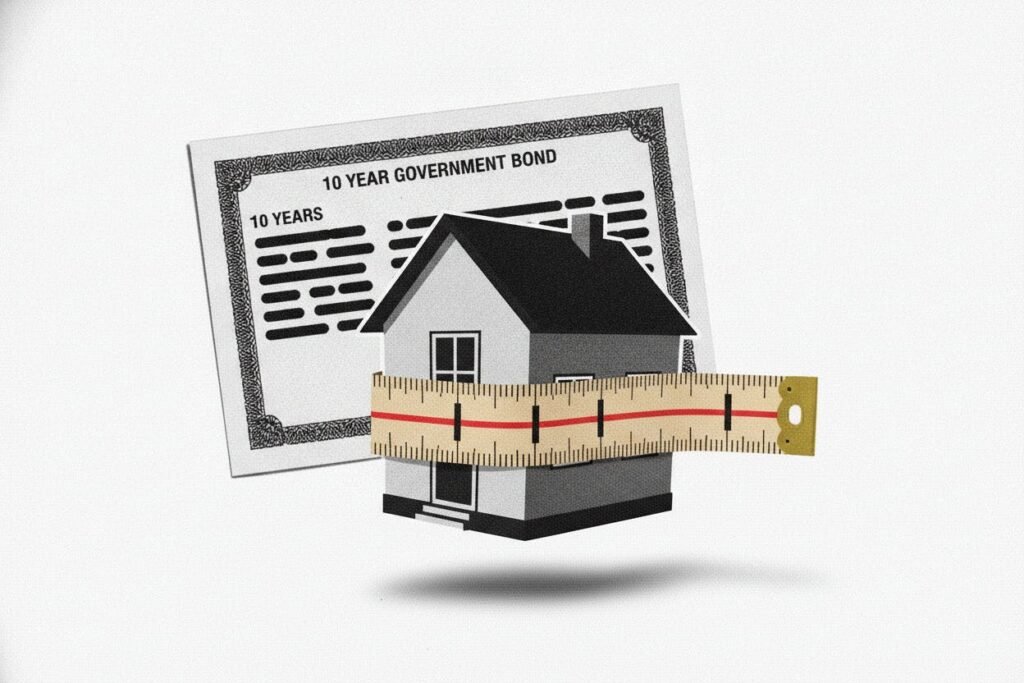
returns on mortgage-backed securities – bundles of home loans sold to investors – and lenders respond by raising the rates they quote to new borrowers. Oil’s rebound matters too: pricier energy can keep overall inflation sticky, which makes markets more open to the idea that the Federal Reserve could keep rates higher for longer. Even if the Fed doesn’t move at its next meeting, expectations alone can push bond yields around, and that shows up quickly in mortgage offers.
Why should I care?
For you: A 6.69% 30-year fixed rate can shrink your budget before you tour a single home.
Mortgage rates don’t move just because a central banker speaks. They often follow longer-term bond yields, especially the 10-year Treasury, plus an extra margin lenders add for risk and operating costs. So when that 10-year yield rises, the monthly interest cost per dollar borrowed usually rises with it, which means the same paycheck qualifies for a smaller loan. In practice, that can force trade-offs: a lower price range, a bigger down payment, or a higher monthly payment to buy the same place. It also means that if markets keep pricing in at least one quarter-point Fed hike by year end, housing affordability can tighten well before the Fed actually changes its policy rate.