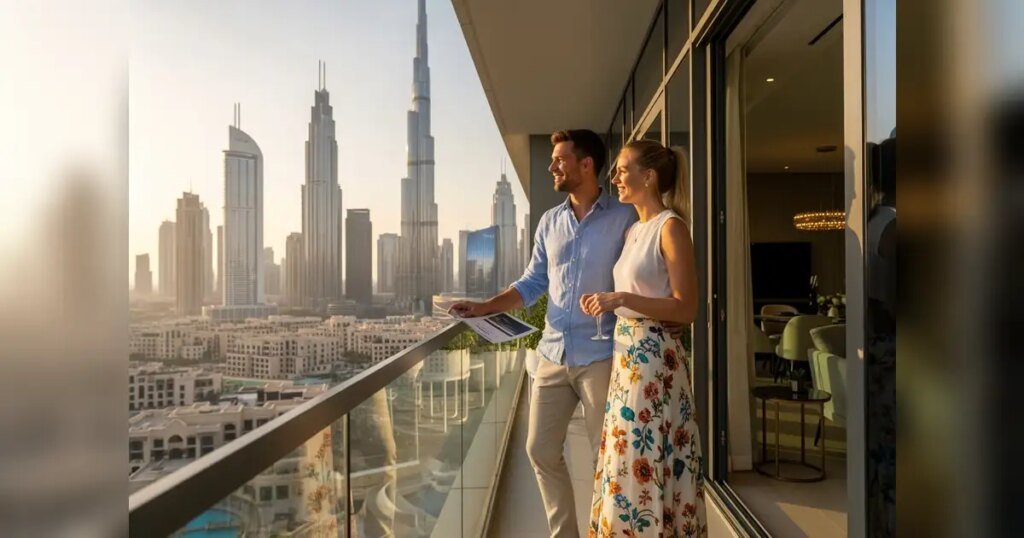
The UAE’s real estate market has been one of the standout growth stories of recent years. Record transaction volumes, rising property values, and strong international demand have helped position the country among the world’s most attractive destinations for real estate investment. Increasingly, the sector is being shaped by factors that extend beyond short-term market momentum.
While regional geopolitical tensions continue to create uncertainty across global markets, the UAE property sector has remained remarkably steady. Investor interest has held firm, transaction activity remains strong, and a growing number of buyers are entering the market with a longer-term perspective rather than a short-term speculative mindset.
Several structural factors are helping support this evolution. Population growth, long-term residency programmes, ongoing infrastructure development, and an expanding base of resident investors are contributing to a market that is becoming increasingly mature and fundamentally driven.
According to Arada’s UAE Property Investment Index, conducted by US-based Penta Group, the UAE ranked as the world’s most attractive real estate investment destination. The survey found that 56% of global investors expressed serious interest in the country’s property market, ahead of the United States, the United Kingdom, France, and Spain. Investors cited strong returns, stability, tax efficiency, and accessibility among the key factors underpinning the market’s appeal.
The findings come as the UAE continues to invest heavily in its future, from the Dh34 billion Dubai Metro Gold Line and the world’s first commercial air taxi network to the Dh6 billion Fourth Federal Corridor project. Together, these developments are strengthening connectivity, supporting economic growth, and reinforcing the country’s appeal as a destination for investment and long-term residency. As a result, the conversation around UAE property is beginning to evolve. Rather than focusing solely on short-term gains, investors are increasingly paying attention to factors such as infrastructure, quality of life, community development, and sustainable value creation. In many ways, the market’s greatest strength today may not be the pace of its growth, but the foundations on which that growth is being built.

From Speculation to Stability
One of the clearest indicators of the market’s evolution is the changing profile of buyers entering the sector. Increasingly, purchasing decisions are being driven by factors such as lifestyle, long-term residency, wealth preservation, and community quality rather than short-term price appreciation alone.
Ravi Menon, Chairman of Sobha Group, believes this shift is evident in the questions buyers are asking.
“Investors are no longer looking only at short-term price appreciation; they are evaluating fundamentals such as developer credibility, delivery track record, construction quality, community planning, infrastructure, sustainability, and long-term liveability,” he said.
According to Menon, the market is attracting a broader demand base that includes end-users, long-term residents, entrepreneurs, family offices, and global high-net-worth individuals who increasingly view Dubai as a place to live, work, preserve wealth, and build a future.
Shiv Mahajan, CEO of Rently UAE, said one of the biggest changes in recent years is that people are no longer coming to Dubai simply to buy property.
“Increasingly, they are coming to build a life here,” he said. Mahajan noted that buyers and tenants are paying closer attention to factors such as community quality, schools, transport connectivity, sustainability, and long-term affordability rather than focusing solely on price appreciation. “Those are typically the signs of a more mature market because they reflect genuine end-user demand,” he added.
Peter Matthews, Group CEO of Century 21 UAE and India, points instead to the framework supporting the market’s expansion. “The transaction numbers are remarkable in their own right, with over 270,000 transactions in 2025 and Dh917 billion in total value. What matters even more is the framework supporting the sector’s growth,” he said.
Matthews highlighted initiatives such as the Dubai Real Estate Strategy 2033, evolving licensing frameworks, and the Golden Visa programme as evidence of a market being deliberately structured for long-term sustainability rather than short-term growth. Regulation and governance have also played a significant role in shaping the sector’s evolution. Menon noted that Dubai’s regulatory environment has strengthened considerably over the years through greater transparency, escrow protections, and clearer governance structures, helping create confidence among both local and international investors.
For Arif Abdul Latif, Founder and Chairman of Arif Developments, said the market is increasingly defined by strategic capital allocation and wealth preservation.
“The UAE’s real estate sector is increasingly defined by strategic capital allocation, wealth preservation, and long-term value creation rather than short-term speculation,” he said.
He added that investment decisions today are being influenced by lifestyle considerations, community integration, asset quality, and future appreciation potential, reflecting what he describes as the characteristics of a mature market.
The resilience of the sector is perhaps most visible in how it has continued to perform despite ongoing geopolitical uncertainty and economic volatility across various global markets.
Nagham Hassan, Market Analyst at eToro, points to the performance of listed developers as evidence of that strength. Emaar reported first-quarter 2026 revenue of Dh12.4 billion and Dh163.4 billion in future sales, while Aldar reported Dh33.2 billion in available liquidity and a development backlog of Dh72.1 billion.
“These are not companies riding a speculative wave, they are businesses with contracted, predictable income streams that do not depend on the market staying hot to survive,” Hassan said.
She also noted that more than 29,000 new investors entered Dubai’s property market during the first quarter of 2026, while residents now account for more than half of all investment by value.
“When the people who actually live in a market become its biggest buyers, speculation has given way to something more durable,” she said.
Buyer Sentiment
Imran Khan, Founder and CEO of PIXL Group and Invespy, believes this resilience is one of the strongest indicators of maturity. “Mature markets are not defined by uninterrupted growth; they are defined by how they absorb shocks and recover,” he said.
According to Khan, today’s investors are placing greater emphasis on rental performance, community quality, infrastructure, and developer credibility than on quick exits and short-term gains.
While confidence in the market remains strong, the way investors assess opportunities is changing. Buyers are becoming more selective, carrying out deeper due diligence and placing greater emphasis on factors such as developer credibility, construction quality, community fundamentals, and long-term value creation.
Menon believes this shift is a reflection of growing market maturity. “Over the past year, buyer sentiment has become more considered, but not weaker. Investors are asking more detailed questions around delivery certainty, developer credibility, construction progress, liquidity, and long-term value. This is a healthy sign of market maturity rather than hesitation,” he said.
Menon added that many buyers are increasingly purchasing for lifestyle, residency, wealth preservation, and family security rather than short-term appreciation, with sustained demand for integrated communities that offer strong liveability, sustainability, connectivity, and confidence in delivery.
For Matthews, the resilience of the market reflects a much broader shift in how buyers view the country itself. “People increasingly view the UAE as somewhere to establish themselves rather than simply park capital,” he said.
Matthews argues that recent geopolitical uncertainty has, in some cases, strengthened the UAE’s appeal. During periods of instability, investors often gravitate towards markets that offer predictability, safety, and a clear long-term vision. He notes that first-quarter 2026 transaction volumes rose by 31% year-on-year despite ongoing regional challenges, describing this as evidence that investor confidence is increasingly structural rather than cyclical.
Abdul Latif shares a similar view, describing the UAE as a global sanctuary for capital, talent, and enterprise.
“Over the past year, buyer sentiment has evolved from opportunistic investment to strategic ownership. Investors are becoming more discerning, placing greater emphasis on location fundamentals, developer reputation, construction quality, and long-term asset sustainability,” he said.
Beyond policy and regulation, demographic and economic fundamentals continue to support confidence. Mahajan highlights population growth, strong tourism performance, increasing talent inflows, and continued expansion across non-oil sectors as important drivers of genuine demand for both residential and commercial real estate.
According to Mahajan, investors today are becoming more selective and informed. Conversations are increasingly centred around rental yields, long-term income generation, infrastructure pipelines, community quality, and future demand drivers rather than rapid price appreciation alone.
“That is actually a healthy sign for the market because mature real estate markets are typically built on informed, long-term decision-making rather than short-term momentum alone,” he said.
Khan believes the distinction between sentiment and confidence is critical when assessing the market’s outlook. “Sentiment can be affected by headlines and short-term events, but confidence is built over years through policy, governance and economic performance,” he said.
The Next Phase of Growth
As the UAE real estate market continues to expand and new supply enters over the coming years, the next phase of growth will be increasingly shaped by quality, community development, and end-user demand rather than price appreciation alone.
Menon says this evolution is both inevitable and healthy. “In a maturing market, not all supply performs equally. Developments that are well-planned, well-connected, and designed around real community needs will continue to attract stronger demand from both residents and investors,” he said.
Menon believes investors should focus on long-term fundamentals rather than short-term pricing movements.
“They should assess whether a project has strong end-user appeal, reliable delivery, quality finishes, community infrastructure, access to schools, retail, green spaces, and transport links. These factors will increasingly determine asset resilience, rental demand, and long-term value.”
Matthews shares adding, “The next phase of growth will absolutely be shaped more by quality and end-user demand than by price appreciation alone, and that is a healthy evolution,” he said.
“In earlier phases, momentum lifted almost everything. Today, buyers are far more discerning. They pay closer attention to the strength of the community, infrastructure, accessibility, developer credibility, and whether a project genuinely supports long-term living.”
For Abdul Latif, the future of the market will be defined by quality rather than quantity. “Without question, the next chapter of growth will be defined by quality rather than quantity. As the market matures, differentiation will increasingly be determined by the strength of a project’s vision, the quality of its execution, and its ability to create meaningful, enduring communities,” he said.
A similar trend is becoming increasingly visible across the broader market. Buyers are paying closer attention to how communities function and the quality of the overall living experience rather than focusing solely on headline pricing.
“We are already seeing buyers pay much closer attention to how communities actually function day to day rather than simply focusing on unit size or headline pricing,” said Mahajan.
“People increasingly want neighbourhoods where they can live, work, connect, and build a long-term lifestyle, and that shift is only becoming more important.”
Khan expects the next cycle to reward investors who focus on fundamentals.
“I believe the next phase of growth will be defined less by speculation and more by quality. As new supply enters the market, buyers will become increasingly selective and projects will need to compete on fundamentals rather than momentum,” he said.
“The strongest-performing developments will be those that create genuine lifestyle value through thoughtful master planning, strong amenities, connectivity, sustainability and community building.”
Khan added that mature markets eventually remove excess speculation and reward patient capital. “The next cycle will belong to investors who prioritise quality assets, strong developers and long-term fundamentals. Those are the buyers who will benefit most when the market moves into its next phase of growth.”
Not everyone, however, believes investors should focus solely on project-level attributes. Hassan argues that market data remains one of the most important indicators to monitor.
“The best way to read this market is to follow the earnings reports of listed developers through the rest of 2026,” she said. “Four things to watch: how quickly new projects are selling out, whether buyers are keeping up with their payment schedules, whether more residents or international buyers are purchasing, and whether new sales are replacing delivered units in the backlog.”
For Hassan, these metrics will provide the clearest indication of how effectively the market is absorbing new supply.
“That is where the truth is, not in sentiment, but in the data.”