
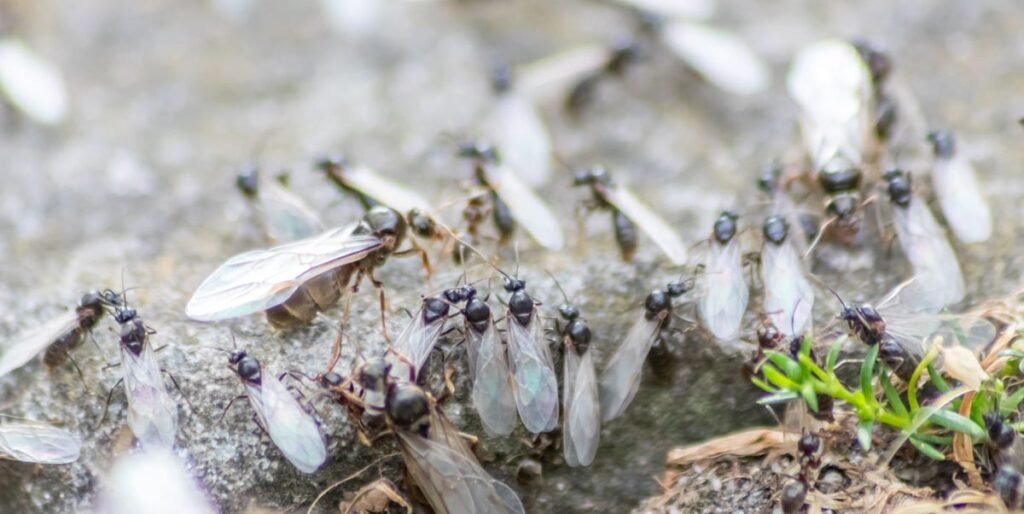
Whether you love it or hate it, it’s an inevitability of summertime: that’s right, Flying Ant Day is back again this year, with many suggesting it could be bigger than ever. The annual UK-wide Flying Ant Day has become somewhat of a national hot topic in recent years, aka the day when seemingly all the ants in the country sprout wings and take to the skies – and our windshields – for an entire day.
But, as is the case with many hot topics, there tends to be a lot of myths flying around the issue – which is where I step in. I’ve been chatting to entomologists and pest-control experts to help set some things straight when it comes to Flying Ant Day. I asked them what it is, if and why this year might be the biggest swarm we’ve seen in years, how to protect our homes and – most pressingly – when Flying Ant Day will arrive this year.
Here’s everything you need to know about Flying Ant Day 2026.
Is Flying Ant Day a myth?

To put it bluntly, yes. ‘Research at the University of Gloucestershire showed there’s no single Flying Ant Day,’ says Professor Hart, an entomologist and professor of science communication at the University of Gloucestershire, who has previously led the Royal Society of Biology’s Flying Ant Survey. So, it’s safe to say he knows a thing or two about our winged friends – and busting the all too common myths that surround them.
‘Instead, thousands of local colonies take flight over several weeks, creating the illusion of one nationwide event.’ So, while it’s a fun idea that these ants somehow mark a date on their calendar to invade, it’s simply not the case.
Professor Hart also informs us of another myth: flying ants are not a separate species. As it turns out, they’re actually the same common ants we see all year round – just their winged reproductive forms. ‘Only the reproductive males and young queens have wings. Their flight is all about finding mates from other colonies, helping to avoid inbreeding and allowing new colonies to be established,’ says Professor Hart.
Are there more flying ants this year?

It’s true, some experts have warned that it’s likely we shall see bigger swarms than usual this year. As is the case with most pest spikes, this is weather dependent. ‘For 2026, the timing looks set to be earlier than usual,’ suggests Adam Juson, founder of Merlin Environmental. ‘This year’s event is expected to occur sooner due to the record-breaking heatwave experienced at the end of May, with specialists warning the annual occurrence will probably come earlier and be more intense than before.’
When asked why it seems there will be so many more flying ants this year, Professor Hart said: ‘Warm temperatures and light winds provide ideal flying conditions. Colonies in the same area experience the same weather, so many launch at around the same time.’ He suggests it’s too early in the season to know for sure if the populations have increased, suggesting that, ‘A warm spring followed by settled summer weather can produce particularly impressive swarms, but that doesn’t necessarily mean there are more ants overall.’
When will Flying Ant Day be?
While we’ve established it won’t occur on exactly the same day for all of us, it is possible to narrow down the window of possible invasion. ‘Based on nine years of Merlin Environmental’s own UK flying ant data, the most statistically likely window for Flying Ant Day 2026 is between 7 July and 20 July, with the peak most often falling in the second or third week of July,’ claims Adam.
‘Other experts predict peak activity between 19 July and 2 August, with the largest swarm most likely around 20 July. In short: expect flying ants from mid-July, sooner in cities and southern regions, and prepare accordingly.’
Are flying ants bad for our homes and gardens?

Now that we know what they are, what they’re doing and when they plan to do it, we can turn our attention to how this flying phenomenon affects us. The answer is: very little. ‘In almost every case, they’re completely harmless. The spectacle is brief, often lasting less than an hour, and the ants disappear as quickly as they arrived,’ says Professor Hart. So, really, the worst they can do is annoy us during a picnic.
In actuality, flying ants and their special day are vital for local ecosystems. ‘Ants are major soil engineers. They help recycle nutrients, disperse seeds in some habitats and provide food for birds and many other animals. Their annual flights are also a huge seasonal feast for predators,’ says Professor Hart.
How to prevent flying ants
But if you’re planning a garden party or a BBQ during peak flying ant season and would rather avoid bugs in your burger, there are a few ways you can deter the ants without causing them harm.
Even Adam admits there’s not a whole lot you can do when a swarm is in motion: ‘The swarm is not responding to your specific property; it’s responding to the weather. You cannot meaningfully intercept a nuptial flight in progress.’ However, there are a few simple measures you can adopt to prevent them entering your home before they take flight. Remember, the best defence is a good offence when it comes to pests.
To help keep flying ants out of your home, focus on making it less inviting:
- Seal any cracks around doors, windows and foundations.
- Fit mesh or magnetic insect screens where possible.
- Keep sugary foods stored in airtight containers.
- Regularly wipe down surfaces, clean up crumbs and spills, empty bins and remove pet food once it’s been eaten.
- Repair leaking pipes and address damp or rotting wood, as moisture can attract certain ant species.
‘What you can do is reduce the number of colonies on or near your premises, seal the routes flying ants would use to enter your building and ensure that any ants that do land nearby don’t find food, water or suitable nesting conditions,’ says Adam. While you can’t prevent Flying Ant Day itself, these simple steps can make it less likely that ants will find their way inside.
But, as Professor Hart puts it, often ‘the best advice is simply to leave them alone. The swarm is a natural event that’s over surprisingly quickly!’ So, sit back and marvel at the annual swarm, appreciating Mother Nature at work.
Ant control buys
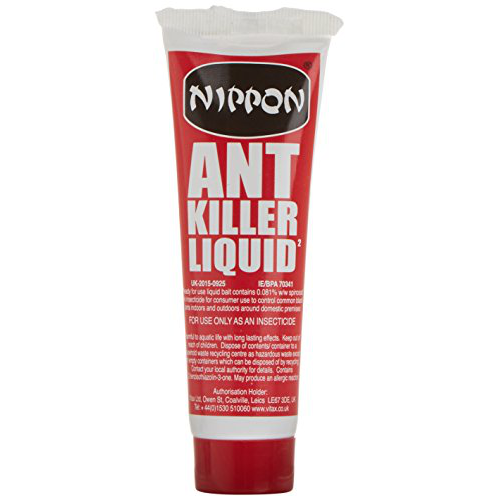
Vitax Nippon Ant Killer Liquid
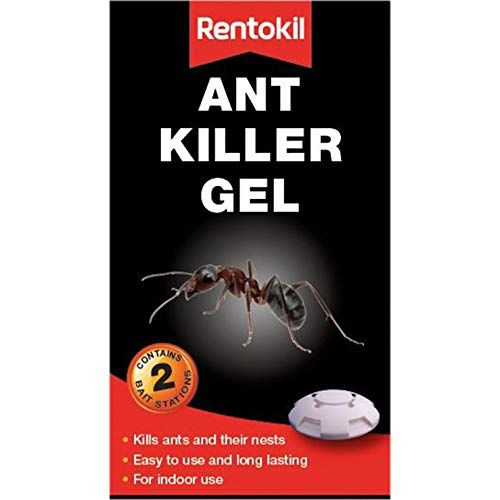
Ant Killer Gel

INCOGNITO AntiMosquito Citronella incense Sticks

Rentokil Insectrol Insect Killer Spray 300ml
Now 23% Off