
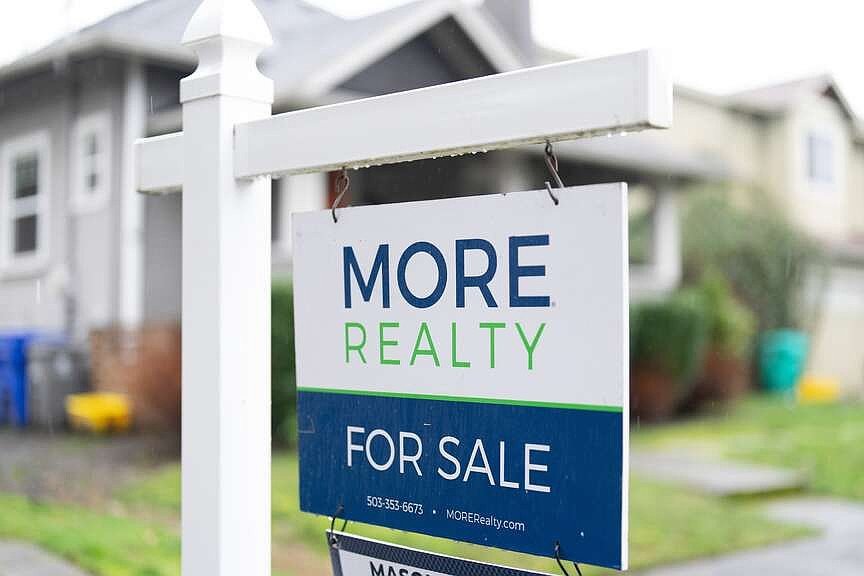
The average long-term U.S. mortgage rate fell this week to its lowest level since mid-May, easing borrowing costs for prospective homebuyers.
The benchmark 30-year fixed rate mortgage rate fell from last week’s 6.49% to 6.43%, the Federal Home Loan Mortgage Corporation mortgage buyer, Freddie Mac, said Thursday. One year ago, the average rate was 6.67%.
The average rate has been mostly hovering around 6.5% going back to mid-May and trending higher overall in the months since the war between the U.S. and Iran began in late February, disrupting the flow of crude oil worldwide. That’s sent oil prices sharply higher, helping drive up inflation, bond yields and mortgage rates.
Despite the modest decline from last week, the average rate is now at its lowest level since May 14, when it was 6.36%.
Borrowing costs on 15-year fixed-rate mortgages, often sought by borrowers refinancing a home loan, also declined this week. That average rate fell from 5.84% to 5.79%. A year ago, it was at 5.8%, Freddie Mac said.
Mortgage rates are influenced by several factors, from the Federal Reserve’s interest rate policy decisions to bond market investors’ expectations for the economy and inflation. They generally follow the trajectory of the 10-year Treasury yield, which lenders use as a guide to pricing home loans.
The 10-year Treasury yield was at 4.46% at midday Thursday on the bond market.
Hope that the United States and Iran may ultimately end their war and reopen the Strait of Hormuz to oil tankers delivering crude has helped lower oil prices, helping ease some of the pressure on bond yields.
Bond yields remain elevated, though. The 10-year Treasury yield was at 3.97% in late February.
As recently as late February, the average rate on a 30-year mortgage had slipped just under 6% for the first time since late 2022. It’s hasn’t fallen below that threshold since. Five weeks ago, it reached 6.53%, its highest level since Aug. 28.
While average long-term mortgage rates remain lower than they were at this time last year, uncertainty about their trajectory amid the war with Iran kept many would-be homebuyers on the sideline.
Sales of existing U.S. homes continue to hovering close to a 4-million annual pace, far short of the historic norm that is closer to 5.2-million.