
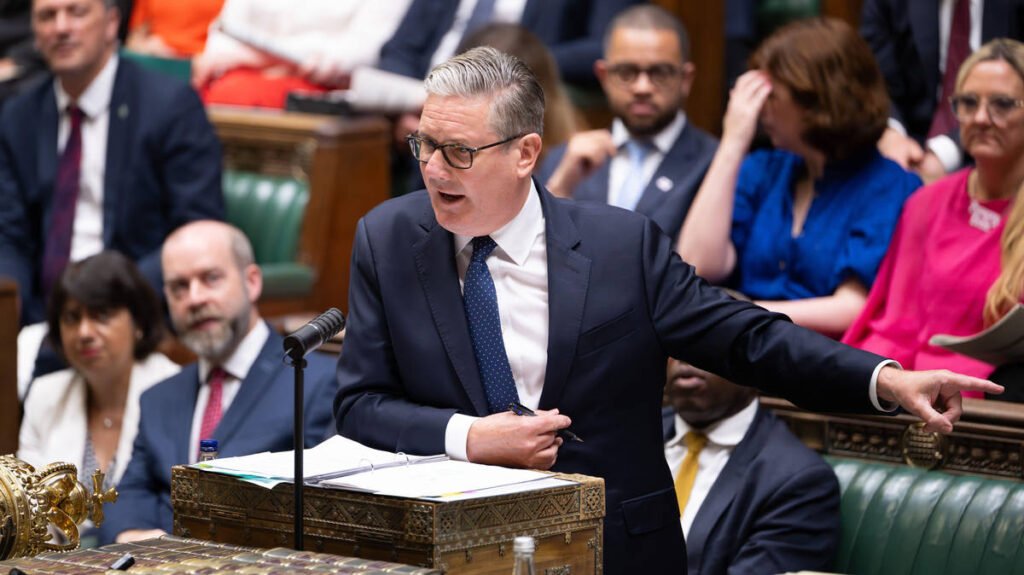
The outgoing Prime Minister has allocated £15bn in funding for defence – around half of the £28bn the Ministry of Defence had asked for

Picture:
Alamy
Details of Sir Keir Starmer’s plan to bolster the country’s defences have been revealed – but top brass have warned the spending plans don’t go far enough.
The outgoing Prime Minister has allocated £15bn in funding for defence – around half of the £28bn the Ministry of Defence had asked for.
But the country’s defences will still be bolstered across land, air and sea within billions flooding over the next few years under Starmer’s plan.
The outgoing Prime Minister’s defence investment plan (DIP) will include £5bn to increase the armed forces’ use of drones and autonomous weapons and also includes plans for a ‘hybrid navy’ with self-controlled vessels and AI alongside conventional warships.
The funding in the Dip also comes on top of the £270 billion promised for defence from 2025/26 to 2028/29.
However, military chiefs will also be forced to find £10.7bn in cuts, with the MoD set to slash funding for infrastructure, with “workforce and resourcing” and Civil Service reform needed.
Chancellor Rachel Reeves said the Treasury still needs to decide where £4.7bn of the £15bn of extra cash will found will come from and will announce this in the next budget.
Former defence secretary John Healey, who resigned earlier this month following a funding row over the DIP, said “more needs to be done in the months ahead” beyond the £15 billion investment.
Read more: Labour’s failure on defence runs deeper than its investment plan
Read more: Starmer’s defence plan will only work if Britain backs its own drone manufacturers, industry warns

Picture:
Alamy
Key funding in the Dip includes:
• More than £8 billion in the Global Combat Air Programme (GCAP) over the next four years, progressing the programme which will build a next-generation stealth fighter jet for the Royal Air Force, alongside our close allies Japan and Italy.
• More than £63 billion over the next four years to strengthen the UK’s nuclear deterrent and to fund Dreadnought and SSN-AUKUS submarines, a new warhead, and other crucial nuclear work. Additionally, we will also purchase 12 F35As and join NATO’s nuclear mission.
• Including elements of the above nuclear investment in the first four years, £26 billion over the next decade in Project Royal Oak – the biggest naval base upgrade for over 45 years, including multi-billion-pound upgrades at Faslane, Portsmouth and Devonport.
• Over £5 billion for the next four years to fund a drone transformation for our Armed Forces. £650 million will deliver inexpensive expendable autonomous systems including drones and uncrewed ground vehicles to rapidly enhance the lethality of the Army, Commando Force and Special Forces.
• Nearly £2 billion will integrate the Armed Forces through a new Digital Targeting Web for decision-making and speed in destroying identified targets.
• £790 million over the next four years to enhance protection of the UK homeland and overseas bases from air, drone and missile threats. The MoD said this will revolutionise command and control and buy new radars and sensors. It will also invest in Directed Energy Weapons, upgrade Sea Viper for our Type 45 destroyers, expand counter drone systems, and build a new Integrated Air, Space and Missile Defence Operations Centre.
• £11 billion on munitions and weapons to increase UK stockpiles, including long-range strike weapons, low-cost cruise missiles and one-way effectors. By 2030, at least six new energetics factories will be built to increase national munitions production capacity.
• £900 million investment to drive efficiency and reform procurement, including a £500 million Transformation Fund to deliver productivity improving investments in AI and workforce transformation
• £100 million for the Prime Minister’s Rapid AI Delivery Taskforce (RAID) to accelerate the deployment of AI-enabled capabilities into the hands of our Armed Forces.

Picture:
Alamy
On top of this, the government is investing £115 million to raise the UK’s defences against the threats from AI, including using AI to improve our biosecurity and mitigate risks posed by autonomous AI agents.
Meanwhile, the British Army’s fleet of Wildcat AH1 helicopters will be retired, along with Storm Shadow missiles, under plans to save money.
The military has also axed plans for a £6bn military communications system known as Skynet 6m which was once lauded as the Government’s biggest space initiative.
Earlier, in the Commons, Healey welcomed the additional money from the Treasury, but added: “Threats are still growing, demands on defence are still rising in this dangerous world, and today’s step means that we will be spending, as a nation, 2.7% of GDP on defence in 2030. The date that Nato now warns we could face a Russian attack.
“So, with European security at stake, would (Defence Secretary Dan Jarvis) agree that more needs to be done in the months ahead beyond the Dip to develop a clear credible funding plan that will hit 3% and that will meet our Nato commitment of 3.5% by 2035?”
Sir Keir said the amount of money in the defence investment plan is “the right choice for the country”, but warned it would mean some road and energy projects will be scrapped.
He added that the defence DIP has reversed the “corrosive hollowing out” of the armed forces.But citrics say say the £15billion extra funding over the next four years is ‘too little too late’, and will include massaged figures.
There is also still no timetable for pushing defence spending to 3 per cent of GDP, let alone the 3.5 per cent the US President and Nato are demanding.
Tory defence spokesman James Cartlidge said: “This is too little too late. Too little because it is barely more than John Healey and Al Carns resigned over, and too late because the plan is almost a year overdue. It is only being rushed through because Keir Starmer is desperate for a legacy.”
General Sir Richard Barrons, a co-author of the 2025 Strategic Defence Review, said today’s plan was “not going to crack the issue” of properly funding the nation’s armed forces.
“It is still not going to crack the issue of, in order to defend the UK sufficiently well, sufficiently quickly, more has to be done sooner, and that requires more money than is currently on the table,” he said.
Chair of the Defence Committee, Tan Dhesi MP, said: “The Defence Investment Plan sets out clear priorities and welcome additional investment, particularly in readiness, nuclear capability and support to Ukraine.”
“However, compared with previous plans, it contains significantly less detail on how that investment will be delivered, particularly over the longer term. It is disappointing that we do not have a clear timeline for reaching 3% of GDP, let alone the pathway to 3.5% which the UK has committed to at NATO.”
“This risks leaving Parliament, and indeed industry, without a clear line of sight on future capability, timelines and funding. So the focus must now be on whether the ambition is matched by a credible delivery plan—and how exposed this leaves the UK and our Forces in the short term to the growing threats we face.”
“We are at a dangerous juncture, which means making difficult choices. The world is less safe, less stable and the pressures on our military are far greater. Given the rising threat level, including warnings from the Prime Minister that NATO needs to be ready for an attack by Russia by 2030, the UK needs to properly invest in our defence and meet the moment.”