
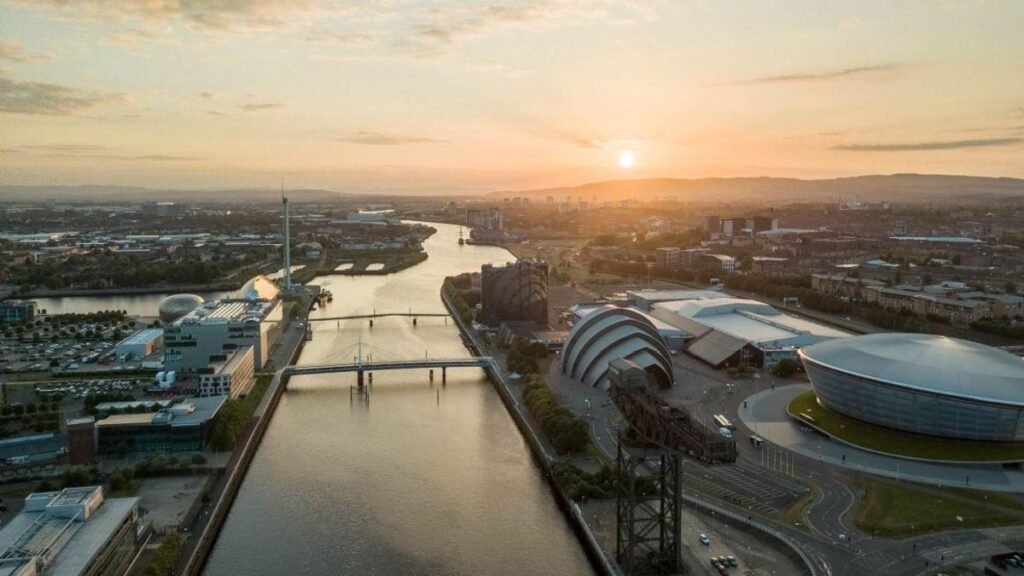
The City Development Plan 2 has been backed by councillors, and will now be put to community groups for their input.

The development plan could transform land along the River Clyde.
A ten-year plan which could create space for more than 30,000 new homes in Glasgow has been backed by city councillors.
Glasgow’s City Development Plan 2 is described as a “blueprint for Glasgow’s future”, and includes plans for the creation of economic development areas to help deliver jobs, supporting the regeneration of the city.
Local residents are now set to have their say on the proposals, with a public consultation expected to start later this year.
The plan includes 36 ‘Areas of Change’ across the city, which aim to make land available for over 30,000 homes along the River Clyde corridor, north and north-east Glasgow, featuring the reuse of brownfield land for new homes.
The Economic Development Areas will be a focus for business growth and innovation, while there are also local town centre regeneration proposals for Drumchapel, Easterhouse, Shawlands and Castlemilk, as well as the City Centre.
Other aims include improved protection for Glasgow’s architectural heritage, open spaces and the natural environment, better support for public transport and active travel, and the creation of the river park along the Clyde.
While the plan has been backed by members of Glasgow City Council, a 12-week period for community groups and other organisations to have their input is planned.
It is expected this will start in late August.
Councillor Ruairi Kelly, convener for development, heritage, housing and land use at Glasgow City Council, said: “The new city development plan is the blueprint for Glasgow’s future, not only enabling the building of tens of thousands of new homes and new jobs, but creating better and more sustainable places throughout the city.
“This work will make Glasgow a better place to live and attract the type of investment which will drive the city’s future economic growth.”
The plans include the development of:
- 36 Areas of Change
- 40 Centres (City, Major and Local)
- 59 Economic Development Areas
- Land for over 30,000 homes
- Land for over 11,000 affordable homes
- 569 Development sites
- 25 Conservation Areas
- 120 Multifunctional community open spaces
- 141 Woodland creation sites
- 77 Food growing sites
- 24 Water infrastructure sites
- 1 Nature Network
- 1 River Park