
London has seen a revival in sales of luxury properties this year as discounts attract Middle East buyers to invest in the UK capital.
Prices are down more than 20 per cent compared with their 2014 peak and have combined with a favourable exchange rate, availability of high-value loans and stable investment opportunities.
American and Gulf buyers account for 50 per cent of sales in the luxury homes market in London so far in 2026, according to a new wealth survey by Beauchamp Estates, which said London was “back in the investment conversation with wealthy Gulf families”. Several American buyers are families who have relocated from the Gulf in the past year.
High-end finance broker Enness Global has seen a 66 per cent increase in enquiries from the Middle East, with deals including the sale of two £15 million prime London homes financed with short-term Sharia-compliant loans.
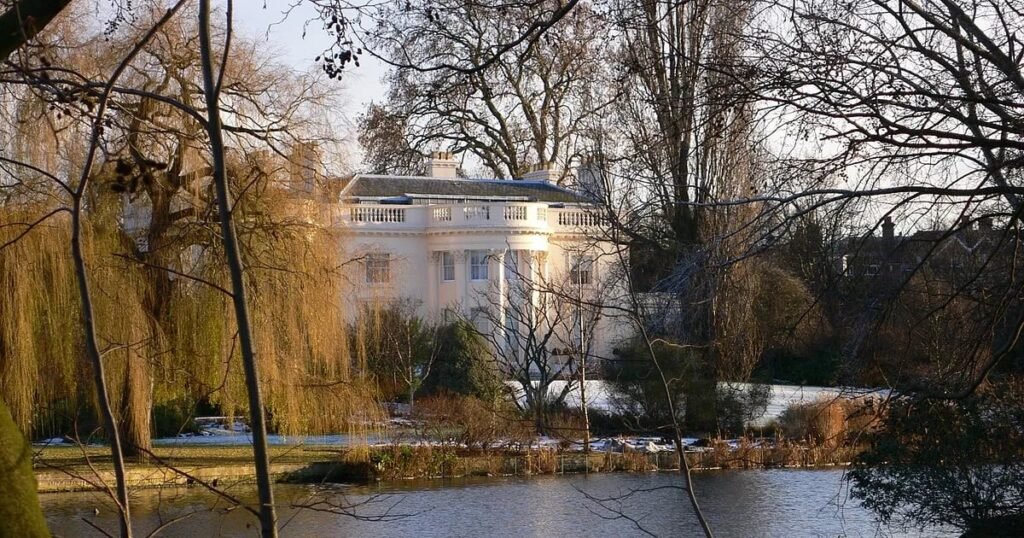
The latest high-value deal is the sale of a £190 million property within Regent’s Park. The Holme is a 40-bedroom, 200-year-old mansion close to London Zoo and has the US ambassador as a neighbour.
The property was put on the market by receivers in 2023 with an asking price as high as £250 million. It was bought for £139 million in 2024 by the Luxembourg-based company Zedra on behalf of an anonymous US billionaire who has now flipped it for a £50 million profit.
The name of the buyer has been reported in the Financial Times, which identified the purchaser as living in the UAE.
The deal, which is being handled by UK Sotheby’s International, is said to be within days of completion.
The sale is the latest in a flurry of deals for some of the city’s most desirable homes. The £190 million price tag is surpassed by only a handful of transactions, including the April sale of Nick Candy’s family home in the exclusive Chelsea district for more than £270 million to Suneil Setiya, the founder of Quadrature Capital.
A Beauchamp Estates survey shows that purchasers from the UAE, Saudi Arabia and Kuwait account for 25 per cent of all Mayfair sales and 20 per cent of prime central London sales this year. American buyers currently account for half of all luxury home sales above £5 million in Mayfair. After Mayfair, the next two most favoured addresses with American and Gulf buyers are Belgravia and Knightsbridge.
“Clearly they see London providing them with exceptional value at present,” said Rosy Khalastchy, director of Beauchamp Estates.
Sales in Mayfair between January and May rose by 15 per cent compared with the same period in 2025. In the first five months of 2026 there have been 32 deals at a cost of £189.3 million compared to 28 deals at £140 million in 2025. The majority of purchases were ‘turn-key’ apartments in either new developments located around Grosvenor Square and Curzon Street, or newly refurbished apartments in buildings with retained Georgian or Victorian facades.
The majority of American buyers in Mayfair, which is becoming London’s ‘Silicon Square’, work in AI, fintech or private equity. There are now more than 165 fintech companies and around 200 private equity firms, many American owned, based in Mayfair.
Jeremy Gee, Managing Director of Beauchamp Estates, said: “All the biggest deals over the last six months have been to either wealthy American or Gulf families. The booming American economy and the Gulf crisis has benefited the London real estate market which is viewed as providing value-for-money, an opportunity to acquire bargains and purchase outstanding trophy homes.”
Islay Robinson, chief executive of Enness Global, said: “We’re seeing exceptional demand for UK property from Middle Eastern buyers in 2026. It’s a combination of factors: political and regional concerns directing capital toward stable assets, the strength of the US dollar making London attractive for dollar-holding buyers, and a widely held view that London values are well-positioned in the current cycle.
“The real shift is on the financing side. High loan-to-value lending is widely available to international buyers, increasingly without the assets-under-management conditions that used to be standard, and lenders can move quickly. For overseas buyers, that ease of access is now as much a driver as the underlying appeal of the property itself.”
Camilla Dell, founder of property consultants Black Brick, told The National that while London has its “fair share of political uncertainty and much higher levels of tax”, the prime London market is now down 24.5 per cent since the peak in 2014, according to Savills.
“This long-term depression has had one positive impact. For the first time in generations, London property is starting to look like good value for money. Combined with a weaker pound, a US dollar-based buyer buying today is effectively getting a 40 per cent discount today compared with buying at the peak,” she said.
According to a report by Coutts more than half of homes put up for sale in London subsequently have their asking price cut, by an average of 12 per cent.