
 When CEO Alasdair Murdoch and CMO Katie Evans joined Burger King UK in 2018, the business was faced with challenges coming from almost all directions.
The estate was underinvested, restaurants were outdated and the brand had become overly reliant on discounting.
“We didn’t think the business had necessarily been run particularly well,” Murdoch said. “Everything was not very good from a business point of view.”
That very direct assessment came from the CEO during a session at Marketing Week’s Leadership Summit yesterday (21 May), as he spoke alongside CMO Evans about the major turnaround journey Burger King has been on over the past eight years,
Private-equity management took over the business in 2017, at that time only around 5% of Burger King’s store estate met brand standards. Today, Murdoch said, that figure is closer to 90%.
That commercial challenge was coupled with a brand that, despite having near-universal awareness, had lost cultural relevance.
“We had people on social media asking, ‘Does Burger King still exist?’” Evans recalled. “We had 500-plus restaurants. It was a really bad situation.”
“From my point of view, it’s very apparent that you need to invest in the brand,” said Murdoch. “If you don’t do that, you will surely lose relevance and you’ll surely die.”
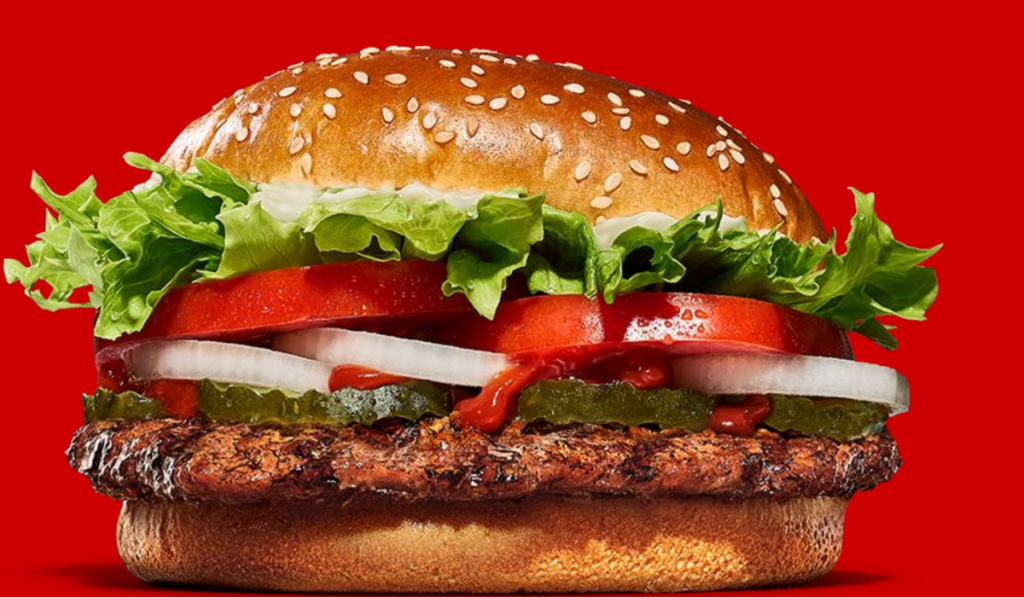
The turnaround strategy centred on rebuilding the brand through a clearer long-term positioning. Rather than trying to communicate multiple assets at once, especially with a relatively small media budget, Burger King focused heavily on the Whopper as its distinctive brand anchor.
“We had to talk about one thing and we had to do it really well,” Evans said.
For Murdoch, the process required a willingness to move away from short-term sales activation towards long-term brand building.
“The way the business had been managed beforehand, all they were interested in was short-term sales because that drove royalty income,” he said. “There was no thought really about long-term trying to drive the benefit of the brand.”
The key relationship
That shift demanded trust between CEO and CMO, particularly when creative risks were involved.
One early example was Burger King’s decision to run a campaign promoting the Whopper by refusing to sell anything else for a day. Internally and externally, there was scepticism. But the CEO and CMO consciously decided to “stand side by side” to back a move they believed in.
Evans described that support as fundamental to effective marketing leadership.
“When things go wrong, I know he’ll still have my back and he’ll still have my team’s back because we’ve made that decision together,” she explained.
Their working relationship dates back more than a decade, including previous roles at Gourmet Burger Kitchen. From both Evans’ and Murdoch’s perspectives, that longevity has created an environment where challenge is encouraged rather than avoided.
“There’s a comfort in being challenged by them and not taking it personally,” Evans said. “And there’s also a comfort in being able to challenge.”
The pair stated that strong CEO-CMO relationships are built not simply on alignment, but on shared accountability and early collaboration.
Evans believes marketers sometimes contribute to the disconnect that can exist between marketing and the wider executive team by presenting ideas too late in the process.
“I think marketers have a responsibility to bring the CFO and the CEO into some of those discussions earlier,” she said. “You have to be willing to share, ‘We have an idea. We don’t have all the answers yet, but let’s have a chat about it.’”
Murdoch agreed, stating the relationship works because both leaders understand each other’s worlds, from investor conversations to operational realities.
“We’re very good at talking about each other’s areas,” he said. “Katie can hold me to account very well.”
A different kind of CEO
The notion that CEOs should default to caution when reviewing marketing ideas is something rejected by Murdoch, especially in categories dominated by bigger competitors.
“If you are Burger King and you have one-tenth of the budget of McDonald’s, we’ve got to be creative,” he said. “We’ve got to be brave.”
That bravery, he argues, becomes even more powerful when combined with the scale and cultural recognition of a legacy brand.
“One of the great advantages of having a brand like Burger King is when you throw a stone into a pond, the PR ripples are massive,” he said. “If you hit the right note and make people smile, that resonates much louder than the amount of money we’ve put behind it.”
The commercial results have followed. Murdoch said total system sales have more than doubled since the turnaround began, with the business now surpassing £1bn in sales.
There’s no silver bullet secret to that impressive turnaround, instead both the CEO and CMO credited consistency in approach.
Burger King’s strategic brand pillars, Evans noted, have remained largely unchanged for five years. That stability allows the business to simplify decision-making internally while creating freedom creatively.
“The simplicity of the plan allows you permission to be a bit wildly creative elsewhere,” she said.
For Murdoch, that clarity matters because brand investment is never a one-off exercise.
“You’ve got to keep investing into your brand,” he said. “Not just from a physical point of view, but from a brand point of view. Everything has to work together.”