
Hydrogen development in the UK is moving from strategy into delivery, but progress is uneven. The projects that reach final investment decisions do so when three things become predictable: revenue, regulation and infrastructure timelines.
When this happens, capital can commit.
A PROMISING PLATFORM
The east has a credible platform, particularly around the Bacton energy hub. It sits at the intersection of nationally significant gas infrastructure, North Sea assets, expanding offshore wind and emerging carbon storage potential.
That creates optionality: blue and green hydrogen pathways, storage and wider system integration. But optionality isn’t bankability.
Converting strengths into investable projects means reducing risk for how projects get paid; molecules move; and delivery risk is managed.

RELIABLE REVENUE
Hydrogen still faces the chicken-and-egg challenge: producers need contracted demand, while users hesitate without predictably priced, reliable supply.
The regions moving fastest have addressed this by anchoring early volumes around customers prepared to commit, then scaling. In the east, we see the shape of those early demand corridors. Major construction programmes provide a platform for zero-emission transport.
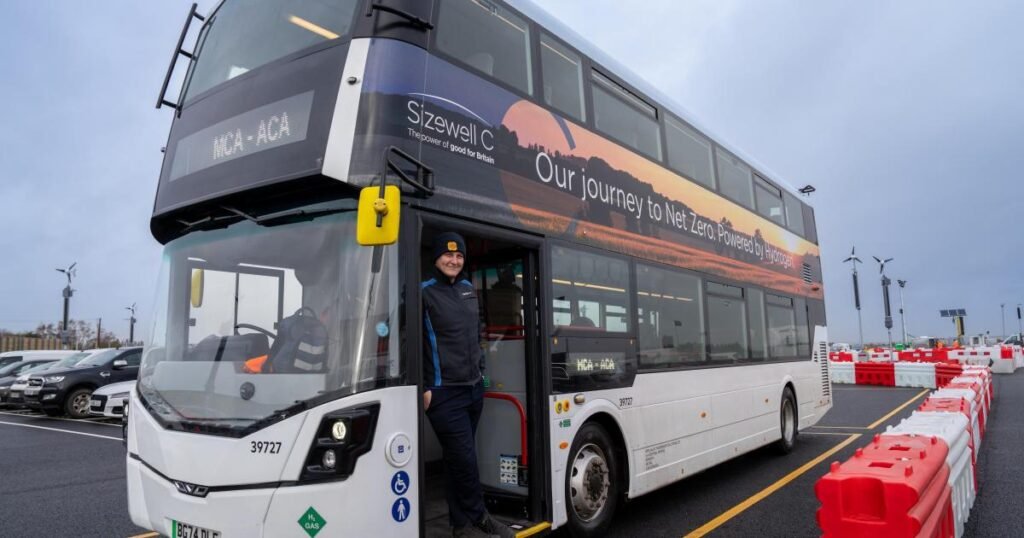
For example, Sizewell C’s approach to deploying hydrogen buses for construction worker transport (see more on page 33) is the kind of visible, operational use-case that can establish dependable, repeatable demand investors can understand.
Alongside this, Freeport East’s ambitions around Felixstowe and Harwich point to a clear opportunity to link hydrogen supply to ports and logistics.
And there is a wider industrial prize too: the East is well placed to host future sustainable maritime and aviation fuel production facilities, where hydrogen can be a key feedstock alongside captured carbon, clean power and strong logistics.
That sort of downstream, scalable demand is precisely what turns early hydrogen markets into something durable. The strategic message is simple: bundle demand where possible, build around anchor offtakers and avoid betting the business case on fragmented uptake.
CONNECTION CERTAINTY
Hydrogen is a logistics business as much as an energy one. Investors need confidence that production today won’t be stranded tomorrow and users won’t be exposed by uncertain connectivity.
That requires treating the east as a phased system build, not a set of isolated projects.
A practical step would be to publish a phased corridor plan with clear decision gates and credible delivery sequencing, connecting hubs such as Bacton, major energy and industrial sites, and strategic demand nodes like ports and large construction programmes.
Even if the plan evolves, it provides a financeable pathway for producers and users and makes infrastructure investment legible, as UK transport and storage frameworks mature.
TIME TO DELIVER
Hydrogen projects carry hidden costs around planning, permitting, procurement and grid connection.
Regions that reduce system risk fastest progress quickest, not by shortcutting scrutiny, but through coordinated delivery: aligned consenting pathways, synchronised connection timelines and transparent milestones.
Across the UK, cluster-led delivery and shared infrastructure logic is showing how this can work, and Europe’s corridor/backbone approach reinforces that investors respond to credible infrastructure pathways just as much as production announcements.
TURNING ADVANTAGE INTO CERTAINTY
The east has everything to host major synthetic fuel production.
Now, we must convert advantage into certainty: anchor early demand through Sizewell C transport and others, publish that phased corridor plan, and align delivery milestones.
This story is also published in Insight Energy magazine, covering the latest news from the UK’s energy sector. Read the latest edition here.