
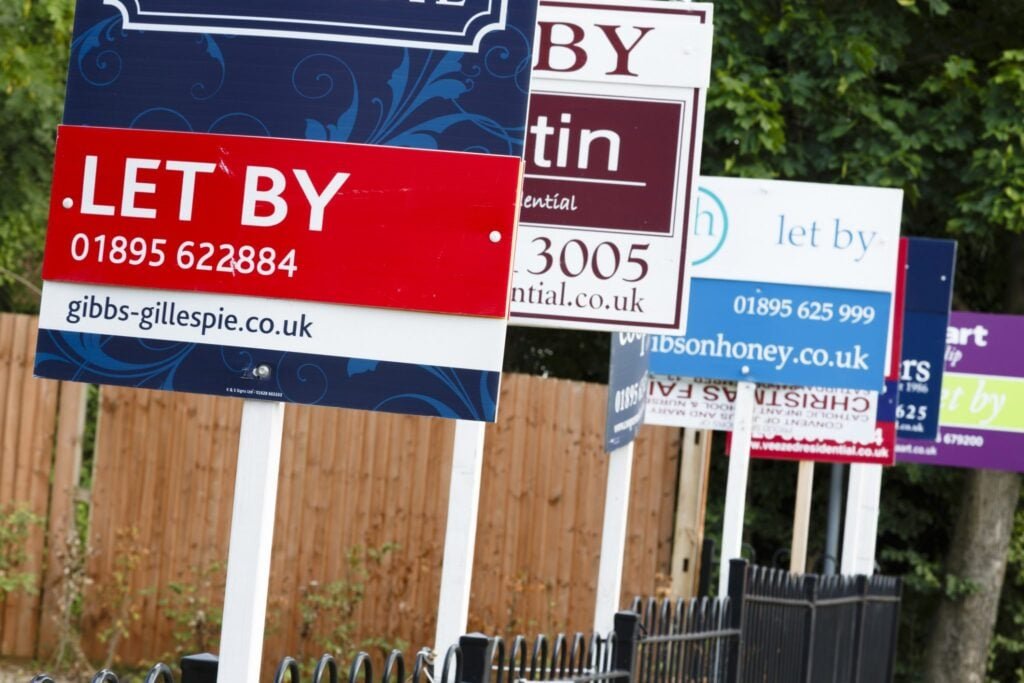
The UK lettings market has been going through a more balanced phase since the start of 2026, with increasing levels of supply and demand softening. It means rents are holding steady on a national basis, although they are continuing to rise in many of the regional markets.
Rightmove’s latest Rental Trends Tracker shows that average advertised rents outside London were unchanged in Q1 at £1,370 per calendar month, which is the first time since 2017 that they have not increased between Q4 and Q1. At the same time, supply has improved with the number of available rental homes up 3% year-on-year, while tenant demand has eased and average enquiries per property have fallen to eight from 11 a year ago and 29 at their 2022 peak.
Annual rental growth outside London now stands at 1.6%, the lowest rate recorded since 2018, while more than a quarter of rental listings (26%) have seen price reductions during marketing as landlords respond to a more price-sensitive environment.
That overall national picture, however, masks some marked variation across the regional markets, with rental growth remaining considerably more resilient in a number of areas, especially in the North and, to a lesser degree, in the Midlands.
North
In the North West, for example, average rents have risen by 3.9% year-on-year to £1,239 per month, while Yorkshire and the Humber has seen growth of 3.5% and rents of £1,087. Yields are also strongest in northern markets, with those in the North East at 8.2%, in the North West they are 7.4%, and in Yorkshire and the Humber they are 7.2%.
Some of the highest rental growth is concentrated in better-connected commuter areas. Urmston in Greater Manchester has seen a rise of 17.6% year-on-year, while Warrington has recorded a 14.9% increase. In Yorkshire and the Humber, Harrogate rents are up 18.9%, and Batley is up 14.6%.
Midlands
Rents in the Midlands are on a slightly steadier path. Annual rental growth is 1.0% in both the East and West Midlands, with average rents of £1,194 and £1,239, respectively. Yields in both regions are 6.7%, which is just above the Great Britain average (excluding London) of 6.5%.
Those figures put the Midlands squarely between the faster-growing northern markets and the higher-cost South.
South
As you would expect, London and the South continue to command the highest rents, with the capital’s averaging £2,736 per month and annual growth of 1.4%. However, yields are lower than in other regions, at 5.8%.
On a national level, though, market conditions have shifted markedly. The increase in available stock and reduced competition between tenants means pricing is becoming more sensitive, with landlords needing to align rents more closely to local demand.
However, at the same time, Rightmove also reports there is little evidence of any significant supply issues ahead of the Renters’ Rights Act coming into force on 1 May, despite widespread concerns over a landlord exodus. The number of newly listed rental homes in March was just 6% lower than a year earlier.
Looking ahead, the more immediate pressure on the sector is coming from finance rather than supply levels, with mortgage rates increasing as a result of events in the Gulf. The average two-year buy-to-let mortgage rate has now risen to 5.79%, up from 4.86% before the crisis began.