
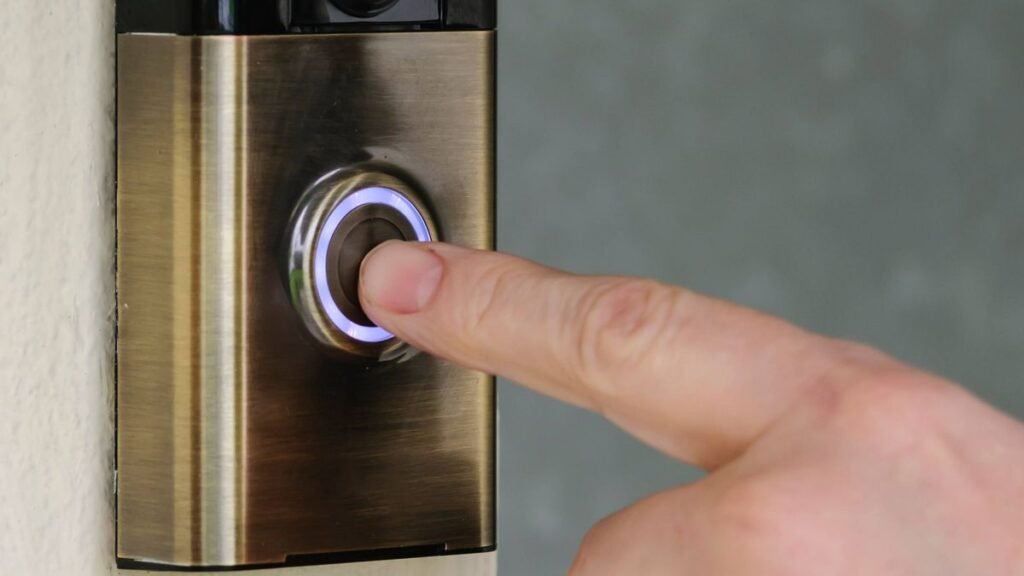
Millions of UK homeowners have video doorbells and outdoor security cameras fitted to their homes

(Image: Stephen Barnes via Getty Images)
Video doorbells and outdoor security cameras have been installed in millions of homes across the UK, with roughly 33% of households now owning some type of smart security gadget. As disputes between neighbours over surveillance increasingly land in court, the legal uncertainty surrounding these devices is becoming harder to ignore, with owners potentially recording footage that extends beyond their own property.
Micheal Fernandes, tech expert at smart home brand Tapo, said: “Smart doorbells are a standard fixture of lots of UK homes, but some owners may never have explored the privacy features beyond the default settings. Field of view, audio range and privacy zone masking are all key to making sure that owners don’t routinely capture pavements, neighbours’ driveways or even conversations happening metres away from their front door.
“CCTV privacy can stir up neighbourly tension, and it’s important to note that it can become a legal issue. Under the Data Protection Act, any homeowner who captures footage beyond their own property boundary is technically classed as a data controller, and has to provide legitimate reasons for recording as well as notice of filming via signage.”
In Britain, regulations governing doorbell cameras are more stringent than in numerous other nations because they’re covered by the UK General Data Protection Regulation (UK GDPR) and the Data Protection Act 2018 the instant they capture anything beyond the owner’s property line. If your neighbour’s device films your front entrance, windows, or even the footpath outside your home, they’re legally deemed a “Data Controller.”
According to UK data protection legislation, you possess certain rights if you’re being filmed. You can: Submit a “Subject Access Request” (SAR): You’re legally permitted to request your neighbour provide a copy of any recordings they hold of you. They must supply this within one month and typically cannot impose a charge.
You can request they erase footage of you if it isn’t being retained for a particular, lawful purpose (such as a documented criminal incident). You can officially challenge their recording of you. They must subsequently demonstrate they have a “compelling legitimate ground” to keep filming that supersedes your privacy rights, reports Devon Live.
The Information Commissioner’s Office (ICO) – Britain’s data watchdog – confirms that if a camera records images beyond the owner’s property boundary, the owner must: display a notice, reduce intrusion and provide justification for audio recording. Capturing audio is regarded as significantly more invasive than video. In the wake of the landmark Fairhurst v Woodard case, British courts have determined that ongoing audio recording which captures conversations on a neighbour’s property frequently constitutes a privacy breach.
For those residing in flats or managed estates, it’s worth examining the lease or ‘Title Deeds.’ Many shared living arrangements prohibit cameras overlooking communal hallways or other residents’ doorways.
Should the camera be repositioned deliberately to track you, or if your neighbour employs the footage for intimidation purposes, this escalates from a “privacy issue” to a “harassment issue.” Contact the police non-emergency number (101).
Micheal explained: “When it comes to the field of view, the first step is to check the positioning of your camera or video doorbell. Narrowing the field of view will ensure you’re only capturing footage within your property boundary – for a typical home, this will include your front door and immediate path out of the home, not the pavement or a street beyond. A tighter field of view will maintain protection of your home without surveilling your neighbours.
“Privacy zone masks are the most effective way to ensure you only capture the necessary areas. Tapo’s privacy zone feature, for example, allows you to block out specific areas within the field of view and exclude them from recordings.
“Privacy zones should never be an afterthought as they are a strong way to ease any tension or disputes with neighbours, allowing you to easily show that you are not intentionally capturing anything within their property boundary.
“Audio recording is a setting that most owners may not even use or realise is active. Doorbell cameras and external cameras can pick up conversations from several metres away, which is worth checking, as conversations can be treated as personal data through GDPR guidelines. Check whether your device allows you to reduce microphone sensitivity and set it as low as your needs allow in order to keep surrounding conversations private.”
What to do if you suspect your neighbour’s security isn’t compliant
Micheal said: “For anyone who is concerned that a neighbour’s security technology may be capturing their property, there are some easy practical steps you can take to gain clarity and ease tension. Communication is always key and we recommend making your concerns clear and asking to see their field of view or privacy masking settings.
“If you believe further intervention is needed, you can also make a formal complaint via the ICO.”