
The UK property market goes through peaks and troughs, but when it’s thriving, it feels like you’re moving at breakneck speed. Buyers can make an offer on a property within hours of viewing it, whereby any legal process, such as conveyancing, obtaining property valuations, and engaging surveys, can feel unnecessarily obstructive and long-winded.
Surveys aren’t always a legal requirement. However, skipping a professional property survey can be incredibly risky in the long run. A standard survey from a RICS chartered surveyor doesn’t cost the earth (between £300 and £1,300 is a good ballpark figure, depending on property status and location).
While it might still seem like an unwanted expense, especially when times are tough financially, it is a vital element in confirming a property’s condition before purchase.

A survey protects your interests; a valuation protects the lender’s.
To clarify any confusion, a survey is not the same as a mortgage valuation. Many first-time buyers believe that their mortgage lender conducts a thorough property survey, but this isn’t the case; these are carried out on the lender’s behalf to ensure the property’s value reflects what you’re paying for it.
A survey, conversely, is designed to protect the homeowner by uncovering faults, so you won’t be faced with extensive repair work after you move in. Furthermore, problems identified allow for transparent and forthcoming price negotiations, or even a withdrawal from the purchase before it’s legally binding. This is by far preferable to discovering issues after completion, when a buyer is then left liable for immediate major costs with no recourse.
Here are the most serious issues that may not be immediately apparent during your viewing(s), but, if skipping a survey, could prove incredibly testing, both financially and emotionally.
Risk #1: Subsidence and structural movement
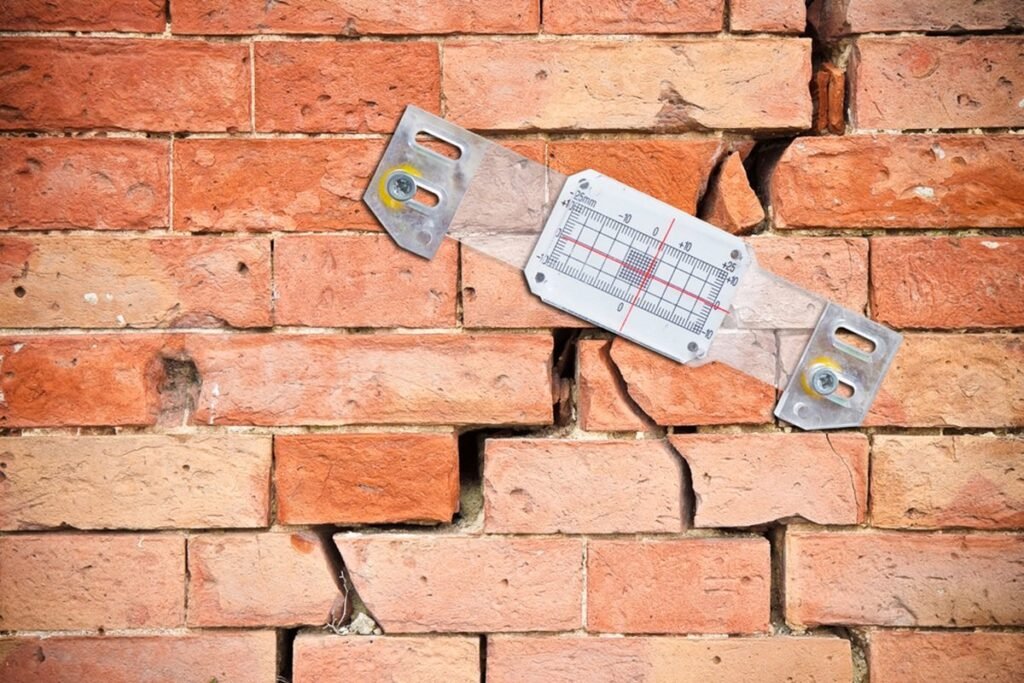
Structural movement can refer to any movement in the building’s structure, such as subsidence or settlement. According to Property Reporter, subsidence is a serious problem that can potentially cut a property value by 20%. Notably, 2025 was a landmark year for subsidence following a particularly hot spring and summer, which is when it’s most likely to occur.
Subsidence occurs when the ground beneath a house’s foundation sinks, which can cause walls to crack, floors to slope, and doors to jam. Even sinking by a few centimetres can have a profound effect. Soils rich in clay across South East England can be particularly susceptible during dry spells, not helped by nearby vegetation drawing moisture away from foundations.
Settlement and subsidence repairs can take a long time and are very expensive and disruptive, to the point where properties may be uninhabitable during repairs. That said, a Level 3 RICS Building Survey, the most comprehensive of the three types of property surveys, identifies warning signs through crack analysis, floor measurements, and foundation assessments. Further guidance on structural surveys is available from the chartered surveyors at Cosey Homes, who have extensive experience identifying structural issues in properties across the UK.

Risk #2: Roof defects and water ingress
Just as the foundations are the most critical part of the base, so too is the roof an essential element to exterior integrity. Roof replacement costs are nothing to joke about, especially emergency repairs following a sudden failure, which can almost double average roof repair costs when internal water damage is factored in.
Missing tiles, failing membrane systems and deteriorated flashing may not be visibly obvious for months, but too much heavy rainfall and before long, water can penetrate ceiling voids, saturate insulation, damage timber frames and damage electrics, to name a few potential issues. In excess, water also creates conditions for rot that can spread rapidly, or cause plasterboard elements to crumble. Professional surveys identify these risks through the inspection of tiles, chimney stacks, guttering and roof spaces, for signs of leaks or timber decay.
Risk #3: Damp
Damp represents one of the most frequently encountered and yet underestimated threats to property integrity and value. This can be caused by condensation in poorly ventilated areas, rising moisture from the ground and up the walls, or penetrating damp due to external water ingress, leaks or structural cavities. Severe damp damage can potentially cost thousands to remediate, if structural repairs are necessary. What’s worse, if permeating for so long, it can compromise electrical systems, be aesthetically unsightly, and create numerous health hazards all while damaging the structure of the building.
Professional surveyors identify damp through moisture meters, thermal imaging, and visual inspection. Without this assessment, buyers may not discover problems until months after completion, with many underlying damp issues rooted in substandard construction or deferred maintenance and easily concealed with subtle decorative work before sale. Kenwood offers a comprehensive resource on damp causes and remediation in various property types that comes in very useful.

Risk #4: Asbestos or Woodworm
Finally, older properties carry specific biological and material risks. In properties built before the 2000s, asbestos remains a major health concern, where still present. An asbestos report, while not a legal requirement, can unveil findings, recommendations and actions for removal wherever it’s found, including ceilings, water tanks and soil, as comprehensively detailed by diagnosis and removal experts, Goodbye Asbestos.
Woodworm infestations are equally serious, causing substantial damage to timber frame buildings and structures. Small holes in woodwork and the presence of fine, powdery dust substances are the first telltale signs of woodworm. Professional intervention early on allows this issue to be isolated quickly. Eradicating the problem while living in the property can be incredibly challenging both logistically and financially.
Other risks of not getting a survey
Aside from the physical structure, a property survey can unveil:
- Boundary disputes and discrepancies
- Rights of way
- Restrictive covenants
While these carry no immediate financial upheaval, they can prevent development, restrict usage, or trigger lengthy and resource-heavy legal battles. Professional surveyors will flag any discrepancies in boundaries, rights of way and covenants, which may not have been readily apparent, before recommending legal investigation.

Key takeaway: Don’t leave anything to chance
Every property purchase involves risk. The question is whether that risk is understood, quantified and consciously accepted. The costs of a professional, proactive survey are far lower than the costs of large-scale repairs and renovations to bring your property up to a liveable and safe standard.
Investing a proportionate amount in a professional risk assessment offers complete peace of mind regarding a property’s true condition. The alternative, of uncovering tens of thousands of pounds in hidden defects at a later date, is a risk few can afford. Do you really want to skip that survey now?

By Annie Button
Annie Button is a freelance writer based in the UK. Writing across a range of topics, she specialises in business development, property, digital marketing, lifestyle, and HR. An English Literature graduate, Annie has contributed to a variety of prestigious online and print publications.