
Various methods are being examined and a government minister has responded

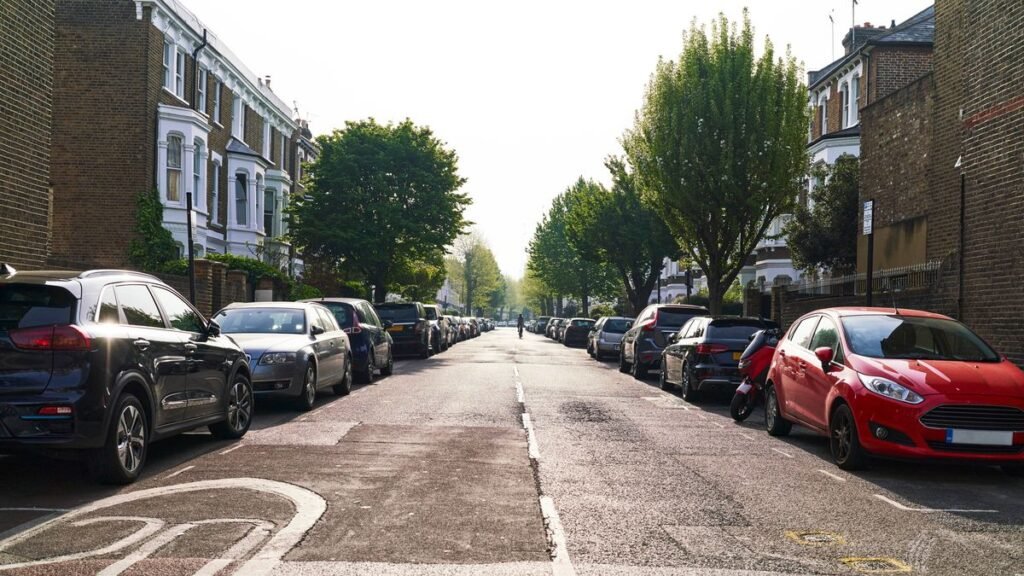
Switching to an EV can be hard if you only have on-street parking(Image: aire images via Getty Images)
A government minister has revealed updates on proposals to overhaul pavement regulations. It is centred around making it simpler for those without driveways to charge their electric vehicles.
Some changes have already been implemented, with a grant being boosted from April 1, 2026. It has now been confirmed that planning permission regulations are under review in an effort to eliminate further obstacles for those keen to switch to an EV, but deterred by the lack of a driveway for convenient charging.
A grant covering the installation of a home electric car charger was raised on April 1 to £500, up from £350. Speaking earlier this year, Keir Mather, the minister for decarbonisation, said this would cover roughly half the cost of fitting one.
The enhanced £500 grant is available to flat owners, renters and landlords. However, for those owning houses with solely on-street parking, further steps are now being taken to permit ‘cross-pavement’ charging solutions to be fitted, enabling residents to safely charge their vehicles on the street outside their home if they lack a driveway or private parking space.
A number of parliamentary questions on the matter have been raised this month.
Joe Robertson, Conservative MP for the Isle of Wight, asked: “To ask the Secretary of State for Transport, pursuant to the Answer of 14 April 2026 to Question 124238 on Electric Vehicles: Charging Points, how many applicants have successfully received funding under the Electric Vehicle Chargepoint Grant for Households with On-Street Parking; and what the total value is of funding awarded under that scheme.”
Mr Mather replied earlier this week: “As of January 1, 2026, the Electric Vehicle Chargepoint Grant for Households with On-Street Parking grant has funded 39 sockets with a grant value of £13,531. The grant funds the installation of charge points at residential properties with on-street parking if they are also installing a cross-pavement solution. This grant is in addition to the £25 million Electric Vehicle Pavement Channels Grant for local authorities.
“The Government has consulted on measures to reduce planning permission requirements for cross-pavement solutions, further supporting households with on-street parking, and will be responding in due course.”
Additional queries were also addressed earlier this month.
Shivani Raja, Conservative MP for Leicester East, questioned: “To ask the Secretary of State for Transport, what steps she is taking with the Secretary of State for Energy Security and Net Zero to improve the (a) accessibility and (b) affordability of at-home EV charging.”
Mr Mather replied: “The Government continues to offer grant funding for those living in flats and rented accommodation, with up to £500 per charge point socket. The Government is also continuing to support drivers to access cheaper, flexible charging tariffs, both at home and in public. The Government set out a range of steps to support this as part of its Clean Flexibility Roadmap 2025.”
Conservative MP for Broadland and Fakenham, Jerome Mayhew, put forward the question: “To ask the Secretary of State for Transport, what plans she has with the Secretary of State for Housing, Communities and Local Government to expand permitted development rights to include pavement gullies for at-home EV charging.”
Mr Mather answered: “The Department ran a consultation between November 2025 and January 2026, seeking views on changes to permitted development rights for cross-pavement charging solutions. The Department will publish its response shortly.”