
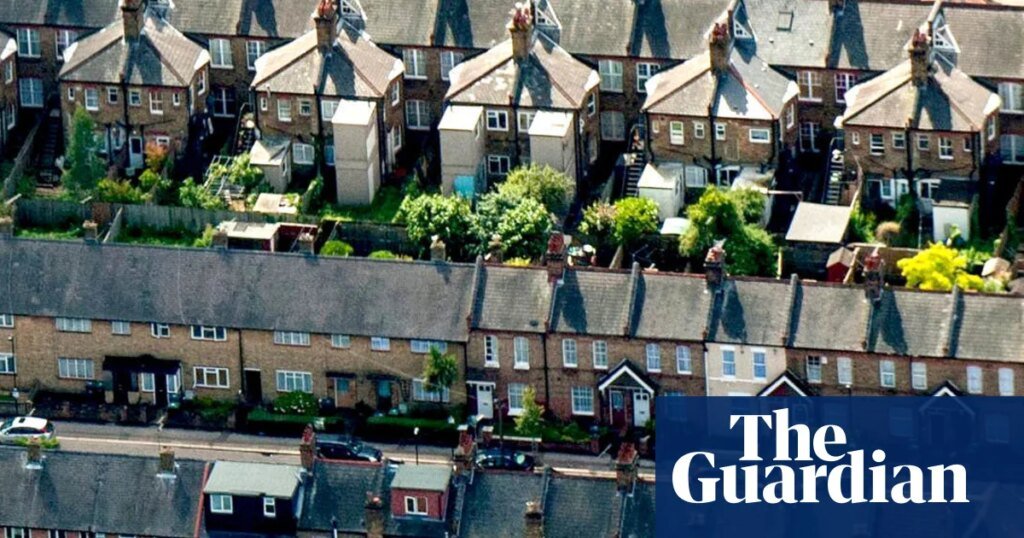
Labour’s promise to make private rented homes in England fit for habitation will not be enforced for almost a decade, a decision campaigners have described as “absurd”.
The timeline means landlords will have until 2035 to implement a new decent homes standard (DHS) in their properties, which will include “robust standards” to combat disrepair, damp and energy inefficiency.
On Wednesday, the government published its plans for a reformed DHS for social rented homes, as well as a DHS for the private rented sector for the first time, confirming that both will need to be implemented by 2035 at the latest.
The housing minister, Matthew Pennycook, said the timeline would give “social landlords in particular the time and the certainty they need to boost housing supply as well as drive up the quality of the homes they manage”.
Ben Twomey, the chief executive of Generation Rent, said: “It is absurd to let landlords drag their feet for an entire decade, denying renters the most basic standards in our homes. It will mean millions of renters, including children, trapped living in poor-quality homes with nowhere to turn.”
The campaign group had pushed for a deadline of 2030 for implementation of the new standard, which was promised as part of the Renters’ Rights Act.
Paula Barker, the Labour MP for Liverpool Wavertree, said the decision was a “disgrace”, adding: “This means families, individuals and children will remain stuck in dangerous, substandard housing, that very well may be having long-term impacts on their health, for close to another decade. This decision is shameful and completely unacceptable.”
The English Housing Survey in 2020-21 found that 21% of privately rented homes did not meet the DHS, with 12% having a category 1 hazard, meaning they posed a significant safety risk.
According to the Health Foundation, one in five private rented homes are classed as “non-decent”, meaning they contain a hazard or immediate threat to health, are in a state of disrepair, or are not effectively insulated or heated.
In the social rented sector, a DHS was introduced in 2001 with an enforcement deadline of 2010, although some councils applied for extensions. As of 2023, 10% of social rented homes failed to meet the DHS, which has not been updated since 2006 and ministers argue it is out of date.
Pennycook previously said a 2035 timeline for the new DHS “broadly aligns with the nine-year implementation period that accompanied the original introduction of the DHS in the social rented sector”.
The new DHS will force landlords to ensure homes are in a reasonable state of repair, free of hazards, damp and mould, and equipped with facilities including noise insulation and child-resistant window restrictors.
Sarah Elliott, the chief executive of Shelter, said: “Renters simply can’t wait this long for decent homes. It is outrageous that millions of renters are stuck paying hand over fist for often shoddy homes that pose a real danger to their health. Now, to add insult to injury, renters are being asked to wait almost an entire decade for the basic protection of a decent home,” she said.
“The government must ensure renters’ homes are safe to live in now, not in 2035, while supporting councils to bring rule-breakers to book by properly funding local authority enforcement teams.”
Paul Shanks, from the Renters’ Reform Coalition, said the government’s “lack of urgency gives landlords the green light to continue profiting from rotten homes, and will have real consequences for the health and wellbeing of millions of tenants”.
“We’re asking the government to bring the timeline forward – renters cannot afford to wait a decade for these basic protections,” he said.
Gavin Smart, the chief executive of the Chartered Institute of Housing, the professional body for the housing profession in the UK, welcomed the new DHS, saying it would “update minimum standards for the first time in 20 years” and would be “crucial to improving quality of life and reducing living costs for tenants”.
A spokesperson for the Ministry of Housing, Communities and Local Government said: “Landlords must continue to fix problems where they exist while the new decent homes’ standard is being implemented.
“Some measures, such as the minimum energy efficient standard, will also be implemented sooner and the changes announced today will lead to cheaper energy bills and warmer homes for tenants, while ensuring landlords have time to meet the new standard.”