
In this contributed article, Susan Wells, director of EV and solar at domestic smart energy provider Hive, explores how solar deployment will scale in the coming years, with regard to the policy support available in the UK.
Uptake of solar is gathering pace across the UK as more households and businesses seek to unlock the benefits of clean, homegrown energy. In 2025 alone, installed capacity rose by 13.6%, increasing from 19.0GW to 21.6GW.
This progress reinforces solar’s growing role in the UK’s energy system – helping to lower bills, strengthen energy security and support long-term decarbonisation. But the bigger question now is whether the UK can sustain and significantly accelerate the pace of delivery.
The government has set a target of up to 45GW of solar capacity by 2030, meaning delivery must more than double within the next four years. Recent government announcements have also underlined the role clean, homegrown energy will play in strengthening the UK’s energy security and domestic energy generation. Achieving this will depend less on the technology itself and more on the systems around it: grid infrastructure, workforce capacity, planning processes and consumer access.
In many ways, the technology question has already been answered. Solar is now one of the most mature and cost-effective forms of new power generation available. Systems are more efficient while installation models are well established. The challenge now is scaling delivery.
One of the most immediate constraints remains grid capacity – especially for large-scale solar projects. Connection timelines and local network limitations continue to affect renewable deployment across the system, from large-scale projects through to distributed generation.
Government and Ofgem have already begun introducing reforms to streamline grid connections and accelerate network investment. The next step will be ensuring those reforms translate into faster connections and stronger local infrastructure in practice. Without sufficient network capacity, even projects that are ready to build can face delays.
Planning processes also play an important role. Solar is increasingly recognised as a central part of the UK’s energy strategy, yet planning outcomes can still vary significantly across local authorities. Greater consistency in guidance and decision-making would help provide confidence for developers while ensuring projects that meet requirements are able to progress efficiently.
What the industry needs to deliver
Alongside infrastructure, the sector must also continue expanding the skilled workforce needed to deliver this growth.
Installing millions more solar panels across homes and commercial buildings will require a sustained increase in trained installers, electricians and engineers. The renewable energy workforce is growing, but demand is rising quickly as electrification accelerates across heating, transport and power.
Adoption in solar among households has grown significantly in recent years, driven largely by homeowners wanting more control over how they power their homes and how much they spend on energy. For many, generating electricity at home is becoming an increasingly practical way to manage long-term energy costs.
However, despite improving economics, upfront cost remains one of the biggest barriers to wider adoption. The long-term benefits of solar are well understood, but the initial investment can be a barrier for many households.
This is where flexible financing options, clear payback expectations and trusted installation pathways will play an important role in widening access.
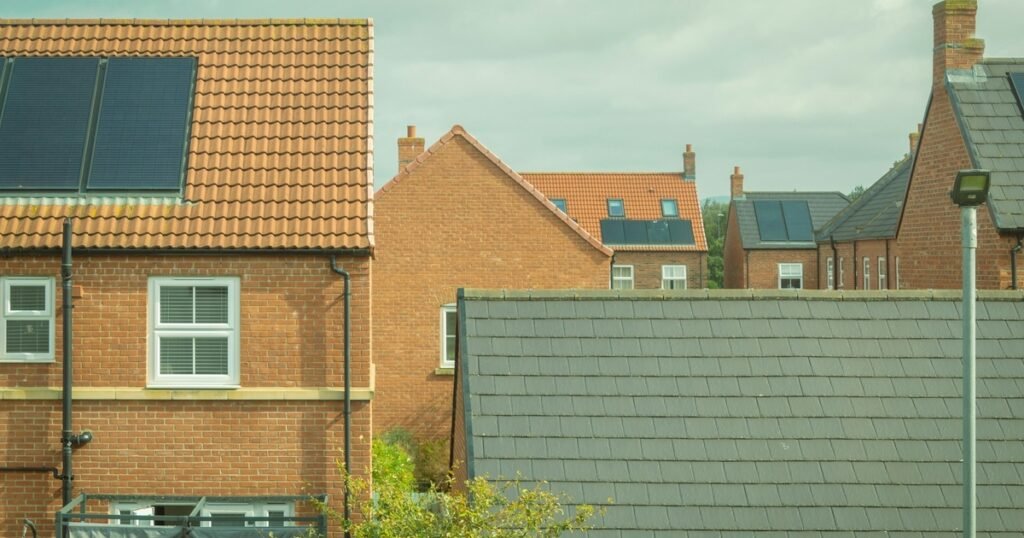
Policy will also influence how quickly solar deployment scales in the coming years. The recent Future Homes Standard announcement, for example, will play an important role in supporting rooftop solar. By building new homes with technologies such as solar generation and electrified heating from the start, we are reducing the need for costly retrofits and helping consumers embrace this technology, seeing the benefits of the connected home. If new homes are built with, it avoids the need for costly retrofits later and helps make onsite generation a normal part of how homes are powered.
At the same time, the majority of the homes that will exist in 2050 have already been built. Ensuring solar can be installed easily and efficiently across existing properties will therefore remain just as important.
The UK’s solar sector is clearly gaining momentum. At Hive, we’ve seen that our own solar panel installs have jumped by 173% so far in the first three months of 2026 compared to the same time last year. The growth seen over the past year shows that deployment can accelerate when the right conditions are in place.
The next step is ensuring that momentum translates into sustained progress over the remainder of the decade. That will depend on how effectively the sector continues to scale installation, expand skills and make solar accessible to more homes and businesses.
If that happens, solar will not only support the UK’s clean power ambitions – it will become one of the technologies that defines how quickly the country can deliver its wider energy transition.