

The University Council, Cambridge’s central governing body, has backed the introduction of a transparency reporting regime for investments in conventional weapons.
Under this regime, the Cambridge University Endowment Trustee Body (CUETB), which oversees the University’s investments, would monitor its level of exposure to “certain investment categories, including conventional weapons”.
If the University’s exposure to companies primarily manufacturing weapons exceeded a certain threshold, CUETB would receive a report including the details of these companies. Discussions with University of Cambridge Investment Management Ltd (UCIM), the company owned by the University which manages its endowment fund, about reducing this exposure would then follow.
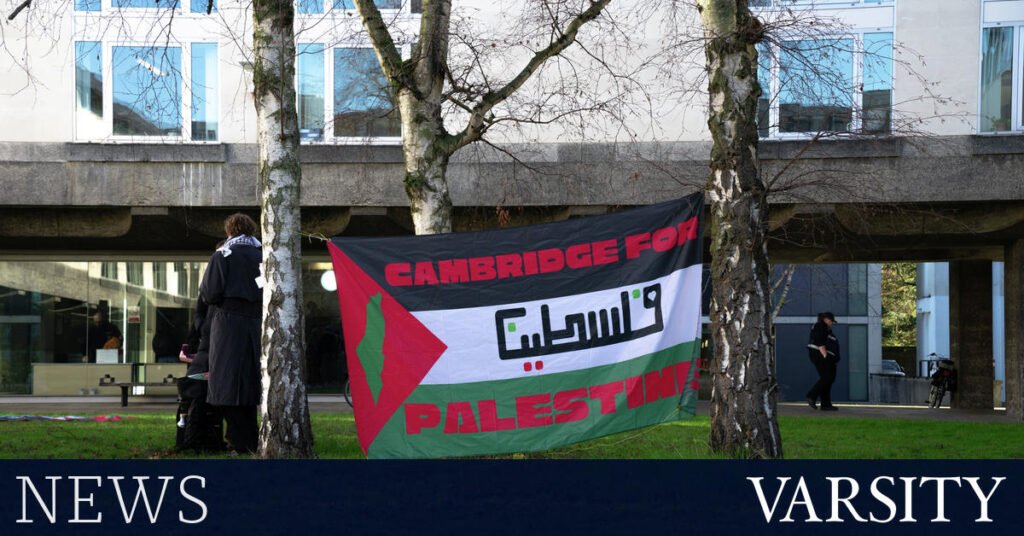
The system was proposed by CUETB at a meeting of the Council in February to discuss a report by the Working Group on Investments. This group was established in exchange for Cambridge for Palestine dismantling its encampment outside King’s College in July 2024.
In October, the Council accepted the Group’s recommendation to end investments in weapons illegal under UK law, but offered three options for conventional weapons: no restrictions, a 1% threshold, or complete divestment.
The group stressed that the Council’s decision “should not jeopardise the fund of funds model of investment and should not result in financial detriment to those who invest in the CUEF”. This model involves employing third-party managers instead of investing directly in companies.
At the February meeting, the Chair of CUETB told councillors that the second two options were impossible without compromising this model or returns on investments, and proposed the transparency regime as an alternative. No decisions were made at this meeting or an earlier discussion in November.
Now the Council has endorsed CUETB’s proposal, but said it will keep the system under review to ensure it is effective. It has also urged CUETB to hold UCIM to account, and to be “as open as possible” with the University without compromising non-disclosure agreements with third-party fund managers.
The Council is yet to respond to a formal petition, or ‘Grace’, initiated in March by 155 members of the Regent House – the governing body composed of Cambridge academics and staff – to introduce full arms divestment as a duty of CUETB in the University Ordinances. This is set to be discussed on 1 June.
Previous Graces on divestment have failed after the Council asserted its sole authority to manage University finances. The initiators of this latest petition hope to avoid this issue by leaning on the Regent House’s power to amend the Ordinances.
Jason Scott-Warren, an English fellow at Caius and member of the Council, disagrees with CUETB’s analysis, telling Varsity: “Just as they did in relation to fossil fuel divestment, so now the administration are claiming that arms divestment would threaten the ‘fund of funds’ model that allegedly props up the University’s superior return on its endowment. Despite the fact that ethical funds that screen out arms are commonplace, Council was informed that our third-party investors would be unable to process such an idea, and would tell the University to take its money elsewhere.
“The result is that, in investments as in research collaboration, the outcome of the Working Group report has been a minor increase in oversight. The University remains fully open to working with and profiting from industries that are implicated in war crimes and crimes against humanity.”
Matthew Copeman and Austin Denis, the undergraduate and postgraduate presidents of the Students’ Union, reacted: “Used correctly, this could achieve real progress towards a more ethical endowment. However, without mechanisms for genuine accountability and transparency, it remains incomplete. The previous Grace submitted addresses these gaps directly, and we urge the Council to accept it as a necessary step to rebuild trust across the University community.”
However, Richard Penty, an engineering professor at Sidney Sussex, said: “The decision by Council strikes a sensible balance. Importantly, it protects the investment model, which is so vital to support the University’s activities and its students, while improving the transparency of CUEF’s investments. The acceptance of the broader recommendations of the working group allows the University to continue to play its important role in National Security while maintaining funding streams for our excellent research.”
Thomas Miley, a sociology academic who has spoken at protests in favour of divestment, told Varsity: “While transparency is a step in the right direction towards a more democratic model of investment, it is disappointing to see that the Council has chosen not to live up to the University’s moral and ethical obligation to make a clear stance for peace and against arms profiteering in a world that is besieged by never-ending wars.
“The University’s guidelines for investment and research funding should embody a commitment to the values of democratic accountability and peaceful coexistence first and foremost, rather than subordinate these to the prospects of collaboration with those who profit by death and destruction. By all means, the Council is a less democratic governing institution than the Regent House, and it would seem appropriate for the latter to be the body tasked to make such an important decision.”