
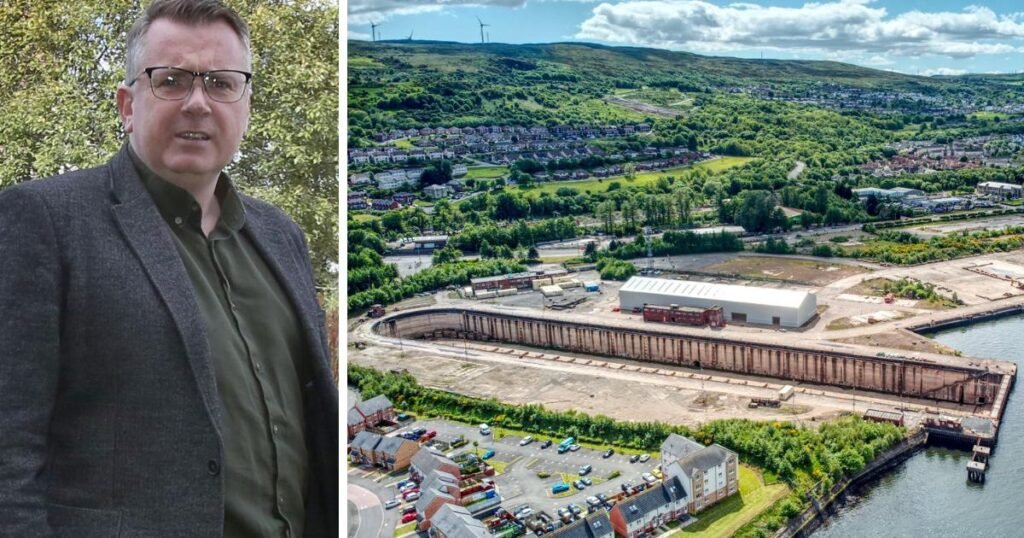
As a director of Inchgreen Marine Park Ltd, the joint venture between the council and Clydeport Operations Ltd (Peel), I welcome this investment which builds on the previous funding from the UK Government (£4.2m), the Scottish Government (£5.6m) and Inverclyde Council (£1.4m) through the Glasgow City Region City Deal and the Scottish Government’s Clyde Mission Fund.
This funding will enable the dry dock to be refurbished to a standard where it’s able to take UK navy ships, whilst it is also transferred to the control of the adjacent Inchgreen Marine Park Joint Venture (JV).
As well as providing much needed investment in this national asset, this is a significant game changer in two other ways.
Firstly, it will allow a more unified business case to be made to prospective companies, which can only increase the potential for job creation. Secondly, as the JV gets income from the rent, its potential income will increase, enabling more investment to be made in the future, either through the JV directly or via the council dividend from the JV; jobs creating jobs.
Investment at Inchgreen also complements the significant and ongoing investment by the Scottish Government in Ferguson Marine. Partnership between the two should enable a sustainable maritime sector to re-establish itself in Inverclyde, with further industrial space along the A8 corridor available.

From a Scottish Government and Inverclyde Council perspective, the rest of the Budget did not ‘reset the dial’.
Whilst there was an announcement of £820m for the Scottish Government through the Barnett Formula, this is not a single year increase but will occur over the next four or five years. Given that Scottish Government Budget is £63 billion (£63,000 million), then the percentage increase for this year is less than 0.25 per cent (being generous).
Also, it still does not address the legacy of the rise in National Insurance contributions made by Labour last year, which continue to negatively impact our public services.

The decision by the UK Labour Government to commit to ending the two-child cap in the rest of the UK is welcome. In doing so they are catching up with the SNP Scottish Government which were already committed to do that next year – and because of the vagaries of the Barnett formula, this will enable the funding in Scotland to be reallocated.
The Scottish Government has pledged to use any funding released to tackle child poverty.
One other significant announcement last week was made by John Swinney. He has stated that enabling legislation is proposed to allow regional partnerships, such as the Glasgow City Region, to take on new powers.

First, I am glad that this is not an imposition of a structure on the Glasgow City Region, which on the whole appears to be working well, but could work better, as Identified by the councils themselves. Indeed, this is an example of the Scottish Government listening to councils.
How this develops we will need to see but we must ensure that Inverclyde’s voice is not lessened.
I am of the age where I remember Strathclyde Regional Council (SRC) and the centralised, and Glasgow-centric, bureaucracy it created. We do not need an SRC 2.0!