
Global: New Global Council for a Common Good Economy to promote alternative to ‘failing’ economic status quo
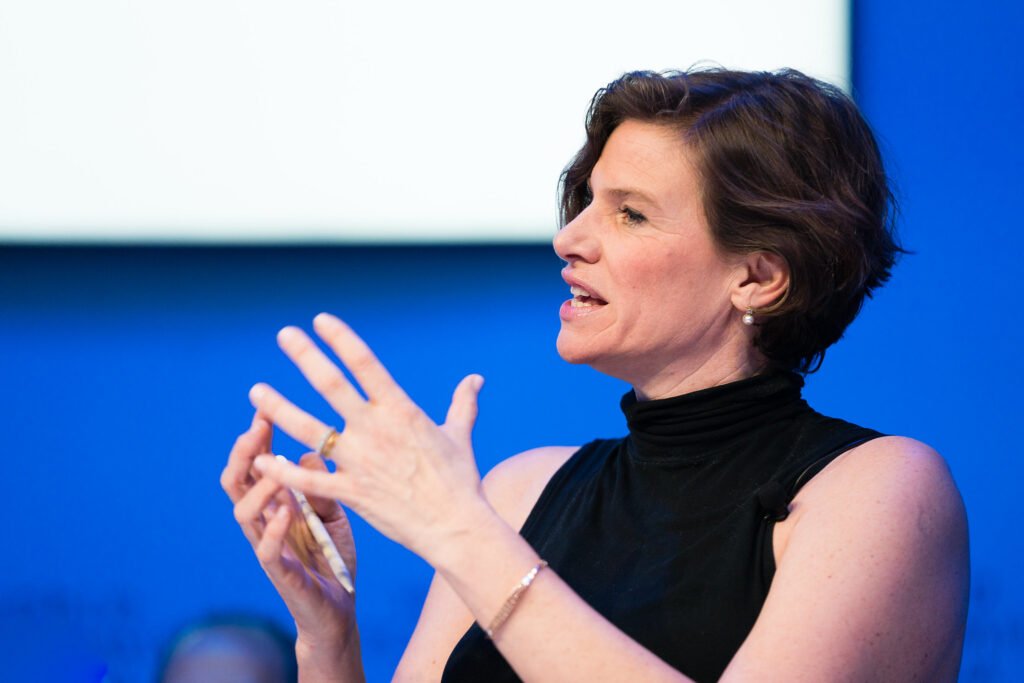
A new initiative to promote economic systems grounded in justice, equality, sustainability and solidarity was launched in Barcelona, Spain on Saturday by University College London’s (UCL) professor Mariana Mazzucato and Spain’s economy minister Carlos Cuerpo. The Global Council for a Common Good Economy aims to challenge orthodox economic thinking, including what we value and measure, how finance serves the economy and whose interests governance serves. The Council will be co-chaired by Mazzucato and Cuerpo, with the UCL Institute for Innovation and Public Purpose as its main academic partner and the Government of Spain as inaugural host. Its membership, drawn from leading economists across the Global North and South, will be announced in due course. It will hold its first meeting in summer 2026 and convene in person on the sidelines of key global events, including the World Bank–IMF Annual Meetings and COP.
US: Impact investors to avoid taking political sides in 2026, says new report
Trying to avoid taking political sides, increased need for catalytic capital and a focus on communities are some of the main trends to look out for in impact investing for 2026. That’s according to interviews with 18 leaders in impact investing, featured in Sorenson Impact Institute’s 2026 Impact Investing Trends & Opportunities. Avoiding labels of being “woke” by showing how impact investing aligns with market practices, or describing it as a “discipline” rather than a political view should be a priority, as the practice needs to appeal to most and avoid becoming a victim of political polarisation, according to the contributors.
The report also finds that reduced public funding creates a higher need for capital that could take higher risk or lower returns, which is starting to lead to more partnerships between philanthropists and impact investors. Some contributors say it would result in a clearer difference between philanthropy and impact investing, while others suggest a blurring of the lines instead as some investors opt to “carve out portions of their portfolios” to pursue catalytic capital investments themselves. The report also highlights momentum in strategies that pursue “intersectional impact”, meaning they integrate both social and environmental objectives.
Global: Have you tried bringing a fox to a conference?
An AI-powered fox, that is. The Skoll Word Forum is taking place this week in Oxford, and as hundreds of delegates are doing their best to navigate the countless mainstage and fringe events, alongside networking, pitching and deal-making, impact consultancy Black Fox Global has launched Farah the Fox, an “AI fundraising strategist” to accompany you during the conference. We tested Farah, and found it delivered targeted advice specific to your organisation and circumstances, helping to identify which delegates are most relevant to you, what to expect from them and how to prepare and engage conversations. Farah, still in beta version, is Chat GPT-powered, but its advice is substantially more informed and nuanced than the generic OpenAI model, which suggests it’s been trained on expert material. Have you used it? If so, we’d love to hear what you thought of it – email us at news@pioneerspost.com.
Global: British International Investment aims to mobilise £15bn of new capital for developing countries
The UK’s development finance institution, British International Investment (BII) has announced a plan to mobilise £15bn of new capital, half of which will be provided by BII and the other half by private sector investment, according to its new five-year strategy revealed this week. The strategy details a commitment to increase BII’s investments in “frontier markets” (the “least developed countries”) to 25% of all new capital deployed. The investor will also increase its focus on climate finance, with 40% of new investments fulfilling that criteria, up from 30% in its previous strategy. This will include the £1bn British Climate Partners, a new initiative to invest in emission reductions in countries that are still heavily reliant on coal power, including India and several countries in southeast Asia. The strategy also reveals a move to “market-level impact”, an approach that targets shifts that can improve the system as a whole, for example introducing competition in a particular sector to lower prices and increase accessibility for consumers.
Costa Rica: Country’s social and solidarity economy mapped
There were 27,453 “social and solidarity economy entities” (SSE) in Costa Rica as of March 2026, involving 30% of the total population, according to the Costa Rica Social and Solidarity Economy Observatory. The data was revealed by Costa Rica’s national director of social and solidarity economy Mario Durán Fernández in an interview published by the International Labour Organisation last week. The Costa Rica Social and Solidarity Economy Observatory was established in July 2025 to map the SSE and disseminate strategic information to strengthen public policy decision-making and raise the profile of the sector. In March the Costa Rican government passed a new law to give formal legal recognition to SSE organisations and recognise the sector’s diversity. Under the law, the SSE includes community-based organisations, co-operatives, worker-owned companies and more.
UK: ‘Everyone in” social investment pilot lifted hundreds out of homelessness, evaluation concludes
The “Everyone In” £50m social investment pilot run by the government and Better Society Capital is “proof that private and public capital can be blended for social purpose”, according to an evaluation of the scheme recently published by the Policy Evaluation and Research Unit (PERU) at Manchester Metropolitan University. Launched in response to rough sleeping during the Covid-19 pandemic, the pilot sought to deliver affordable housing for people experiencing homelessness. The £50m provided by Better Society Capital and the UK government attracted an additional £138m from investors. The capital was channeled through three social investment managers – Social and Sustainable Capital (SASC), Resonance, and Bridges Fund Management – which implemented different models with not-for-profit housing providers. A total of 528 properties were purchased across England and Scotland, with more than 90% of properties in areas with the highest numbers of homelessness assessments. Compared with grant programmes, the social investment pilot delivered faster procurement, higher-quality housing and greater stability for tenants, the evaluation found. The social investment pilot was also cost-neutral or lower cost than using privately rented housing or temporary accommodation.
England: State of social enterprise across country’s regions revealed
Stats and insights on the contributions of social enterprise across England’s different regions were published last week by Social Enterprise UK (SEUK), in collaboration with Access – The Foundation for Social Investment and Better Society Capital. SEUK said the nine regional fact sheets are designed to help local authorities understand the contribution of social enterprises to their economy, support social enterprises’ work and be a resource for journalists. Data in the fact sheets includes: just 43% of social enterprise leaders in Yorkshire are women, in comparison to the UK figure of 57%; the median social enterprise turnover in North West England was around £117,500, in comparison to £67,500 in North East England; and around 70% of social enterprises in the West Midlands operate as Community Interest Companies, compared to 43% in London.
Figure of the week: £80m
That’s the size of Eka Venture’s second fund as the impact VC firm announced its final close this month. Fund II will focus on early-stage startups, and plans to back up to 30 UK companies. Investors in the fund include British Business Bank, Better Society Capital, Guy’s & St Thomas’ Foundation, The Health Foundation, WRAP and Esmée Fairbairn Foundation.
Movers and Shakers
- Sophie Pender, founder and CEO of social enterprise The 93% Club and WISE100 winner, is joining the board of UNICEF UK.
Top image: Mariana Mazzucato speaks at the World Economic Forum in 2020 (credit: UCL Institute for Innovation and Public Purpose, Flickr)

| Ready to invest in independent, solutions-based journalism?
Our paying members get unrestricted access to all our content, while helping to sustain our journalism. Plus, we’re an independently owned social enterprise, so joining our mission means you’re investing in the social economy. |