
That is the conclusion of a detailed review of party pledges on capital spending in Wales, published by Cardiff University as part of its 2026 Senedd manifesto analysis series, which reveals stark disagreements between political parties and warns that limited capital funding will force difficult choices no matter who forms the next government.
The analysis highlights a wide range of promises on major infrastructure investment, including new hospitals, social housing, improved road networks, and upgraded rail lines.
However, it says these ambitions may not be achievable within a capital budget expected to decline by around 9 per cent in real terms over the next parliamentary term.
The report, part of the 2026 Scottish and Welsh Elections Project led by Cardiff University in partnership with the Fraser of Allander Institute and supported by the Nuffield Foundation, examines capital spending plans in the context of a challenging financial outlook for the next Welsh Government.
Mark Drakeford, finance secretary, has taken a “neutral” approach to the 2026-27 Draft Budget.
This means spending has been increased only to match forecast inflation, leaving just £118 million in unallocated capital funding for 2026-27.
This limited headroom will make prioritising new infrastructure projects challenging, according to the analysis.
The capital block grant is expected to remain flat at around £3.3 billion per year through 2029-30.
With UK Government priorities shifting towards defence spending, which does not generate devolved funding for Wales, the outlook is particularly challenging.
The Welsh Government can borrow up to £165 million for capital investment in 2026-27, with this figure rising annually in line with inflation.
Additional UK Government capital funding outside the core block grant – estimated at £152 million in 2026-27 – is set to fall sharply to just £44 million by 2029-30.
Taken together, the analysis concludes that the Welsh Government’s core capital budget (excluding financial transactions funding) could decline by 9 per cent in real terms over the course of the next Senedd term.
Health infrastructure features prominently in every party’s manifesto.
Plaid Cymru, the Welsh Conservatives and Reform UK have all promised new surgical hubs to help clear NHS waiting lists.
Plaid Cymru has proposed a new investment programme for sustainable health and care facilities, while the Welsh Liberal Democrats are calling for a capital investment plan to repair and upgrade hospital buildings.
Reform UK has pledged a multi-year capital programme for modernising and renewing hospital estates.
The Welsh Conservatives want to establish a ‘21st Century Hospitals Fund’ to support hospital upgrades and construction. This includes building four new community hospitals with minor injuries units.
Welsh Labour has pledged £4 billion for new hospitals through its ‘Hospitals of the Future Fund’. This would cover the replacement of Wrexham Maelor Hospital and University Hospital Wales, and a major new hospital in West Wales. However, details around project costs, funding sources and annual spending profiles remain unclear.
Health capital spending for 2026-27 is expected to total around £566 million.
After deducting allocations for maintenance, digital upgrades, diagnostics, vehicles, community hubs and smaller schemes, only £250 million remains for other approved and unapproved projects.
Delivering the proposed £4 billion programme over 10 years would require annual spending of around £400 million – well above existing capital allocations.
Labour’s plans rely on a combination of block grant funding, capital borrowing, and the Mutual Investment Model (MIM).
MIM defers capital costs by using private sector finance, but this means future day-to-day funding is used to repay investments over time – potentially placing a strain on long-term budgets.
The New Velindre Cancer Centre, delivered through the MIM, carries a capital value of £312 million.
Once complete, the Welsh Government will make annual service payments of £34 million for 25 years, with a portion indexed to inflation.
Transport investment also features strongly across manifestos.
Welsh Labour, the Welsh Liberal Democrats, the Green Party and Plaid Cymru all support expanding rail infrastructure through new stations and line upgrades.
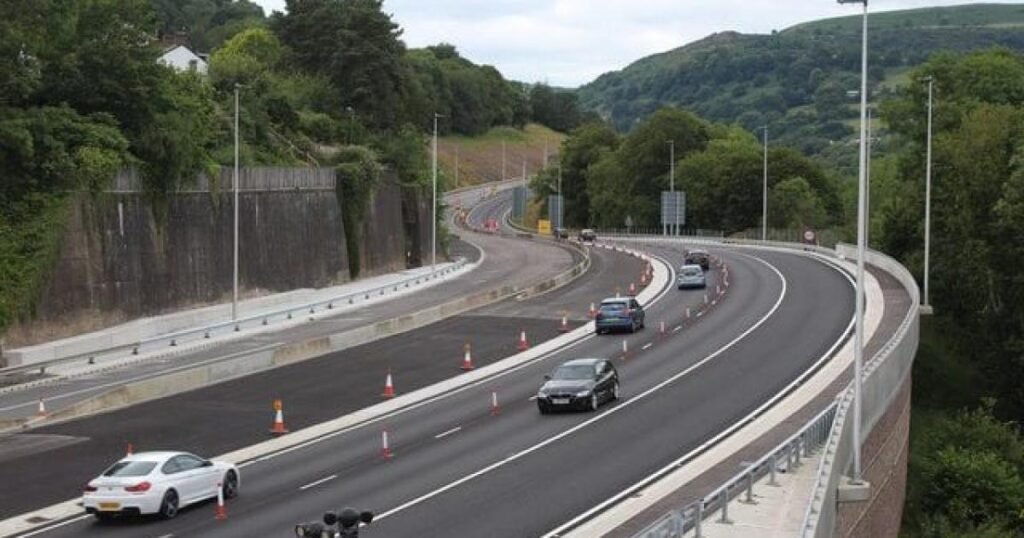
Reform UK and the Welsh Conservatives want to increase rail capacity more broadly. Both have also committed to building the long-discussed M4 relief road south of Newport, a project cancelled by the current government in 2019 with an estimated cost of £1.6 billion.
Updated construction costs are likely to be significantly higher, given a 29 per cent increase in infrastructure costs since the original proposal was dropped.
Reform UK has suggested private funding or support from a new British Sovereign Wealth Fund. As with privately financed hospital projects, this approach would shift upfront capital costs into future spending commitments.
The A465 dualling project was privately funded and has a capital value of £590 million. It now requires annual service payments of £38 million for the next 30 years.
Dan Thomas, Reform UK leader, has suggested reallocating funding earmarked for rail in favour of roads.
He has proposed diverting £2.5 billion from the Transport for Wales rail investment prospectus – valued at £14 billion by the 2040s – towards immediate road improvements.
However, the analysis points out this is not a viable option.
Rail infrastructure in Wales remains a reserved area, meaning funding decisions are made by the UK Government, not by the Senedd.
The £14 billion plan is not underpinned by actual allocations, with only £350 million identified in the 2025 Spending Review.
No additional funds could be redirected from rail to road projects during the 2026-2030 Senedd term.
Housing commitments are similarly ambitious.
The social housing grant is set at £446 million for 2026-27.
Manifesto pledges include Welsh Labour’s promise of 40,000 social homes over the next decade, Plaid Cymru’s target of 20,000 by 2030, the Green Party’s pledge of 60,000 over 10 years, and the Welsh Liberal Democrats’ goal of 30,000.
These figures broadly align with the outgoing government’s target of 20,000 additional social homes over the previous term.
However, recent data suggests this target will be narrowly missed, and the numbers include non-social housing and some existing social homes.
There are also major pledges on housing decarbonisation.
Welsh Labour, Plaid Cymru and the Green Party have all committed to expanding retrofitting and energy efficiency schemes.
Reform UK, by contrast, has pledged to “scrap net zero in devolved policy” and end Welsh Government “green subsidies.”
Mr Thomas has argued this would free up £145 million in capital funds for other priorities. The analysis warns that such savings could not be used to fund the party’s proposed tax cuts.
The report concludes that while all parties have set out bold capital spending ambitions, tough decisions will be unavoidable given the shrinking budget.
It warns that reliance on private finance models does not eliminate costs. Instead, it defers them – sometimes at greater overall expense – to future spending years, placing additional pressure on day-to-day budgets.
Clearer information on funding plans is needed, according to the authors, who urge parties to provide greater transparency not just for the first year, but across the full Senedd term.
Headline pledges may sound attractive, but without clarity on funding, timelines and trade-offs, questions remain over their deliverability.
The analysis suggests that only through greater detail can voters judge whether promises will become reality – and whether they represent the best use of limited public funds.