
Unlock the Editor’s Digest for free
Roula Khalaf, Editor of the FT, selects her favourite stories in this weekly newsletter.
As Lord Stephen Carter, chief executive of Informa, the UK-listed data and trade show company, moved to the United Arab Emirates last year, its shares rose 30 per cent in six months. At its capital markets day there in November, the first presentation slide was: “Welcome to Dubai!”
It goes to show you never can tell. Informa’s bet on Dubai’s potential felt less prescient this week: its shares fell sharply on Monday after Iran retaliated against bombing by the US and Israel by attacking Gulf states with missiles and drones. That halted a rally in the FTSE 100 over the past year, with the energy company BP one of the few index constituents to benefit.
The contrast fits with the change in investor sentiment that galvanised the UK stock market before the attack. Money flowed out of technology, software and business service sectors and into capital and asset-intensive sectors such as banking, energy, mining and defence. The old industrial stalwarts of the FTSE 100, including BP, came back into investment fashion.
BP is among what Goldman Sachs and others call Halo (heavy assets, low obsolescence) stocks. Along with defence contractors including BAE Systems and mining companies such as Rio Tinto, they have gained not only from this change but from global investors diversifying out of the US. After years of underperformance, the FTSE 100 beat the S&P 500’s total return in 2025.
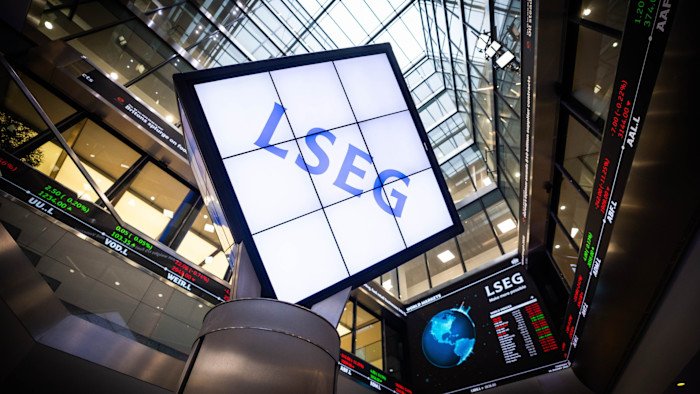
The UK index has been reshaped. The advertising group WPP, a member since 1998, dropped out in December and software and services groups have been hurt by AI concerns. Shares in Relx, the legal and business information group, fell by more than 30 per cent in a year and the data-rich London Stock Exchange Group also suffered.
The uncertainties created by the Iran war make it impossible to predict what will happen now. A retreat from risk-taking plays to the strengths of some sectors in the FTSE 100. Rolls-Royce, an outstanding performer in the past two years, was exposed to worries about airlines and aviation this week but also stands to benefit from higher defence spending.
The FTSE 100 is a poor proxy for the UK economy. Its members are typically global, gaining only 22 per cent of sales from the UK (a smaller proportion than from North America). Fresnillo, Mexico’s largest gold producer, produced the highest return in the index last year, reflecting London’s long history as a financial centre for global miners and commodity companies.
But even the more UK-focused FTSE 250, whose constituents get more than half their revenues from the UK and 70 per cent from Europe as a whole, has been performing better. Global investors have woken up to the corporate bargains on offer in the UK, with monthly flows into UK equity funds this year at their highest since 2018, according to Goldman Sachs.
The vicious cycle for the UK of passive investors allocating more to US index funds to match their higher equity returns has started to reverse. The hedge fund manager Sir Paul Marshall wrote five years ago that the City of London was “in danger of becoming a sort of Jurassic Park”, but, as in the Steven Spielberg film, the dinosaurs have been getting livelier.
This created an improving mood in the City, if not in the wider UK economy, until this week. A market with double-digit annual returns and growing dynamism is not only good for investors but more attractive as a financial centre. Fewer companies may feel the need to move to the US and London is more likely to be picked by those weighing up venues for initial public offerings.
The question is, what happens now? The UK is hardly alone in being affected by the war: uncertainty ricocheted around global markets this week. But instability in the Gulf has a direct impact on UK hedge funds and institutions with employees there, and on companies such as Informa. While the Gulf is only 10 per cent of its live events business, it has been growing.
Even if calm returns, the FTSE 100’s Halo strength will be a mixed blessing. The UK needs to keep building high-growth technology and life sciences companies: Zeneca entered the index in 1993 after it was demerged from Imperial Chemical Industries, a classic Halo stock. AstraZeneca is now the most valuable company in Britain, valued at nearly £240bn this week.
But it has been so long since London produced world-beating returns and companies were rewarded for rising earnings that even war in the Middle East cannot entirely spoil the mood. The halo dimmed this week, but there is still hope that it can shine again.