
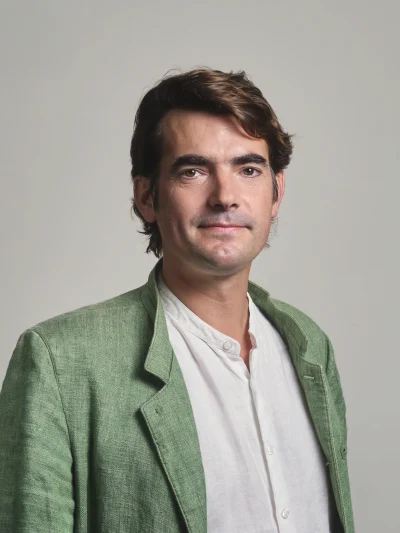
It’s an exciting and uncertain time for both healthcare providers and researchers. Disruptive technologies are coming to the fore and data-driven insights seem to be playing an ever-greater role in how we analyse and interpret information.
In the light of these changes, will emerging technologies, such as artificial intelligence, be the game changers their supporters claim, or is there still a place for traditional, tried and trusted good science principles in the research pipeline?
We sat down with Nat Hutley, CEO of Koodos – a regulated investment firm with a clear focus in the healthcare, life sciences, and oncology sectors – to discuss in more detail.
- The healthtech investment landscape has shifted quite a bit over the past couple of years. From your perspective, what’s changed most and what’s driving it?
This is quite a wide question. I can’t talk about broader changes, as we’re a newcomer in the health tech investment landscape. I can talk about our specific experience, however.
It seems like in our area of expertise, genomics, immuno-oncologies and AI seem to be attracting the big dollars still.
The simplicity of what we are investing in, perhaps, lacks the buzz of the ’new shiny thing,’ herd mentality that dominates most industries.
COVID and the conspiracy theories surrounding it have undoubtedly changed this industry from a public opinion perspective, but our focus and aim is just to plug away at this nascent space and forget the rest.
-
Nat Hutley
There’s been a lot of talk about funding tightening across tech. Is healthtech experiencing the same pressure?
I am sure the long-term horizons for health investments in general are a bit of a buzzkill for many investors.
The hyper valuations of low-revenue companies, seemingly with the sole objective of selling to the largest pharma, has undoubtedly changed.
Pharmaceutical companies now seem to be pursuing a Mergers & Acquisition strategy instead of internal innovation.
Historically, it’s been cheaper for large corporations to buy in innovation rather than try to foster it – that seems to be changing, and as a result, only good businesses are being bought – making favourable returns less likely and less often.
- How is investor confidence in healthtech right now — and are investors becoming more selective about what they back, particularly around AI?
AI is being marketed as something that can do everything smarter than anyone else and quicker than anything else – or pretty much the solution to everything.
Speed is truth, they say, and if it’s moving fast, it must be right! I don’t know about broader investor confidence, but I do like that what we are doing as a business is tangible – taking bits of physical tumors and testing them with real drugs.
Regulation is a lagging indicator and before we adopt AI, I can’t see us adopting the Tower of Babel.
It seems that in the growth-at-all cost model, the winners are obvious. They might be smarter people than me, but to us, it seems like blind optimism and not something we can rationally support for our investors.
- Why do so many UK healthtech innovations still stall at the pilot stage and struggle to commercialise?
This is a good question!
We are the envy of the world with the NHS. We also have the golden triangle of innovation around Oxford and amazing technological investments.
I think we lack the risk appetite and the funding to take these projects through to commercialisation.
Our innovators bring the rigour of scientific communities and validate their science – but that’s where the journey ends and often where their interests also finish.
We have, perhaps, a joy of the science and validation, whereas the Americans have the joy of winning and making money.
- Research for the UK Office for Life Sciences shows fewer than one in five healthtech businesses have applied for public sector manufacturing grants. What’s putting them off?
I don’t know. I do know that these grants are hard to apply for and time consuming to complete. Perhaps they don’t apply because they don’t think they will be successful.
I had a call with Health Innovation Wessex and to say it was unhelpful, would be an understatement. Too many bureaucrats pushing paper!
Even close family members of mine warn and caution me against doing this Functional Testing project because of the minefield of bureaucracy it may create.
- How do you see the healthtech investment landscape evolving over the next 12–24 months?
The health tech landscape is evolving at pace with a host of new and exciting technologies under development.
While it’s difficult to predict exactly how the investment side of things will change, what’s clear is that there is growing appetite to bring revolutionary technologies to market that have the potential to transform healthcare and positively impact lives UK and worldwide.
Pharmaceutical companies now seem to be pursuing a Mergers & Acquisition strategy instead of internal innovation.
Historically, it’s been cheaper for large corporations to buy in innovation rather than try to foster it – that seems to be changing, and as a result, only good businesses are being bought – making favourable returns less likely and less often.
- What advice would you give a healthtech founder to make their business investable and scalable?
Get someone commercial if you want to build a business.
Don’t take investor’s money if you want a perpetual science project – there’s a big difference between funding scientific projects and expecting a healthy return on investment.
The clinical trial you want to do and the clinical trial you need to do are two very different things.
