
The announcement on 8 April of a tentative two-week ceasefire between the US and Iran saw oil prices fall and markets rally.
 However, as Property Week went to press, uncertainty remained over the next stage of the conflict in the Middle East.
The longer-term impact on the region, and indeed the world, is becoming clearer: higher inflation, shortages of key fuels and unpredictability in markets ranging from Tokyo to Toronto. How the war will affect inward investment from the Middle East into UK real estate is less clear.
The global GDP at risk from the Iran conflict is estimated to be in the region of $3.5trn (£2.6trn) or 3.15% of global output if the Strait of Hormuz stays shut.
A report by Swiss-Korean think tank SolAbility projects that many Gulf economies face a collapse in revenue. It adds that even “Saudi Arabia’s Vision 2030 non-oil revenue diversification strategy, while partially protective, does not offset the scale of hydrocarbon revenue loss at current bypass constraints”. The report says Gulf states “face simultaneous revenue collapse, infrastructure damage and fiscal reserve drawdown in the current scenario”.
The think tank is not the only one to outline the impact of the conflict on Gulf countries. A report by Oxford Economics, published on 27 March, predicts a long-term hit to multiple sectors of Gulf countries’ GDP. It states: “We forecast that the negative impact on tourism, along with domestic demand, will last much longer than the conflict and that the sector will take time to recover.
“The recovery depends on the level of security the Gulf Cooperation Council [achieves once the war ends]. Some countries’ public finances will improve significantly, but only those that are able to export oil while prices remain high. We think the rest will see deterioration in their fiscal balances in the coming years.”
Too early to tell
The scale of any fiscal reserve drawdown is what may concern UK property investment managers, who could see foreign investment slow or, in the worst-case scenario, reverse.
News of a ceasefire is unlikely to abate those concerns. Clive Docwra, managing director, McBains, says: “Despite the agreement of a two-week ceasefire and the opening of the Strait of Hormuz, investment in UK commercial real estate has already been hit hard by the Iran war, and will take some time to recover.
“Supply chain delays as a result of materials unable to come from the Middle East have already deterred investors, and the resultant logjam in materials getting through will take a while to clear.”
However, Neal Moy, managing director of Paragon Development Finance, says the Iran conflict raises issues that have played out many times before over the past few decades.
“Geopolitical shocks often raise questions about whether overseas investors will pull back, but it’s still too early to draw conclusions with any real certainty,” he explains. “Worth remembering is that UK real estate is typically viewed by Gulf investors as a long-term, income-generating and politically stable asset. While capital allocation is being reviewed by a few states, that does not necessarily translate into selling. Developers have become used to navigating economic shocks over the past decade, but ongoing uncertainty is unhelpful for demand, particularly on the sales side.”
For long-term stability, the UK looks like a safe haven for capital
Brian Welsh, OPRE Solutions
Walter Boettcher, chief economist and head of research and economics at Colliers, adds: “It’s too soon to say whether people in the Middle East have taken a view on what they are going to do yet [with sovereign wealth investment], but I wouldn’t underestimate the depth of resources they have tucked away in their sovereign wealth funds to actually provide a good degree of stability, at least for the short term. One fund had a trillion [dollars] in it – that will go a long way in terms of providing stability.”
Middle East funds have typically been big investors in global and UK real estate. Globally, the Gulf states have an estimated $5trn (£3.8trn) in assets invested via sovereign wealth funds.
According to a report published last year by the Bank of London and the Middle East (BLME), there has traditionally been a “transatlantic tussle” between the US and UK for investment from Arab countries, with London perceived – at least by the BLME – as edging that battle.
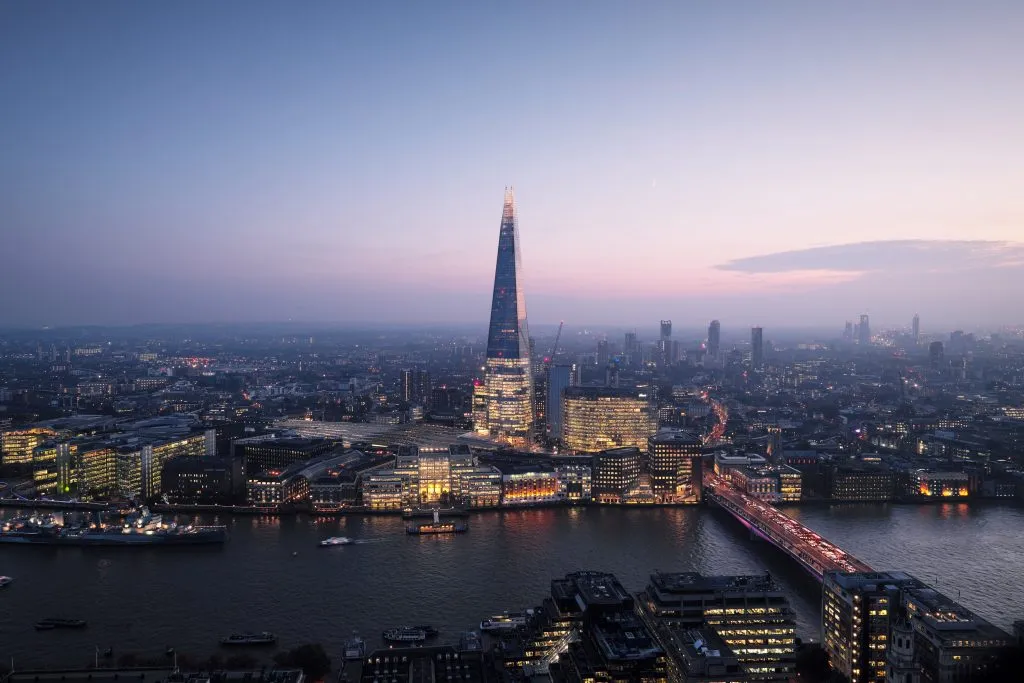
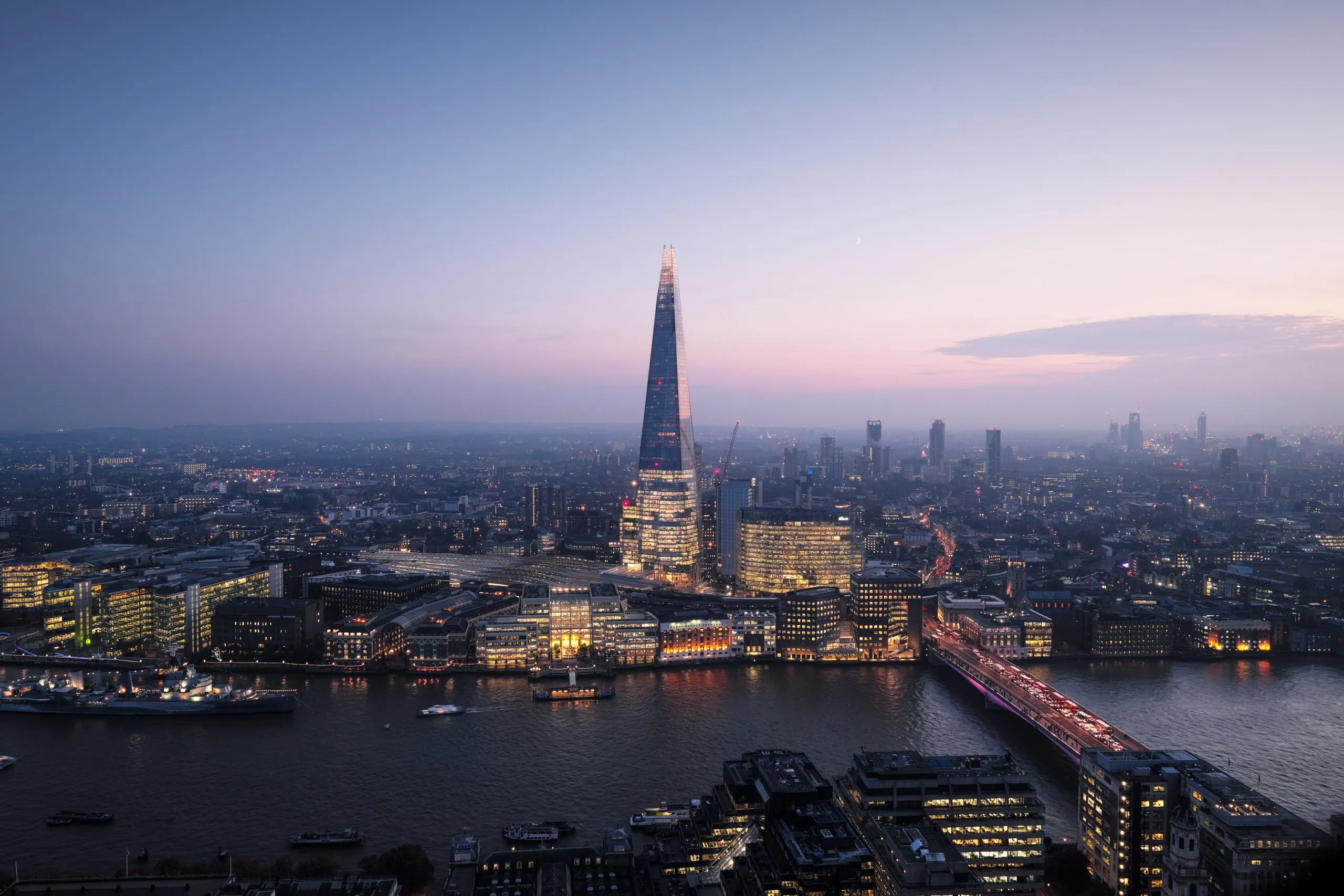
The Qatar Investment Authority alone has invested an estimated £100bn in UK assets. This includes The Shard, a 20% stake in Heathrow airport and a 50% stake, along with Brookfield Properties, in Canary Wharf Group, which it acquired in 2015. In November, Dubai-based developer Arada also acquired an 80% stake in the 5,000-home Thameside West development as part of its UK expansion plans.
The BLME’s annual report notes that both the US and the UK have faced competition for investment from within Gulf countries themselves, even before the Iran conflict. But the UK does have advantages in other areas that may make inward investment more resilient to a downturn.
“In a world where certainty is the scarcest commodity, the UK’s institutional-grade transparency, legal robustness and currency stability make it the default destination for capital that cannot afford to take big risks,” says Brian Welsh, chief executive of student accommodation consultancy OPRE Solutions.
“Before the Iran conflict, we saw rising interest from particularly the south-east Asian market, and this will only increase,” he adds.
“Although Dubai has seen huge growth over the past few years in the residential market in comparison to the UK, no one can deny that for long-term stability the UK – despite inflationary pressures as a result of the conflict – looks like a safe haven for capital wanting to find a home in real estate, with the structurally sound residential living sector, which still sees occupancy of 90%-plus, the clear preference.”
Boettcher adds: “If things were to degenerate considerably further or the timeframe of the disruption becomes over-extended then there may be some concerns, but equally the assets [Gulf investors] have in the UK are considered to be in a safe environment, with the rule of law protecting them. I can’t overestimate how important that is to all Middle Eastern investors, especially given the circumstances we’ve seen so far.”
Strong and stable
The UK, and London in particular, has often been considered a safe haven for capital flight during a crisis. When Transparency International studied the impact of global crises and corruption on the location for investment, it found that during the Arab Spring in 2011, London saw a 50% rise in investment from the Middle East region.
Research from Knight Frank showed that, in the 12 months to 30 June 2015, Middle Eastern investment in the UK rose from 11% to 16% on the back of geopolitical instability in the region. It noted: “This trend is likely to continue, with future crises promising more crisis capital, much of which will be invested into the UK property market.”
Ultimately, the big unknown for every sovereign wealth fund, investment manager and, indeed, the global economy is how long the Iran war lasts. The biggest lever over real estate investment will come down to escalation, a long war of attrition or some kind of lasting peace.
“From our discussions at Mipim, appetite from the UAE, Qatar and Saudi Arabia has not changed – interest remains for both UK and European real estate,” Welsh says. “Those that already have active investments are looking at asset management strategies in order to create value over the next six to 12 months before revisiting possible, more positive, exits.”