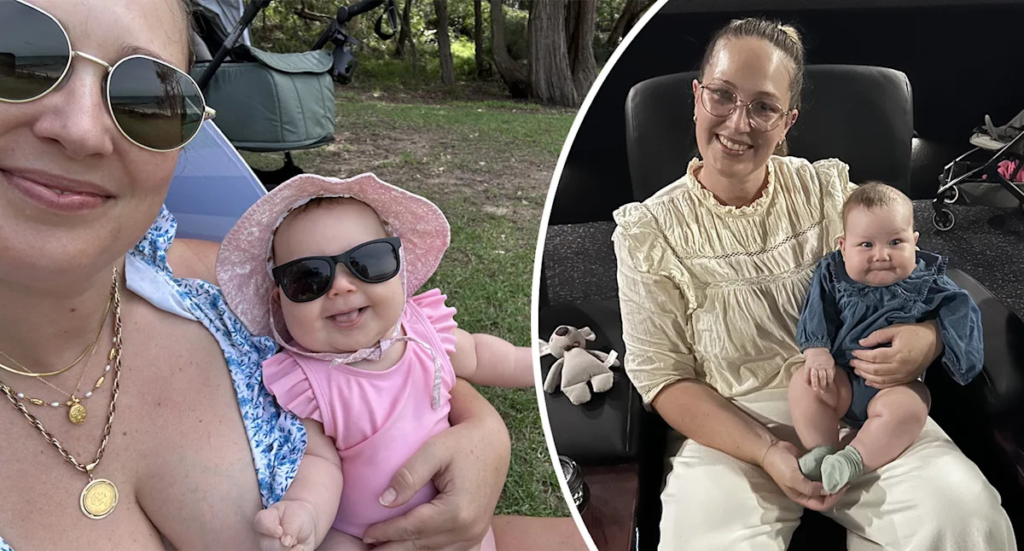
New mum Sarah Rugg would “absolutely love” to have a place to call her own. But the 36-year-old told Yahoo Finance it’s not something she and her partner can realistically afford to do in Sydney.
The couple’s daughter, Maggie, is just five months old, but Rugg is already worried about her financial future and whether she’ll be able to get onto the property ladder herself when she grows up.
RELATED
“Unless there’s a crash in the market, the way it’s going and as interest rates keep rising and the cost of living, it’s going to be so hard for them,” Rugg said.
“We’re trying to start helping her out now and put some money aside for her so when she does get to an age, she’ll at least have something.
“If everything keeps going the way it’s going, absolutely, it’s going to be even harder for them for this generation.”
Rugg is currently on 12 months maternity leave from her hotel management job, but is now weighing up whether she returns to work early to help manage costs and save further.
“We definitely won’t be able to afford in Sydney. We weren’t the smartest savers when we were younger, both of us. So now we’re in a position where we’re quite screwed,” she said.
“The property market has jumped so much in such a short amount of time that anyone like us that didn’t really think logically about that, is now screwed.”
Parents anxious over kids’ financial futures
Rugg isn’t the only parent with these anxieties.
New research from Sharesies found 69 per cent of parents are anxious about their kids’ financial future, with 22 per cent believing their kids will be worse off than themselves.
Half of parents are worried their kids may never own a home. Others are worried about their kids’ ability to access the same experiences they had, with 44 per cent fearing they’ll miss out on experiences like gap years or further study and 41 per cent worried they will have to sacrifice sport and after-school activities.
Sharesies co-founder Brooke Roberts told Yahoo Finance the research highlighted that a strong majority of parents were feeling uncertain of their kids’ financial future.
“Those concerns are centred around long‑term outcomes, particularly how the next generation will afford home ownership, as well as access to education and broader life opportunities,” she said.
“What’s emerging is a more proactive and deliberate approach from parents for building wealth progressively, rather than relying on a single milestone later in life.”
A growing number of parents and grandparents are now “micro saving” for younger generations, with Rugg and her partner planning to start regularly investing $50 a week for Maggie.
Other parents have taken a more radical and generous approach, with one Sydney dad sharing with Yahoo Finance that he bought an investment property for his 3-year-old daughter to give her a head start.
The heart of this year’s budget was tackling intergenerational inequality, with sweeping changes to the capital gains tax discount and negative gearing estimated to help 75,000 people buy their first home over the next 10 years.
Higher costs mean Aussies are having fewer kids
Cost-of-living concerns are also weighing on Aussies’ decisions to expand their families or have kids at all.
The 2025 HILDA Survey found more Aussies are choosing to have no children or fewer children compared to 20 years ago, with the general costs of having kids now the more important factor.
For the first time, the average number of kids desired by men fell below two, while women’s preferences dropped to 2.09.
“As it was twenty years ago, two children are still the most desired family size, but we’ve seen an increase in the number of people who said they wanted one child, or none at all,” Dr Inga Lass, senior research fellow in the HILDA Survey team, said.
“Potential parents are growing more concerned about their financial security and the costs of raising a child, and that pragmatism is outweighing the emotional side of the decision.”
Sharesies also found that cost-of-living concerns influenced 49 per cent of parents’ decision to limit their family size or have kids.
Australia’s fertility rate is currently sitting at a record low of 1.48 births per woman, below the replacement level of 2.1.
Rugg said she would like to have another child but is unsure whether it’s going to be possible, particularly if she stays at home with the kids.
“If we’re struggling now with one kid on my partner’s salary, how the heck are we going to do two? Then even if you do want to have three or four, then you have to upgrade the car or your house,” she said.
“One more would be a stretch, but I can’t see us having more than another because of that reason.”
If you wish to unsubscribe from our newsletter and promotions emails, please click here
We use cookies on our website to give you the most relevant experience by remembering your preferences and repeat visits. By clicking “Accept All”, you consent to the use of ALL the cookies. However, you may visit "Cookie Settings" to provide a controlled consent. View more