
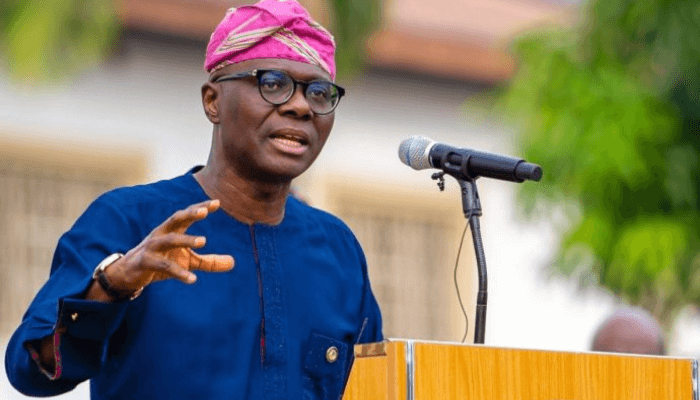
Babajide Sanwo-Olu, the Lagos State governor, has said that real estate and property investment remain vital to the state’s economy. In Lagos, land, a major component of real estate, is equivalent of an oil well. It is a money spinner for the state.
Lagos has a robust economy that places it ahead of other states in Nigeria. The state’s Gross Domestic Product (GDP) is about $259 billion by purchasing power parity (PPP), making it the second-largest economy in Africa, after Cairo, Egypt.
The state government officials who disclosed this number at the launch of the Lagos Economic Development Update (LEDU) 2025, also projected that its economy would grow from ₦54.77 trillion in 2024 to ₦66.47 trillion in 2025, with real GDP growth estimated at between 5.02 percent and 6.49 percent.
Arguably, real estate and property investment are a major contributor to this growth. It is a huge economic activity, accounting for about 37 percent of all real estate activities in Nigeria. According to the governor, apart from helping the state economy, disciplined property investment also helps close the housing gap, improves living standards, and strengthens urban resilience.
Read also: The audaciousness of the Lagos property market
“The sector creates jobs across the value chain, from architects and engineers to artisans and suppliers, while stimulating demand for locally produced materials and supporting small businesses,” Sanwo-Olu added.
This was affirmed by Samuel Ajose, chairman/CEO, Levitical Group, who spoke in an interview with BusinessDay in Lagos recently. Ajose, whose group is into real estate and construction, said that, among other things, they create direct and indirect employment and provide housing for families across income brackets.
The governor’s views were contained in his address, which was delivered on his behalf by Moruf Akinderu-Fatai, the state commissioner for housing, at the 2026 edition of the BusinessDay Property Investment and Smart Cities Conference in Lagos recently.
He noted that the present reality in property investment is capital discipline, pointing out that, across the world and here in Nigeria, capital has become more cautious, financing costs are higher, and investors are prioritising certainty, transparency, and long-term returns.
“Capital discipline, therefore, is not simply about spending less; it is about investing wisely, in projects that deliver economic value, social inclusion, and environmental sustainability,” he said.
“In an era of capital discipline, investors are no longer chasing short-term gains. They are looking for clarity of vision, predictability of policy, and alignment between infrastructure and development. This is where government must lead,” the governor added.
According to him, Lagos recognises that capital discipline must begin with them, which is why the government is strengthening planning systems, digitising land administration, and improving transparency in approvals to reduce uncertainty and transaction costs.
Read also: Lagos property market seen attracting $5bn investment in 5years
“We are aligning infrastructure delivery with growth corridors so that roads, transport networks, power, and digital connectivity support where people live and work. By doing so, we are creating an environment where responsible investment can thrive with confidence,” the governor noted.
Earlier, Hakeem Oguniran, CEO, Eximia Realties, had noted in his keynote speech at the conference that “capital discipline signifies a change from production volume, acquiring and/or developing as many properties as possible, to financial value, and optimising the value of every Naira deployed.”
Oguniran reasoned that property investment is not about speed and volume, but about rigid, strategic, and consistent allocation of resources that prioritise cash flow, manage debt levels, and avoid impulsive, panic-driven investment decisions.
He explained that investors need capital discipline for managing emotions, which is driven by return on ego (ROE), adding that capital discipline is also needed for investor trust and enhanced credibility, for transparent, data-driven, and rigorous objectives.

