
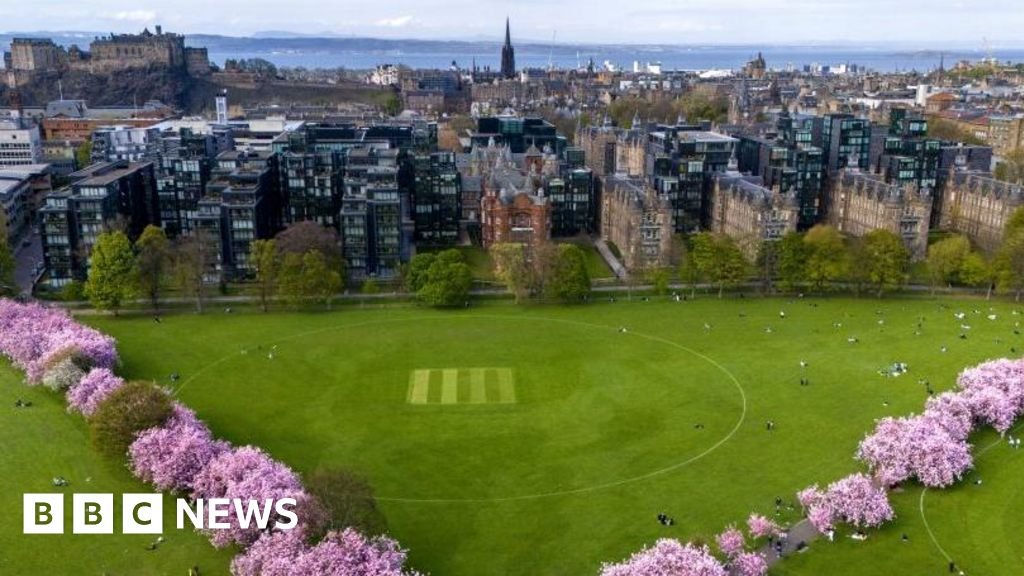
Official registry data has exposed a massive influx of overseas wealth dominating Edinburgh’s property market, with foreign investors capturing more than a third of the luxury properties in the controversial Quartermile development.
The unprecedented foreign acquisition of Scottish real estate accelerates a profound housing crisis, artificially inflating urban property values and displacing local residents. As international capital flows into concrete assets, the architectural heritage of a capital city is being rapidly commodified into a holding mechanism for offshore wealth.
The Transformation of Quartermile
Situated between the historic Old Town and the sprawling greenery of The Meadows, the Quartermile district was conceived as a premier urban regeneration project. Built upon the remnants of the 19th-century Royal Infirmary, the site is now a fortress of sleek glass and steel towers. However, beneath the modern architectural facade lies a stark demographic reality: the development functions less as a thriving community and more as an international investment portfolio.
Recent disclosures from Registers of Scotland (RoS) reveal the staggering scale of offshore ownership. Out of 751 property titles registered within the Quartermile site, an astonishing 263 were purchased using an overseas address. This concentration of foreign capital highlights a systemic shift in how luxury real estate is utilized in the modern economy.
The Data Behind the Displacement
The Quartermile statistics reflect a broader, deeply concerning national trend. While the vast majority of Scottish land remains domestically owned, the concentration of foreign ownership in high-value urban centers is intensifying rapidly. The numbers paint a clear picture of a market heavily skewed toward international buyers.
- Across Scotland, 28,825 property titles—representing 1.4 percent of the national total—are registered to overseas addresses.
- Edinburgh alone accounts for 18.7 percent of all foreign-owned property registrations in the country.
- Within the Quartermile development, 95 separate luxury properties were purchased exclusively by buyers based in Hong Kong.
- More than 5,000 offices, hotels, homes, and retail units across Edinburgh are entirely controlled by entities based outside the United Kingdom.
Urban economists warn that this influx of speculative capital creates devastating downstream effects. Professor James Mwangi, a global real estate analyst, explains that international buyers often purchase properties as stable assets rather than primary residences. “When a third of a development is owned overseas, it inevitably results in hollowed-out neighborhoods, reduced local economic activity, and an artificial scarcity that drives up housing costs for local workers,” Mwangi details.
Global Real Estate and the Nairobi Parallel
The phenomenon of foreign capital distorting local housing markets is a global crisis with direct parallels in East Africa. In Nairobi, upscale neighborhoods such as Kileleshwa, Kilimani, and Muthaiga have experienced massive influxes of foreign investment, particularly from multinational expatriates and international holding companies. This trend has pushed average property prices far beyond the reach of the local middle class.
Whether in the shadow of Edinburgh Castle or the skyline of Nairobi, the fundamental mechanism is identical: residential property is stripped of its social utility and reduced to a financial instrument. A two-bedroom apartment in the Quartermile can command upwards of £750,000 (approximately KES 124.5 million), a valuation entirely disconnected from the median Scottish wage, just as Nairobi luxury developments are decoupled from the Kenyan economic reality.
Regulatory Inertia and Future Impacts
Despite growing public outrage, legislative efforts to curtail foreign ownership have remained tepid. The Scottish government has debated implementing supplementary land taxes and stricter transparency requirements, but policymakers fear aggressive regulation could trigger capital flight. Meanwhile, the architectural character of Edinburgh is undergoing a subtle but permanent alteration.
The proliferation of luxury short-term lets and vacant investment properties hollows out the civic fabric of the city. Essential workers, including the medical professionals who once staffed the hospital that originally occupied the Quartermile site, are now entirely priced out of the central district. The market mechanics heavily favor offshore wealth over local necessity.
The Quartermile development stands as a gleaming monument to modern global capitalism. Unless radical regulatory frameworks are implemented, the historic heart of Edinburgh will continue its slow, irreversible transition from a living city into a sterilized safety deposit box for international millionaires.