
JAKARTA – The trend of property investment in Bali, especially Denpasar, carries hidden risks that are beginning to concern market participants.
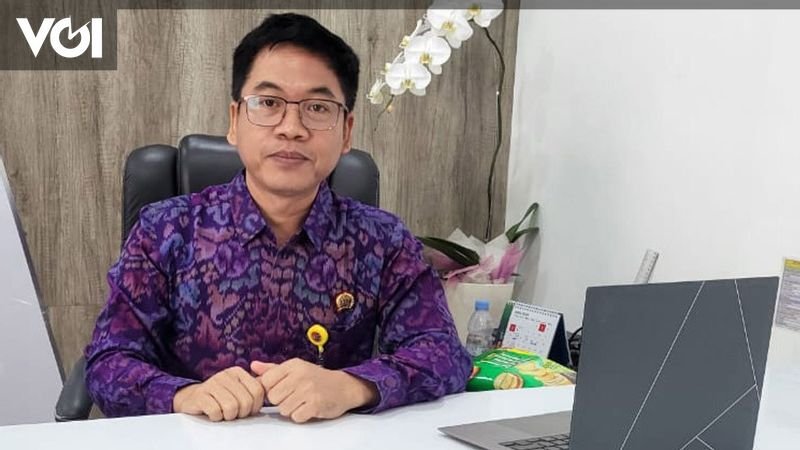
Head of the Denpasar City Land Office, Mulyadi, said the phenomenon of “stuck certificates” which could potentially harm investors.
According to him, this case occurred when the land that had been purchased and certified could not be developed due to the status of the spatial plan, especially if it fell into the Protected Rice Field (LSD) category.
“Many investors do not check the spatial layout before buying. Even though this is crucial,” he said.
In the midst of high investment interest, the rate of conversion of rice fields in Denpasar has reached around 6 percent per year – the highest in Bali. This condition encourages the government to tighten regulations through a moratorium on land function changes.
For investors, the main risk is not on ownership, but on asset utilization. Fixed certificates can be issued, but developments such as land division or commercial development can be hampered.
“This is often surprising. There are certificates, but they cannot be used as planned,” said Mulyadi.
The central government together with ATR/BPN and related ministries is now strengthening spatial planning supervision to maintain the sustainability of agricultural land.
Market participants are urged to be more careful by checking the Detailed Spatial Plan (RDTR) before the transaction, including through the BUMI ATR/BPN digital platform.
Amid this pressure, Denpasar still recorded a land registration rate of almost 99 percent with a conflict of less than 1 percent, reflecting the stability of land administration.
However, with limited land and increasingly strict regulations, investors need to take into account the risk of spatial planning as a major factor in the decision to invest in property in Bali.
The English, Chinese, Japanese, Arabic, and French versions are automatically generated by the AI. So there may still be inaccuracies in translating, please always see Indonesian as our main language.
(system supported by DigitalSiber.id)