
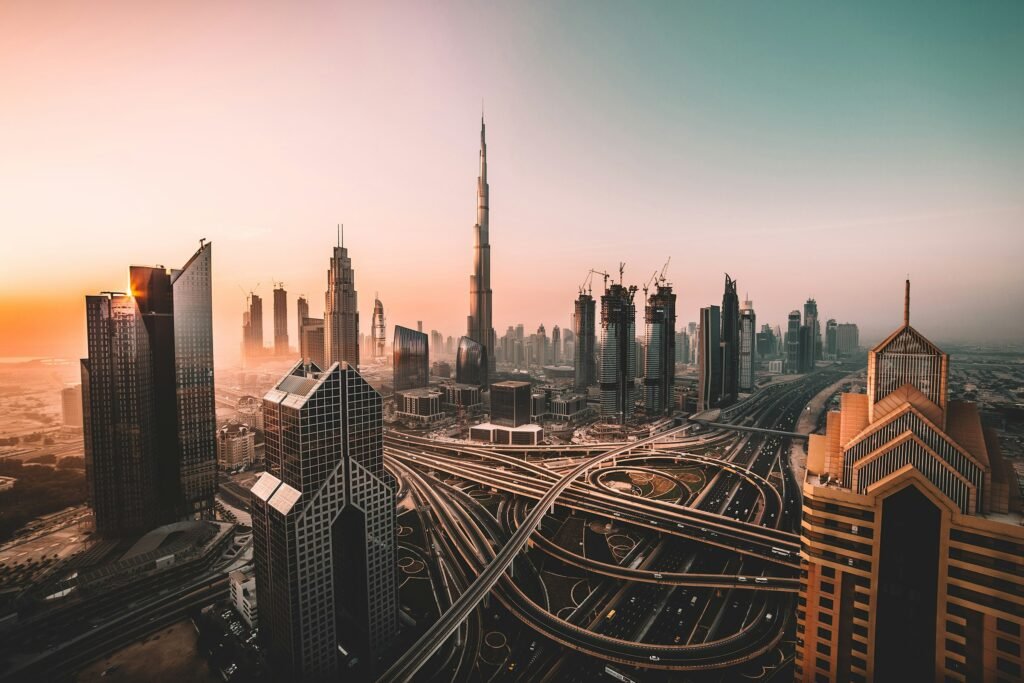
Dubai’s property market in 2026 continues to attract attention from investors seeking diversified real estate exposure. The emirate’s regulatory framework, economic diversification, and urban development have created conditions that support both income generation and long-term holding strategies. While no market is without variability, data from the first quarter of 2026 highlight sustained activity across sales and rentals.
One of the most cited advantages remains the tax environment. The UAE levies no personal income tax on rental earnings for individuals, no capital gains tax on property sales, and no recurring annual property tax. This structure allows gross rental returns to translate more directly into net income compared with many other jurisdictions. Investors retain the full rental yield without deductions for local income or gains taxes, subject only to their home-country tax obligations.
Rental yields in Dubai have remained competitive. Market reports for early 2026 place average gross residential yields in the range of 6–7 percent city-wide, with apartments in mid-market communities often delivering 7–9.5 percent and villas closer to 5–8 percent. These figures compare favorably with major global cities. For context, equivalent yields in prime London or New York typically fall between 2–5 percent before local taxes further reduce net returns. One analysis observed that “$1 million can buy around 78 square meters in Dubai” versus approximately 34 square meters in London or New York, illustrating both yield and space differentials.
For more details on current market trends, investors can visit website and review the latest transaction data.
Population growth has provided underlying demand support. Dubai’s population exceeded 4 million in 2025, with conservative forecasts indicating an additional 175,000–225,000 residents in 2026. This expansion, driven by professional migration and economic opportunity, has helped absorb new housing supply and maintained occupancy rates. Steady tenant inflows have contributed to rental contract volumes exceeding 139,000 in the first quarter of 2026 alone.
The Golden Visa program offers a structured residency pathway tied to property ownership. Foreign investors who acquire one or more properties with a combined Dubai Land Department valuation of AED 2 million (approximately USD 545,000) qualify for a 10-year renewable Golden Visa. Off-plan properties and certain mortgaged assets meeting the valuation threshold can also qualify under updated rules. The visa extends to the investor’s spouse and children, providing long-term residency without a local sponsor. A lower-threshold two-year investor visa remains available for properties valued at AED 750,000, though the 10-year option draws greater interest among serious investors.
Off-plan properties represent a significant segment of market activity, often accounting for 60–70 percent of residential transactions in recent periods. These units typically carry lower entry prices than completed equivalents in the same location and feature extended payment plans spread over construction. Buyers may benefit from potential capital appreciation as projects near completion, though they forgo immediate rental income until handover. Ready properties, by contrast, allow instant occupancy and rental cash flow but command higher upfront costs. Market observers note that the choice between the two depends on an investor’s liquidity needs and risk tolerance rather than any universal superiority.
Foreign buyers encounter relatively straightforward purchase procedures in designated freehold areas. Ownership is registered directly with the Dubai Land Department, and no local partner or sponsor is required in freehold zones. The process involves standard due diligence, title checks, and payment of a 4 percent transfer fee (split or paid by the buyer depending on agreement). Mortgage financing from local banks is available to non-residents under established loan-to-value ratios, further easing entry for qualified purchasers. Transaction volumes in the first quarter of 2026 reached nearly 48,000 deals with a total value of Dh176.7 billion, reflecting continued participation from international buyers.
For those evaluating the market, several practical considerations apply. Location selection influences both yield and liquidity; established communities often provide more predictable rental demand, while emerging districts may offer higher initial yields but greater variability. Due diligence on developer track records for off-plan purchases and on building quality and service charges for ready units remains essential. Currency stability, given the UAE dirham’s peg to the US dollar, also reduces exchange-rate risk for many international investors.
Overall, the combination of tax neutrality, competitive rental yields, demographic momentum, and accessible residency options has positioned Dubai’s property market as one element within a broader global investment landscape. As with any real estate decision, outcomes depend on individual financial circumstances, holding periods, and thorough market research. Data from 2026 suggest the fundamentals supporting the sector have remained consistent, providing a factual basis for investors conducting their own assessments.