
-
President Trump is proposing a federal initiative to purchase mortgage-backed securities as a way to push down long-term mortgage rates.
-
The plan would expand the government’s role in housing finance, reviving a strategy used during past economic downturns.
-
Supporters say lower rates could jump-start the housing market, while critics warn of financial and political risks.
President Trump has offered a proposal aimed at easing the strain of high mortgage rates by having the federal government purchase large quantities of mortgage-backed securities, a move designed to drive borrowing costs lower for homebuyers.
Under the plan, federal agencies would step into financial markets as major buyers of securities backed by residential mortgages. By increasing demand for those securities, the administration believes yields would fall, translating into lower interest rates on 30-year and 15-year home loans offered to consumers.
“Homeownership has become too expensive for too many Americans,” Trump said in remarks to reporters. “If we can bring mortgage rates down, we can unlock the housing market and get families back into homes.”
Mortgage-backed security purchases are not without precedent. During the 2008 financial crisis and again in the early stages of the COVID-19 pandemic, the Federal Reserve used similar tools to stabilize housing markets and encourage lending. Trump’s proposal, however, would place renewed emphasis on the policy as a direct response to persistently high borrowing costs.
Low rates led to higher home prices
Unusually low mortgage rates during the early stages of the pandemic led to escalating home prices, which in most cases have not retreated. Meanwhile, mortgage rates have returned to normal.
Freddie Mac reports its Primary Mortgage Market Survey shows the 30-year fixed-rate mortgage averaged 6.16% this week, about the same as the week before.
“In the first full week of the new year, mortgage rates remained within a narrow range, hovering close to the 6% mark,” said Sam Khater, Freddie Mac’s chief economist. “The combination of solid economic growth and lower rates has led to improving momentum in for-sale residential demand, with purchase applications up over 20% from a year ago.”
Ripple effect
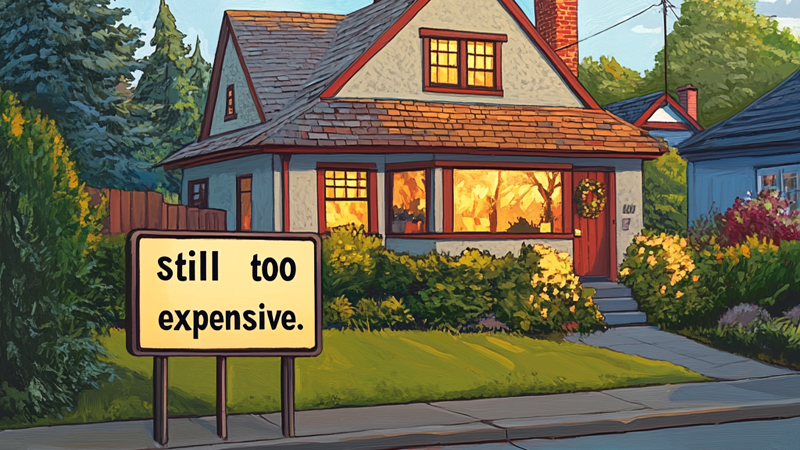
But Trump says rates are still high at today’s home prices and administration officials argue that lower mortgage rates could have a ripple effect across the economy, boosting home sales, construction activity, and consumer confidence. Housing affordability has deteriorated in recent years as elevated interest rates combined with limited inventory to push monthly payments higher.
Still, the idea is already drawing criticism. Some economists warn that large-scale government purchases of mortgage-backed securities could distort markets, increase federal exposure to housing risk, or complicate the Federal Reserve’s efforts to control inflation. Others question whether the plan would meaningfully lower rates without reigniting price pressures in an already tight housing market.
Congressional reaction has been mixed. Lawmakers from high-cost housing states expressed interest in the proposal, while fiscal conservatives raised concerns about expanding the government’s footprint in financial markets.