
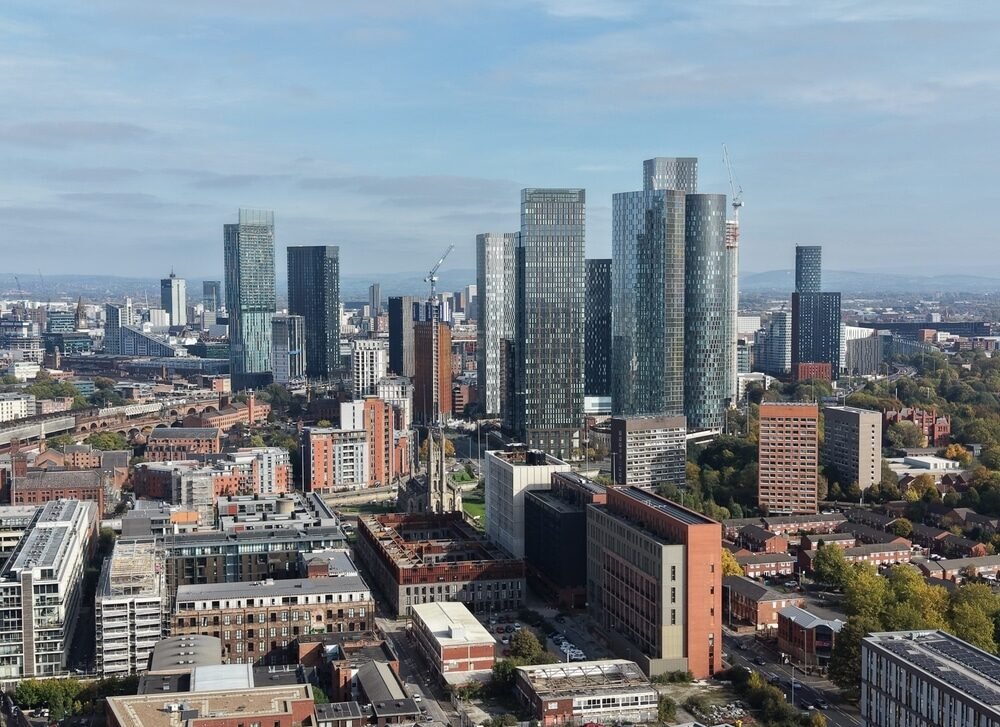
Manchester has kept the top spot for buy-to-let (BTL) investors for the second year running in the Aldermore BTL index.
The bank’s tracker looks at five key indicators that impact BTL desirability – average total rent, the best short-term returns through yield, long-term return through house price growth over the past decade, the lowest number of vacancies as a proportion of total housing stock, and the percentage of the city’s population in the rental market – to come up with the top 10 cities.
Manchester retains a clear lead. The city was top last year and second the year before, with the bank saying that leading cities were generating a return of 7.4% for landlords, and adding that the market was beginning to stabilise, with less reshuffling between cities.
Jon Cooper, director of mortgages at Aldermore, said: “Relative consistency comes despite a more challenging backdrop for landlords, both economically and because of more restrictive regulation.
“There’s no doubt that the operating environment has become more complex. Increased regulation and evolving tenant expectations mean landlords need to be far more hands-on, regularly reviewing their portfolios, reassessing yields and ensuring their properties remain competitive.
“However, the fundamentals remain supportive. Demand for well-located rental homes continues to outstrip supply in many cities, rental income has held firm year-on-year, and competition for quality stock remains high. For landlords prepared to adapt and take a long-term view, there are still resilient and attractive returns to be found.”

The big BTL planner: Key dates landlords need to know
Sponsored by BM Solutions
The best of the rest
Outside of Manchester, other cities in the top 10 included Glasgow at number two, followed by Coventry, Wigan, Nottingham, Liverpool, Birmingham, Portsmouth, Derby and Telford. Milton Keynes, Bristol and Portsmouth all fell out of the table, while outside the top 10, Stoke (21st) and Doncaster (27th) both had the highest jump this year.
The news follows figures from Zoopla in March that showed that the number of tenants competing for each rented home had dropped to a six-year low.
The data showed that rental growth was stronger in more affordable markets such as Northern England and Scotland, with some cities reporting increases of 3-4% and higher – such as Liverpool and Newcastle, with growth rates of 4.6% and 4.5% respectively. Meanwhile, some cities in the Midlands and Southern regions were seeing lower or negative price growth, such as Bristol with 0.8% growth and Cambridge with 0.1%. Further, average rents fell by 0.7% in Birmingham and 0.8% in Nottingham.