
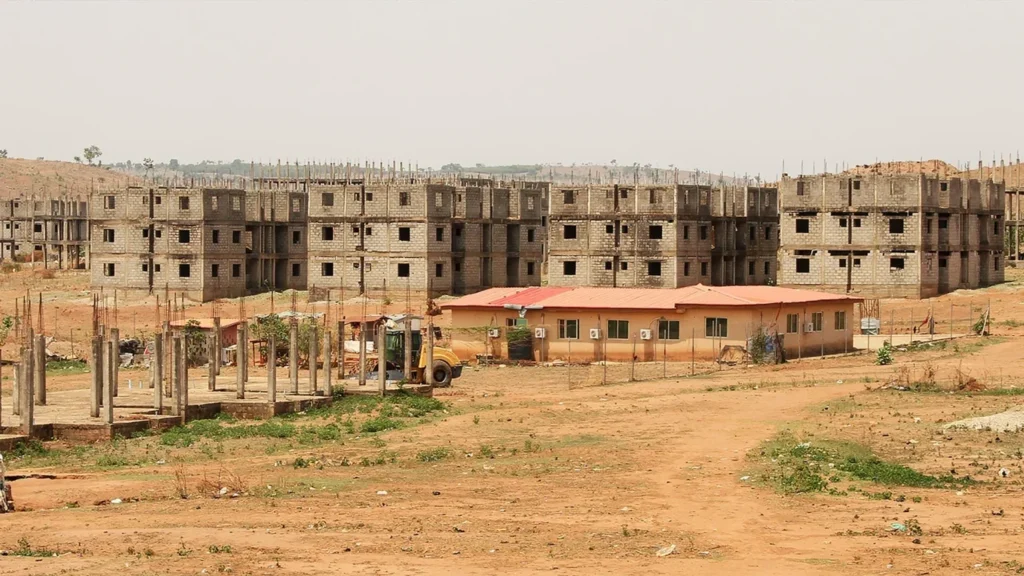
Oseni also noted that investment opportunities are increasingly shifting from Lagos Island to emerging Mainland corridors as rising land values and property prices make traditionally prime locations less accessible to new investors. He argued that improving infrastructure, streamlining land administration and expanding access to financing would accelerate residential development and improve housing affordability.
Expert Calls for Housing Policy Reforms
According to Oseni, lengthy approval procedures and complex property documentation remain among the biggest barriers to housing development in Nigeria.
He said simplifying land registration processes, reducing bureaucratic bottlenecks and improving regulatory efficiency would encourage greater private sector participation in residential development. He added that easier access to development finance would enable developers to increase housing supply and deliver projects more efficiently.
Investment Shifts Towards Lagos Mainland
Oseni observed that high property prices in established markets such as Lekki, Victoria Island and Ikoyi are prompting investors to consider emerging locations on the Lagos Mainland.
He identified the Lagos-Ogun growth corridor as an area with significant development potential, citing ongoing infrastructure improvements, population growth and expanding commercial activities as key factors driving investor interest. He added that better transport infrastructure and improved access to finance could unlock more housing projects in these areas.
Mainland Housing Summit to Highlight New Opportunities
The industry expert disclosed that the Mainland Housing Summit 2026, scheduled for 25 July, will bring together developers, financial institutions, building materials suppliers and other stakeholders to examine investment opportunities, housing finance, construction trends and the future of residential development across the Lagos Mainland.
The event is also expected to connect prospective investors with industry players while promoting awareness of emerging real estate opportunities outside Lagos Island.
Housing Corporations Seek Scalable Solutions
At the same time, the Association of Housing Corporations of Nigeria (AHCN) called for scalable approaches to address Nigeria’s growing housing deficit.
Speaking during its national workshop in Calabar, the association said conventional affordable housing programmes focused solely on reducing house prices are no longer sufficient. It advocated integrated housing ecosystems capable of delivering large volumes of affordable homes to meet demand driven by rapid urbanisation, population growth, rising construction costs and financing constraints.
Implications for Nigeria’s Housing Market
The comments reinforce growing calls for structural reforms to improve housing delivery across Nigeria. Industry stakeholders continue to identify affordable housing finance, simplified land administration, infrastructure investment and efficient regulatory processes as critical to reducing development costs and attracting private investment.
As demand for housing continues to rise, experts believe emerging Mainland corridors could play an increasingly important role in expanding residential supply and improving affordability, provided policy reforms create a more enabling investment environment.
Outlook
The latest recommendations underscore the need for coordinated reforms to support sustainable housing development in Nigeria. Strengthening access to finance, simplifying property documentation and investing in infrastructure could improve investor confidence and accelerate residential construction.
With development costs rising in established property markets, emerging Mainland locations are expected to attract greater investor attention, potentially reshaping the future of Lagos’ housing landscape.