
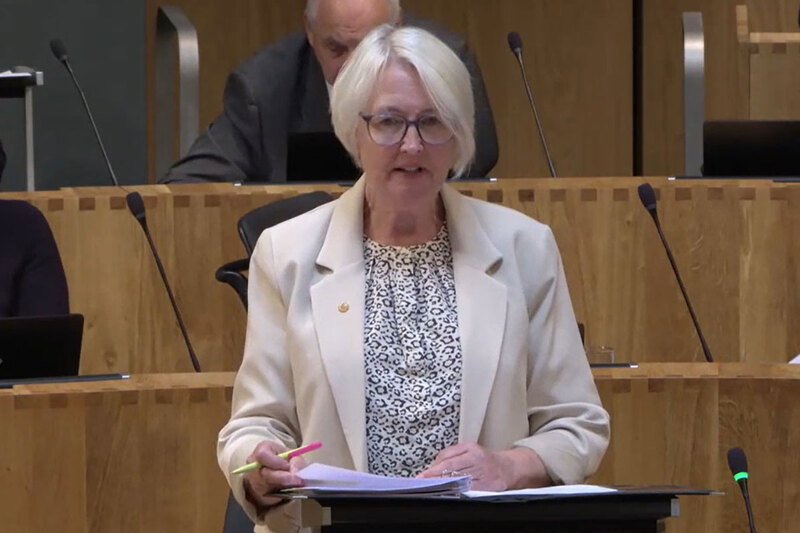
On the private rented sector, Ms Gwenllian said she intends to bring forward legislation in this Senedd term to “improve housing affordability”.
She continued: “I’m actively looking at different measures for fair rents that have been operating in other countries, such as Scotland.
“They have tried various models, and it’s really interesting that we have somewhere that we can go and have a look at what they’ve done and lessons to be learnt out of that.
“I’m also considering opportunities to strengthen the enforcement framework, introducing financial penalties along with criminal sanctions so that poor landlord behaviour can be addressed at an early stage, ensuring that fines levied can be retained by local authorities to bolster their enforcement approaches.”
Ms Gwenllian also confirmed Plaid Cymru’s manifesto commitment to legislate for a Community Right to Buy.
“This will make it easier for valued community assets, including buildings and land for housing, to be brought into community ownership,” she said.
The government will also establish a ‘town centre taskforce’ within its first 100 days, the cabinet minister said, which will look at how to develop homes in town centres.
In response to Ms Gwenllian’s statement, Matt Dicks, national director at the Chartered Institute of Housing Cymru, welcomed plans to legislate for the right to adequate housing and for Unnos, a new arm’s-length development body.
But Mr Dicks said the CIH “would urge caution when considering any form of rent control”.
He continued: “While it may offer short-term relief for tenants, there is a risk of unintended consequences – particularly reducing supply and distorting the market over time.
“Any intervention therefore needs to be carefully designed as part of a balanced, long-term approach that tackles the underlying drivers of unaffordability, including housing supply, investment and market stability.
“Rent control should not be seen as a substitute for increasing the supply of homes, which remains the most effective way to improve affordability over the long term.”