

Pink Line areas still below full potential
The Pink Line corridor is also drawing investor interest, particularly around Min Buri, Ram Intra and Khu Bon.
Although the line has already opened, land values in several areas have yet to fully reflect its long-term potential. Analysts say these districts are gradually shifting from suburban areas into new residential hubs for northern and eastern Bangkok.
Housing costs in these locations remain around 40-60% lower than in inner-city areas, making them attractive to both homebuyers and developers targeting more affordable segments.
Previous market surveys found that the Pink Line was among the new rail routes with the strongest land-price growth, with average increases of nearly 5% per year along several sections. Land along Ram Intra and Min Buri currently ranges from about 80,000 to 300,000 baht per square wah, still significantly lower than many established mass-transit locations.

Southern Purple Line seen as Thonburi game changer
Another route under close watch is the southern section of the Purple Line, from Tao Poon to Rat Burana.
The project is viewed as a game changer for Thonburi because it will connect major economic areas such as Wongwian Yai, Samre, Dao Khanong and Rat Burana with Bangkok’s main rail network.
Property experts say land prices around Wongwian Yai and Samre have already begun rising ahead of full development. Rat Burana, however, is still viewed as a relatively affordable location with strong future potential.
Current land prices along the corridor range from about 120,000 to 400,000 baht per square wah. Analysts estimate prices could rise by another 20-40% within five years after the line begins full service.
Samut Prakan-Bang Pu offers long-term returns
The Green Line extension towards Samut Prakan and Bang Pu has recorded some of the strongest land-price growth in recent years.
Data from the Real Estate Information Center shows that land prices along the Samut Prakan-Bang Pu corridor have risen by more than 20% per year in some periods, supported by industrial expansion in the Eastern Economic Corridor, logistics investment and growing demand for mid- to upper-market housing.
Land along the outer section of Sukhumvit Road is currently priced at about 70,000 to 250,000 baht per square wah, still far below locations such as Bearing and On Nut.
Analysts say the area is better suited to medium- and long-term investors seeking gains from industrial, logistics and residential expansion.
Khu Khot-Lam Luk Ka becomes northern growth corridor
Khu Khot, Lam Luk Ka and Khlong Luang are also emerging as new residential bases for people working in Bangkok.
The area benefits from Green Line connectivity and access to motorway networks, supporting demand for low-rise housing and more affordable residential projects.
Although land prices have increased steadily in recent years, they remain relatively affordable at around 30,000 to 120,000 baht per square wah. This allows housing developers to continue launching projects at prices accessible to middle-income buyers.
Property analysts expect the corridor to become one of northern Bangkok’s key growth zones over the next decade.
CBD remains valuable but upside shifts outward
Industry observers say CBD land will remain Bangkok’s most expensive and prestigious property market, but high entry costs are limiting opportunities for outsized returns.
By contrast, outer-city rail corridors still offer lower land costs, stronger development potential and room for capital gains as transport connectivity improves.
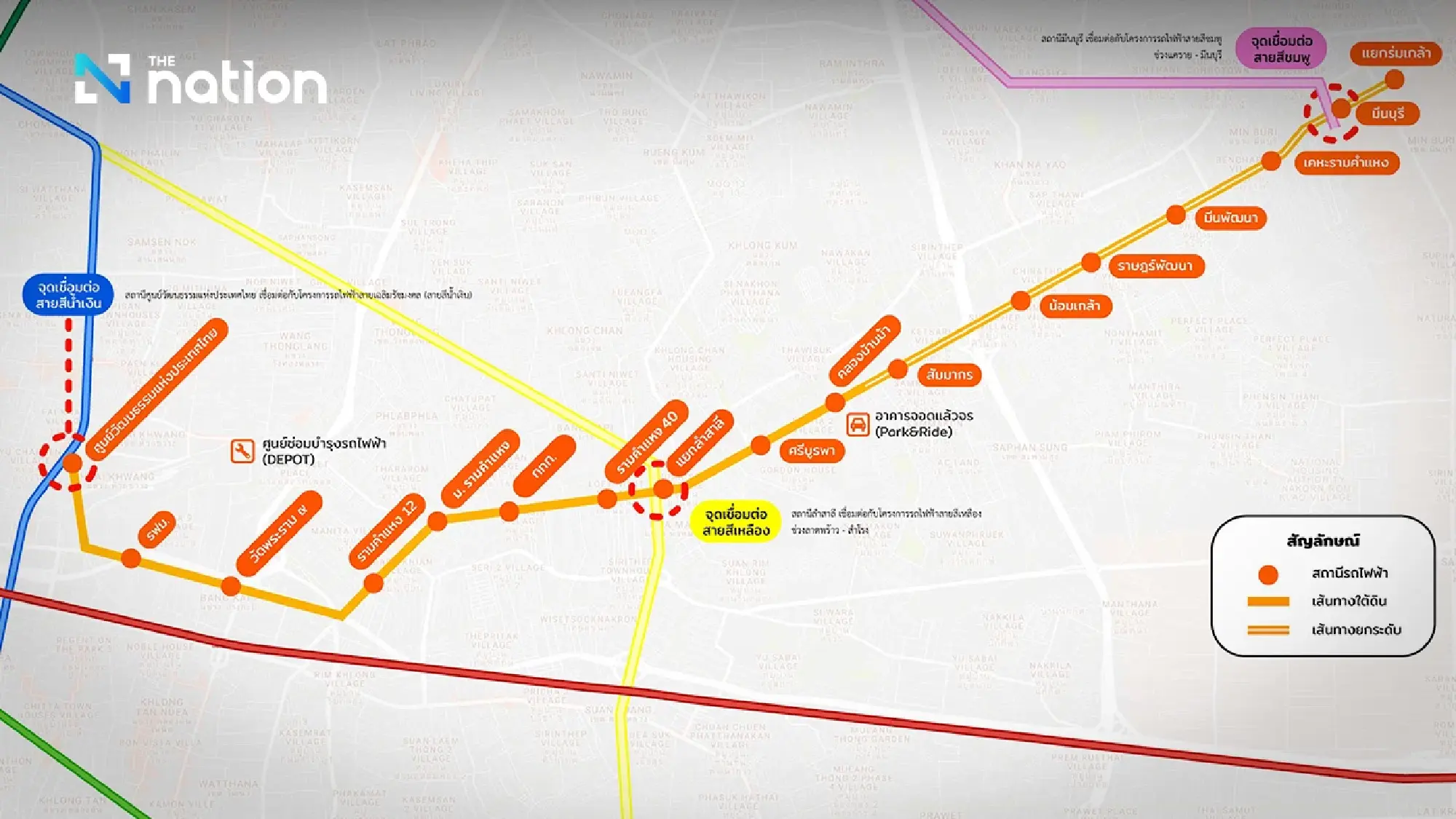
Over the next five years, the eastern Orange Line is expected to remain the leading investment location because of its multi-line connectivity and strong urban-development potential. The southern Purple Line is viewed as a dark horse, while Samut Prakan-Bang Pu and Khu Khot-Lam Luk Ka are seen as longer-term plays tied to Bangkok’s outward expansion.
As inner-city land becomes scarcer and increasingly unaffordable, investing along new mass-transit routes is becoming a core strategy for developers and property investors seeking returns above the broader market.