
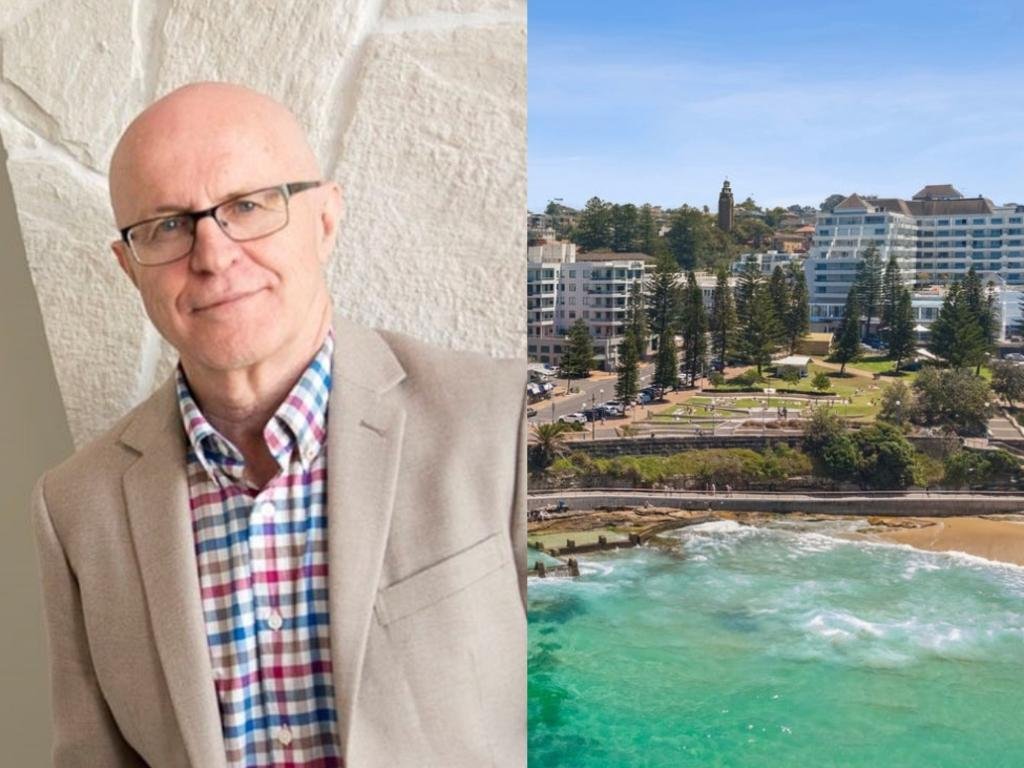

Terry Ryder says apartment living is going through a transformative phase throughout the country.
Australia’s apartment market continues to gain strength, delivering higher returns for investors.
The latest Rise and Rise of Apartments report from Nuestar and Hotspotting revealed rental growth for apartments was now outpacing rental growth for houses in many locations around the country.
According to Nuestar founder Michael Wilkins, more than half of the apartment markets
across Australia’s key capital cities recorded higher rental growth than their house counterparts.
166 apartment markets achieved double-digit median asking rent growth over the past 12 months.
“More renters are opting for attached dwellings in key markets across the nation, which has driven up rents and returns for investors,” Mr Wilkins said.
“Apartments are not just an affordability play.
“In the right locations, they are a way to secure exposure to high-quality, high-demand markets earlier and at a lower entry point than houses.
“Our analysis of the Australian apartment market revealed that 166 apartment markets
achieved double-digit median asking rent growth over the past 12 months.”
MORE NEWS: Historic beach shack to be bulldozed for apartments
Sad twist behind MAFS villain’s ‘trad wife’ palace
How a $10m property deal was frozen by budget definition chaos
This top-floor two-bedroom Queensland unit at 5/327 Cornwall Street, Greenslopes is up for rent at $600 per week.
Queensland had 53 of those apartment markets New South Wales, 37; Western Australia, 25; Victoria, 20; Northern Territory, 16; South Australia, 10; and Tasmania, 5.
The ACT market did not have any apartment markets with double-digit rent growth – its
highest was 7 per cent.
Hotspotting founder Terry Ryder said apartment living was going through a transformative phase throughout the country.
“It’s a whole new paradigm, really” Mr Ryder said.
“I often say the only constant in real estate is change and we’re always looking for those changes; this is a big one.
Hotspotting founder Terry Ryder.
“In real estate houses on land always showed better growth and were a better investment but that’s changing.
“The demand for units comes from many different reasons – it’s not just affordability.
“It’s the low-maintenance lifestyle, the lock and leave factor, a better location being in an apartment rather than in a house in the suburbs.”
The rise in rents means there were 18 apartment markets that commanded a rent of more
than $1000 per week – all but one of which were in New South Wales, led by The Rocks in
Sydney, where the median asking rent was $1425 per week, followed by Caringbah South
in Sutherland Shire at $1300 per week.
1106/57-59 Queen Street, Auburn in Sydney is up for rent at $780 per week.
The other top ten entry was in Western Australia, with Pegs Creek in Karratha
commanding $1150 per week.
The top asking rent in Queensland can be found in the Noosa apartment market at $959 per week, while in Victoria, Mont Albert North in Whitehorse LGA is $750 per week.
Greater Melbourne led the pack, with 114 suburbs where apartment market rent growth
outpaced house rent growth in the past 12 months.
Other regions included Greater Sydney (104 suburbs), Greater Brisbane (69 suburbs), Greater Perth (37 suburbs), Greater Adelaide (27 suburbs), Greater Darwin (12 suburbs), Australian Capital Territory (14 suburbs) and Greater Hobart (three suburbs).
This three-bedroom townhouse at 73/14 Cavill Place, Runcorn in Queensland is up for rent at $700 per week.
Mr Ryder said rising rents and more affordable buy-in prices than the house market meant stronger returns for investors in the apartment market.
And he said that with federal budget changes to allow future negative gearing only for
new builds, apartment assets would be more in demand.
“As a result of the Budget changes, yields will become a higher priority for many investors
and as this report shows, the higher yields are to be found in the apartment market,” Mr
Ryder said.
“There are a lot more apartment projects underway and their price point is lower than
stand-alone properties, so they appeal to investors, who are generally looking to buy at a
lower price point.
“As well as the potential benefits of being able to access negative gearing, new properties
offer investors better depreciation benefits.”
111/124 Palmerston Street, Carlton in Victoria is up for rent at 665 per week.
The research found that across the Greater Capital City markets, there were 162 apartment markets with yields of 5 per cent or more compared to just 11 house markets.
The highest yields in the apartment market were overwhelmingly dominated by suburbs within Greater Darwin, which takes out all top ten spots for rental yields, starting at 7.9 per cent in Karama.
In Greater Melbourne, Carlton was the highest with a yield of 6.8%, Curtin in the ACT was 6.5%, Perth was 6.1%, Auburn in Sydney was 6.3 per cent, Brighton in Hobart was 5.5 per cent, Adelaide was 5.3 per cent and Woolloongabba in Brisbane was 4.6 per cent.
“All these fundamentals come together to show that the apartment market is gaining strength as a force for property investment and will continue to do so,” Mr Wilkins said.