
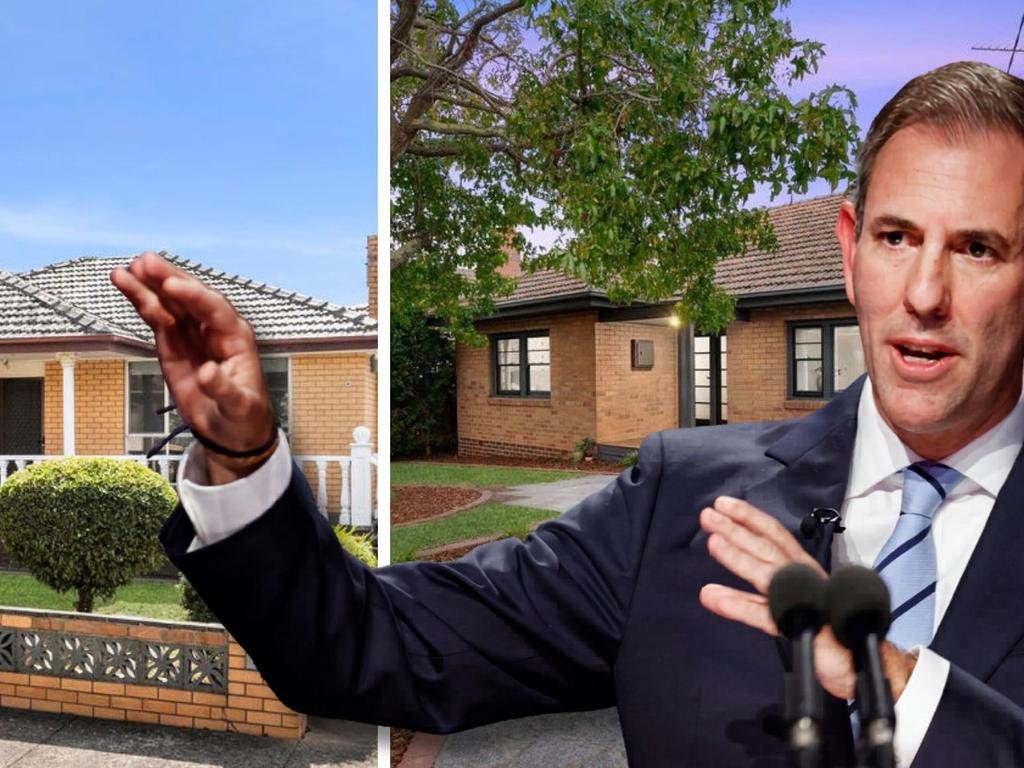

The Brisbane suburbs where property investors face paying the most and least tax if CGT reforms proposed by the federal government go ahead have been revealed.
Brisbane property investors who have held homes in the city’s most prestigious suburbs for decades could face tax bills of up to $1.4m under proposed changes to capital gains tax — a hike of more than $644,000 above what they would owe today.
Exclusive PropTrack modelling reveals the Queensland capital is more exposed to the budget tax shake-up than other capital city because it recorded the strongest real housing gains in the country over the past 35 years — once inflation is stripped out.
RELATED: Brisbane investors flee as new data exposes suburbs in CGT firing line
Real estate investors warned: get valuation or pay more tax
Investors who own houses like this in New Farm could pay up to $1.4m in tax if they sold under proposed changes to CGT.
The biggest hit would fall on owners of long-held houses in New Farm and Hamilton, where property values have surged far beyond inflation, creating an enormous gap between what the current 50 per cent CGT discount taxes and what a proposed inflation-indexed system would demand.
A New Farm house bought in 1990 for $150,000 — now worth roughly $3.37m — would attract a tax bill of approximately $758,000 under the existing system. Under indexation, that bill would jump to nearly $1.4m.
Hamilton investors face the second-largest increase, with the tax liability on a typical long-held house rising by about $482,000. Bulimba, Highgate Hill, Hawthorne, Ascot and Paddington also ranked among the suburbs with the steepest increases.
Investors who own houses like this in Hamilton could pay more tax if they sold under proposed changes to CGT.
| WHERE BRISBANE INVESTORS COULD PAY THE LEAST TAX UNDER CGT REFORMS | ||||
| Suburb | Type | Extra tax under | Ratio of investors | |
| proposed model | to owner/occupiers | |||
| Kangaroo Point | Unit | -$137,000 | 65%/35% | |
| Spring Hill | Unit | $6,000 | 70%/30% | |
| Mount Warren Park | Unit | $26,000 | 56%/44% | |
| Kelvin Grove | Unit | $44,000 | 55%/45% | |
| Logan Central | Unit | $43,000 | 30%/70% | |
| Source: PropTrack | ||||
But the analysis found not all investors would be worse off.
Landlords who bought a unit in Kangaroo Point in 1990 would actually save $137,000 in CGT under the proposed measures, with Spring Hill, Mount Warren Park, Logan Central and Kelvin Grove units showing similarly modest differences between the two systems — a reflection of how little some inner-city apartment markets have outpaced inflation over the long term.
The reform, floated as part of the federal government’s broader tax review, would replace the flat 50 per cent CGT discount with a mechanism allowing investors to index a property’s original purchase price to inflation, with the remaining real gain taxed in full at the investor’s marginal rate.
Investors who own units in complexes like this in Kangaroo Point could actually save money if they sold under proposed changes to CGT.
PropTrack’s analysis lays bare just how dramatically Brisbane house prices have outpaced inflation.
The modelling shows Brisbane recorded the strongest long-term house price growth of any capital city over the period, with values rising more than 1000 per cent since 1990.
By comparison, Sydney house prices rose about 730 per cent and Melbourne about 565 per cent over the same timeframe.
Had values simply tracked the consumer price index since 1990, the city’s median house price would sit below $250,000 today. Instead, it has surged past $1m.
An investor who bought a median-priced Brisbane house for $95,000 in 1990 would pay about $150,000 more in tax under the proposed indexation model — $381,640, compared to $226,775 under the current laws.
For Brisbane units, investors face paying $84,000 more tax on a median-priced unit if they bought more than 30 years ago.
| WHERE BRISBANE INVESTORS COULD PAY THE MOST TAX UNDER CGT REFORMS | ||||
| Suburb | Type | Extra tax under | Ratio of investors to | |
| proposed model | owner/occupiers | |||
| New Farm | House | $644,000 | 56%/44% | |
| Hamilton | House | $482,000 | 56%/44% | |
| Bulimba | House | $438,000 | 39%/61% | |
| Hawthorne | House | $421,000 | 35%/65% | |
| Ascot | House | $415,000 | 45%/55% | |
| Source: PropTrack. | ||||
Investors who own units in complexes like this in Spring Hill could actually pay less tax if they sold under proposed changes to CGT.
MORE: Gen Z buyers fuel ‘overheated’ Brisbane property market in race for starter homes
Budget blow: Voters turn on government, demand radical housing tax reform
The federal government has not formally announced changes to the CGT regime, but debate around the proposal has intensified amid broader discussions about housing affordability and tax reform.
If legislated, from July 1, 2027, investors will be taxed on the above-inflation gain on their asset, rather on 50 per cent of the gain.
The PropTrack modelling assumes a top marginal tax rate of 47 per cent, inclusive of the Medicare levy.
PropTrack senior economist Angus Moore said some property investors would pay less tax under the new system.
“Over the past decade approximately 27 per cent of properties that received a capital gain would have been better off under the new indexation model,” Mr Moore said.
PropTrack economist Angus Moore. Picture: Supplied.
“Newly built homes are the only assets exempt from this change: buyers of new homes will be able to opt to stay under the existing 50 per cent discount, or use inflation-indexing.”
Rethink Group chief executive Scott O’Neill said high-density corridors in inner Brisbane and investment-grade stock on the Gold Coast and Sunshine Coast would be most exposed, warning that suburbs where investor ownership was already elevated would be “vulnerable to price softening if lending capacity is curtailed”.
“The investors who will be hit hardest are those who have been aggressively leveraging established residential property with thin yield coverage,” Mr O’Neill said.
“Tightened borrowing capacity will expose those positions quickly, particularly if rental income projections don’t hold up in a softening market.”
Rethink Group founder and CEO Scott O’Neill.
CPA Australia tax lead Jenny Wong said the proposed CGT changes represented a “fundamental shift in how property wealth is taxed”, but would not necessarily disadvantage property investors.
“The good news for investors who already hold property is that the transitional arrangements offer real protection,” Ms Wong said.
“If you held an investment property before 7:30pm on 12 May 2026, the negative gearing rules don’t change for you, and the CGT reform only applies to gains that accrue after 1 July 2027 — not to gains built up over years of ownership before that date. Investors absolutely should be reviewing their position with a registered tax agent.”
Investors who own units in complexes like this in Kelvin Grove might not have to pay as much tax under proposed changes to CGT.
Ms Wong said the government ha deliberately left the door open for investors willing to support new housing supply.
“Investors in new builds can still access negative gearing and, when they sell, they can choose between the old 50 per cent discount or the new indexation regime — whichever works better for them,” she said.
“That’s a significant advantage, and we expect it to redirect investor appetite toward off-the-plan and newly constructed properties.”
Even though the legislation had not yet passed parliament, Ms Wong said investors should be taking action now.
“The key questions to ask your CPA or registered tax agent are: ‘How does this affect my cost base? Should I get a market valuation of my property as at 1 July 2027? And does my investment strategy still stack up under the new rules?’ Those conversations need to be happening now.”