

Property investors are being warned not to overlook one of the biggest tax advantages still available to them – depreciation – after the Albanese government’s sweeping crackdown on negative gearing and capital gains tax concessions.
While political and media attention has focused on the abolition of negative gearing for future purchases of existing homes and the rollback of the 50% capital gains tax discount, depreciation remains fully intact.
According to industry experts, too many investors are still failing to claim it properly.
“Property investors are often surprised by the amount they can legally claim,” says BMT Tax Depreciation chief executive Bradley Beer.
“Depreciation can significantly improve cash flow, particularly in the early years of owning an investment property.”
A changed landscape
The renewed focus on depreciation comes as investors scramble to reassess strategies following the budget overhaul.
Under the new rules, investors purchasing established properties after budget night – May 12, 2026 – can no longer immediately deduct rental losses against salary and wage income.
Those losses must instead be quarantined and carried forward to offset future rental income or capital gains.
From July 1, 2027, the 50% CGT discount will also be replaced by an inflation-indexed system with a minimum 30% tax rate.
None of those changes affect depreciation.
What is depreciation?
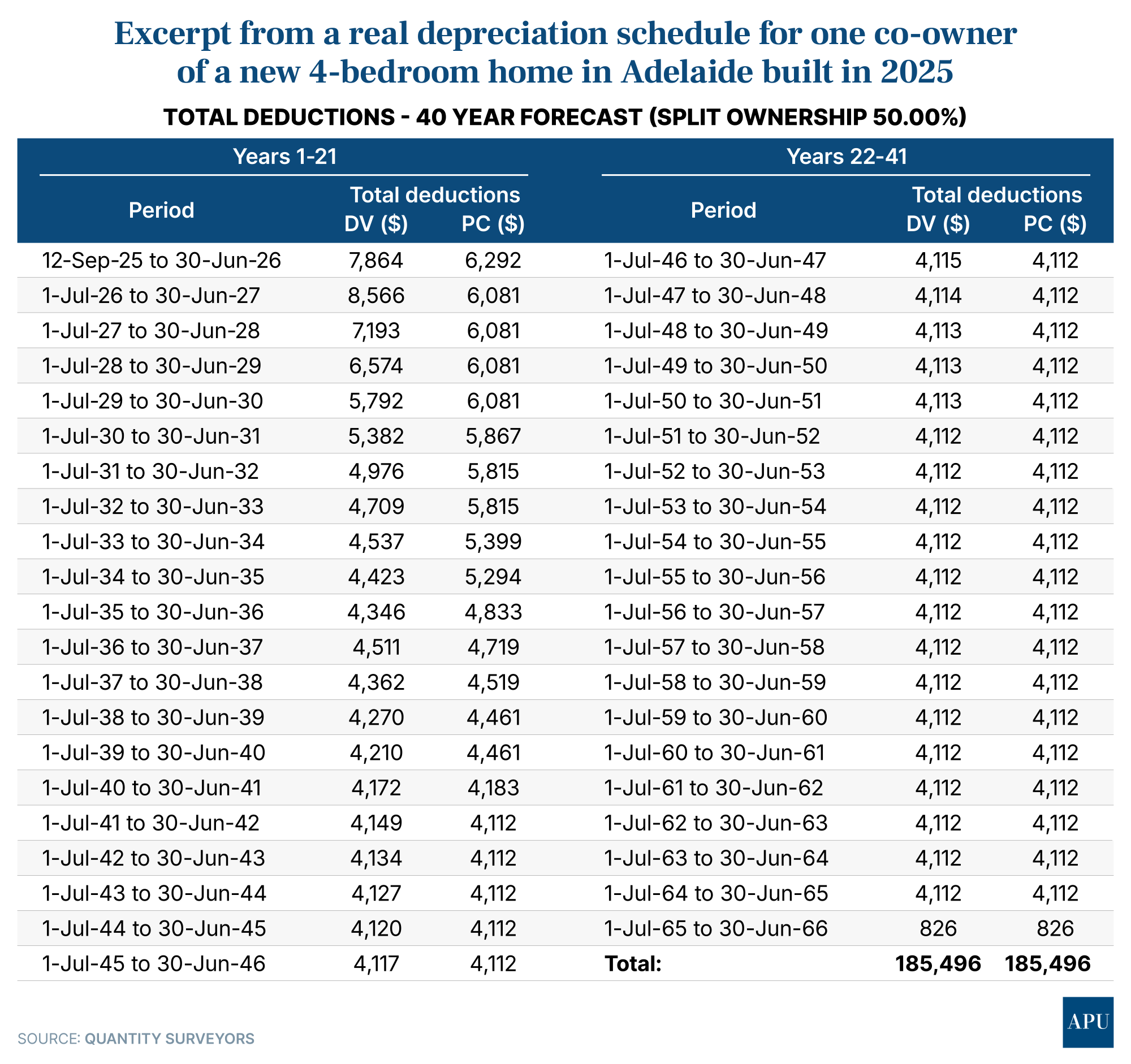
Depreciation allows investors to claim tax deductions for the decline in value of a property’s structure and assets over time; everything from carpets, blinds and air conditioners to hot water systems, lighting and cabinetry.
Crucially, many of these are “non-cash deductions”, meaning investors reduce their taxable income without spending additional money each year.
Depreciation specialist Duo Tax says the deduction has become even more important in a higher interest-rate environment.
“Every dollar counts for investors right now.
“Depreciation deductions can make a significant difference to after-tax cash flow, particularly when interest costs are elevated.”
Industry groups say many investors either fail to claim depreciation altogether or significantly underclaim what they’re entitled to.
A common misconception is that it only applies to new properties.
“Even older properties can contain substantial depreciable assets,” BMT’s Bradley Beer says.
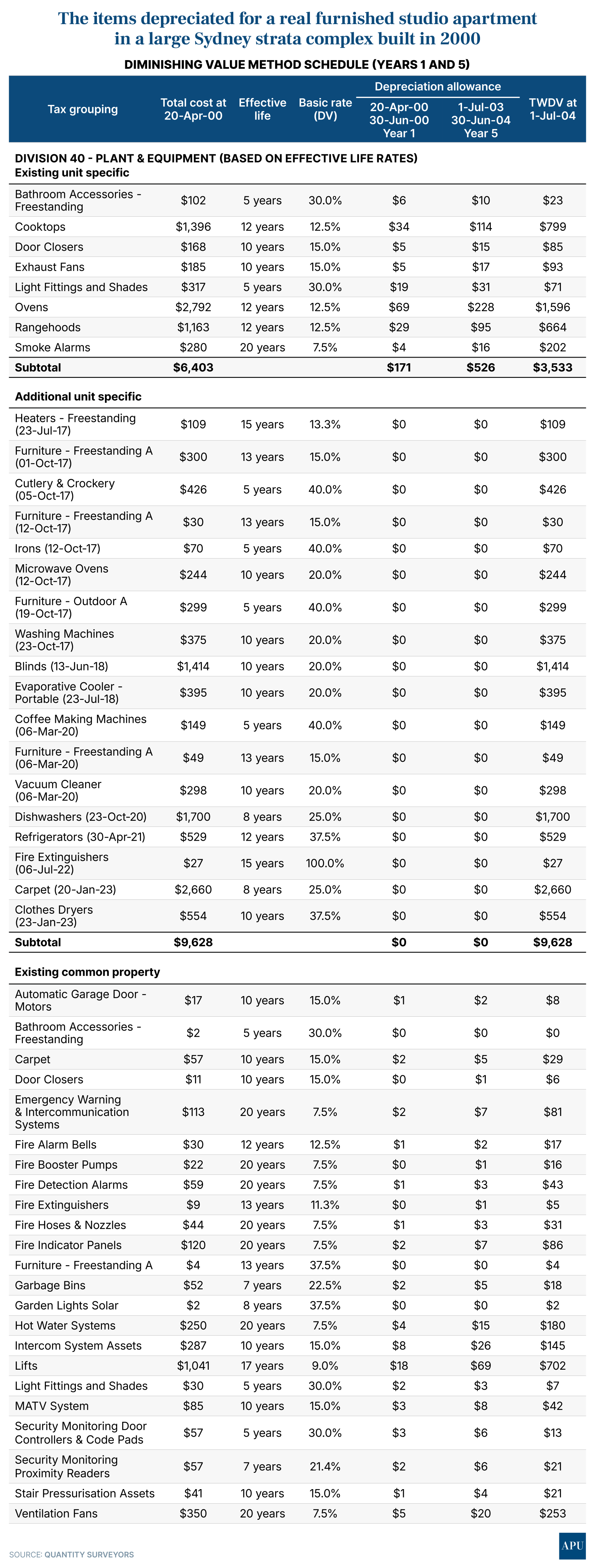
“Renovations, common property assets in apartment buildings and previously unclaimed deductions can all create opportunities.”
The cash flow advantage
The numbers can be significant.
A newly built investment property generating $8,000 a year in depreciation deductions could reduce an investor’s annual tax bill by several thousand dollars, depending on their bracket — helping to offset mortgage repayments, improve borrowing capacity or build a larger financial buffer.
That matters more than ever.
Commonwealth Bank analysis found that removing immediate negative gearing benefits for established properties is roughly equivalent to increasing investor mortgage rates by between 0.9 and 1.55 percentage points in cash-flow terms.
A depreciation schedule prepared by a qualified quantity surveyor typically costs several hundred dollars and is itself tax deductible.
New builds lead the way
The strongest depreciation benefits generally flow to newer properties, which contain newer fixtures, fittings and construction components.
That advantage is compounded by the budget’s deliberate carve-out for new housing: investors in genuinely new dwellings that add to housing supply can still negatively gear losses against income, retain access to generous depreciation deductions, and choose between the old CGT discount or the new indexed regime.
The government says the exemption is designed to encourage investment in new supply at a time Australia remains deeply undersupplied.
The effect may be a two-speed market – new housing retaining strong tax incentives, while established property becomes considerably less attractive.
That said, established properties shouldn’t be automatically dismissed from depreciation perspective.
Apartment investors in particular may still benefit from substantial depreciation claims linked to common property assets such as lifts, security systems, fire equipment and shared strata infrastructure.
Growing complexity
The Albanese government’s changes also make record-keeping far more important.
Under the transitional CGT arrangements, assets owned before July 1, 2027 will effectively fall under two separate tax systems, splitting gains between the old and new regimes.
Accurate depreciation schedules, cost-base records and capital works calculations will become increasingly valuable.
“The investors who understand the rules and structure themselves properly are usually the ones who adapt best to policy changes,” one adviser notes.
Despite the political backlash following the budget, most economists still expect housing supply shortages, population growth and rental demand to underpin the long-term fundamentals of residential property.
And while the government has significantly altered the tax treatment of investment housing, depreciation – one of the sector’s most powerful deduction tools – appears set to survive the shake-up untouched.