
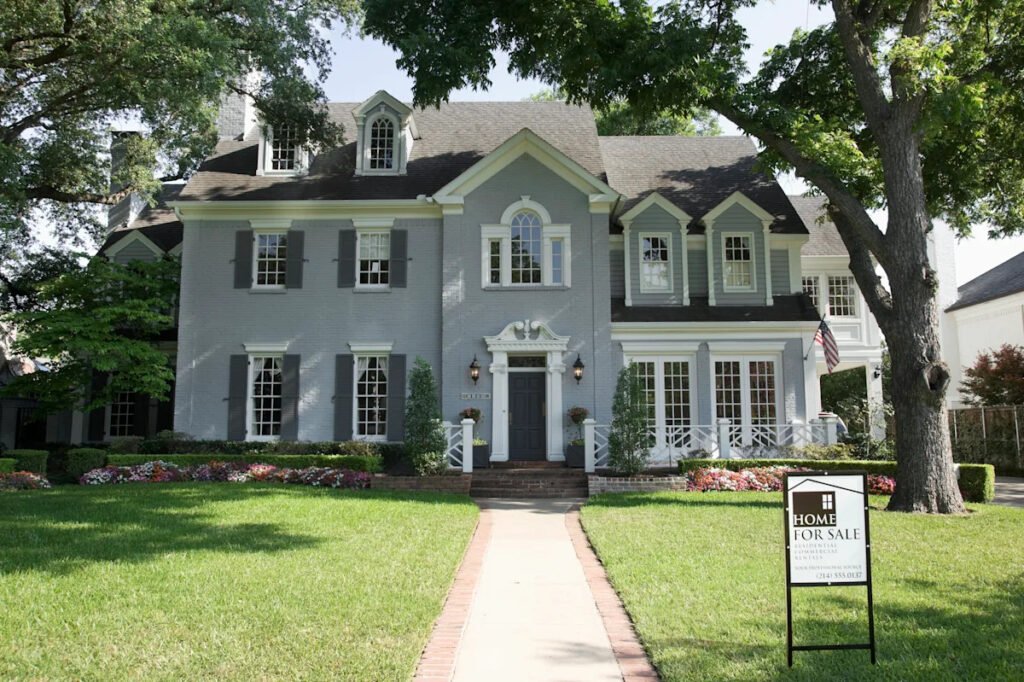
A crypto-backed mortgage is just one step in the tokenization of assets and the future of finance. Using bitcoin as collateral for a home loan or down payment will open the door to homeownership for potentially millions of crypto investors.
This is what’s about to happen.
What is a crypto-backed mortgage?
A crypto-backed mortgage is a type of home loan where you use your cryptocurrency as collateral to borrow money — without having to sell your crypto first.
Fannie Mae, a government-sponsored company that provides capital to the housing finance industry, has announced that it will begin accepting bitcoin and the stablecoin USD Coin as collateral for the most popular type of home loan, the conventional mortgage.
While the crypto-backed mortgage isn’t available yet, it is imminent. To date, accepting bitcoin as a down payment on a mortgage or as collateral for 100% financing has been a niche service offered by fewer than a handful of providers. In Fannie Mae’s pilot program, mortgage provider Better will partner with crypto platform Coinbase. A waitlist is gathering early interest.
A conventional mortgage backed by crypto
“We’ve actually seen really, really strong interest,” Coinbase head of business development, Mark Troianovski, told Yahoo Finance. “Every single person on the waitlist is a story of someone, like you or me, that’s just been sitting on [crypto] for years and now is like, ‘Oh, I can actually use this to do something very useful, which is put a roof over my head.'”
Vishal Garg, founder and CEO of Better, told Yahoo Finance that the official rollout of the crypto mortgage will be in June, though some crypto-backed loans are being done now to work out kinks in the process.
The conventional mortgage offered by Better and Coinbase is effectively a zero-down mortgage with two loans wrapped into one. There’s the regular mortgage, plus a down-payment loan backed by crypto. The loans are combined into a single interest rate, term, and monthly payment.
If pledging bitcoin, the collateral value must be at least 250% of the down payment loan. For a pledge of USDC, the initial value must be at least 125% of the down payment loan.
For instance, a $250,000 BTC pledge allows a $100,000 down payment loan, and a $125,000 USDC pledge provides a $100,000 down payment loan.
If approved for a loan by Better, Coinbase One members will be eligible for a lender credit against closing costs equal to 1% of the mortgage amount, up to a maximum of $10,000.
“This isn’t just about bitcoin, this is about any tokenized asset,” Garg said. “Forty-one percent of our customers ended up not buying a house or not qualifying because they didn’t have the down payment proceeds.”
Eventually, he envisions borrowers being able to use tokenized versions of S&P 500 index ETFs, stocks such as Amazon, Tesla, or other tokenized assets as a down payment on a mortgage — without selling the highly appreciated holding.
“We’re working already with a couple of major U.S. corporations to enable their employees to be able to leverage their stock to buy a home with no down payment,” Garg added. “There’s $35 trillion in U.S. stocks and bonds held by U.S. households — not institutions — by U.S. households. The amount that’s kept in bank accounts and checking accounts is $5 trillion. Right now, we only count $5 trillion as eligible to fund a down payment.”
Coinbase’s Troianovski noted that, “The high net worth segment is used to not selling their assets to finance their lifestyle. And that is a tried-and-true mechanism. This is the same exact mechanism that a Sergey Bryn or Jeff Bezos uses, because they don’t want to sell a bunch of Google stock or Amazon stock to buy [something]. Instead of sitting on millions of Amazon stock, you’re sitting on a few hundred grand of bitcoin. Previously, you’d have to sell it. People don’t want to do that.”
The strategy is called Buy, Borrow, Die — one of the tricks millionaires use to pay less taxes.
Crypto mortgages for those without traditional incomes
Before founding Milo.io, Josip Rupena worked in the ultra-high-net-worth divisions of Wall Street firms, dealing with wealthy retired executives with large concentrated positions in company stocks.
He’s very familiar with the concept of borrowing against a highly appreciated asset rather than selling it. And, strangely enough, he says some ultra-wealthy retired clients just didn’t meet the conventional loan qualification standards.
While conventional mortgages are generally underwritten, requiring proof of steady income, Milo issues loans to holders of sizable digital assets without traditional income streams.
“They couldn’t really document income because they had no more income, but a very sizable net worth,” Rupena told Yahoo Finance. He launched Milo as a solution to such challenges. The company recently topped $100 million in crypto mortgage originations, including a record $12 million loan.
Milo doesn’t require a typical income to qualify for a mortgage, but provides 100% financing.
Here’s how it works:
-
No money down is required.
-
The 30-year mortgage offers the first 10 years at interest-only, then amortizes over the next 20 years.
-
For a $1 million loan, the borrower would post $1 million in bitcoin as collateral.
-
Both the bitcoin and the property are pledged as collateral.
-
If the value of bitcoin declines by 65%, the million dollars turns into $350,000, and either more bitcoin would need to be deposited, or the loan balance would need to be reduced.
“Over the three and a half year period that we’ve been originating our crypto mortgages, we’ve never had to ask for someone to post more collateral because of that 65% drawdown,” Rupena said.
A self-custody crypto mortgage is also offered, where Milo verifies the bitcoin, but the customer continues to hold it themselves and makes a cash down payment.
“Our mortgage rates are slightly higher than conventional — about half a point higher — but not significantly higher. If conventional rates are 6.5%, we’re going to be 7%.”
The Milo website has a mortgage prequalification tool that takes about five minutes to complete.
Rupena said a Milo crypto mortgage is best for someone with a significant portion of their net worth in bitcoin and who may not have a traditional income, so conventional mortgage financing doesn’t work for them.
Two things to consider about conventional crypto mortgages
Bryan Courchesne is the founder and CEO of Daim.io, a registered investment advisor focused on crypto, headquartered in Palm Beach, Fla. He says clients are already inquiring about crypto mortgages.
His firm has assisted clients with property bridge loans and 1031 tax exchanges, but he is looking forward to the rollout of actual crypto mortgages.
He notes two considerations regarding the Better/Coinbase crypto-backed conventional mortgage. One is the 250% bitcoin-to-down-payment collateral requirement.
“So on the one end, you’re saving from selling and having a huge tax bill,” Courchesne said. “But on the other end, you have to have two and half times what’s needed for the down payment.”
He also said borrowers should be prepared to pay a higher interest rate on a conventional home loan backed by crypto.
“We’re hearing that they’re between 125 and 150 basis points above the going rate,” he said. So, a borrower may initially qualify at 7% because they’re considered a higher risk. However, the loan may be priced at 8% or 8.5%.
But ultimately, Courchesne is optimistic about crypto mortgages.
“I think more people are going to be able to realize the American dream by using crypto.”
