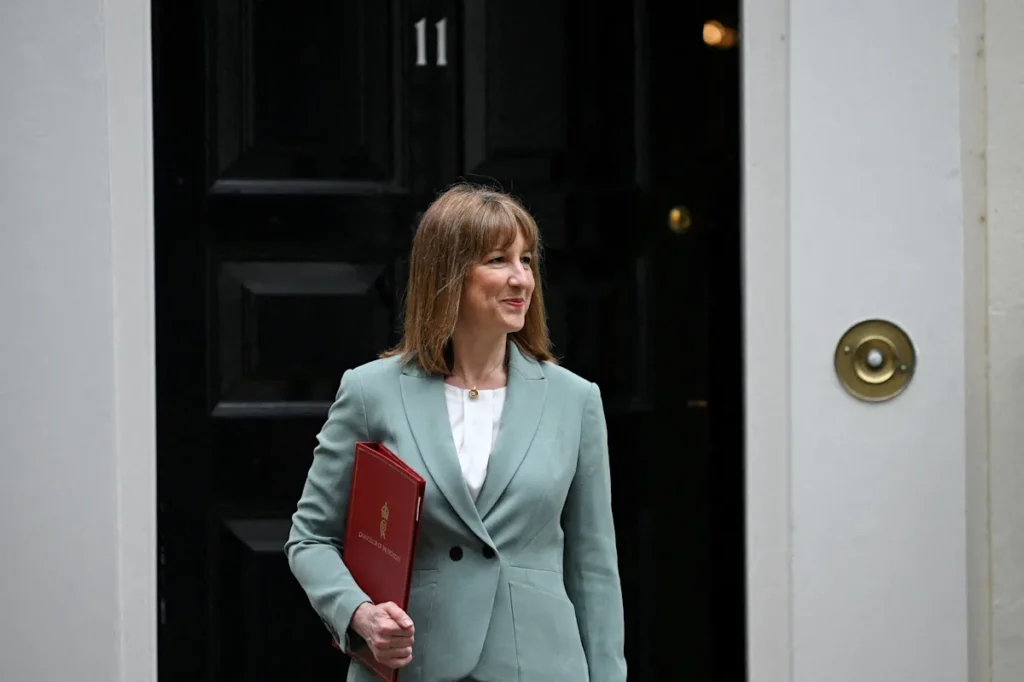
Speculation is rife as to which areas chancellor Rachel Reeves could target in the autumn budget to help repair the UK’s public finances, with changes to property taxes rumoured to be on the table.
The chancellor is expected to announce billions in tax rises in the budget in an effort to raise funds.
While Reeves has reportedly dropped plans to increase income tax rates, it is rumoured that she could instead opt to extend the freeze on thresholds for this tax for another two years.
Changes to salary sacrifice rules and cash individual savings accounts (ISAs) could also reportedly be on the cards.
Another mooted area of reform is property taxes, with changes to stamp duty and council tax said to have been among the options considered by the Treasury.
One of the latest budget rumours to resurface is that Reeves could apply a “mansion tax” to houses worth more than £2m.
The Financial Times reported that such a policy would be expected to raise between £400m and £450m.
According to the report, Reeves had considered implementing this council tax “surcharge” to homes valued at more than £1.5m but had faced a backlash from some Labour MPs.
The surcharge has been dubbed a “mansion tax” and would reportedly be levied in addition to council tax.
Read more: Finance experts answer your pre-budget questions
As part of these changes, the FT reported that Reeves will announce a re-evaluation of properties in the top three council tax bands.
Council tax is charged on residential properties to help fund for local services, such as schools, rubbish collection and leisure centres. The amount is based on the value of someone’s home, with rates running across eight bands of property value. These bands are based on property valuations from 1991, so have faced criticism for being outdated, given the growth in house prices since then.
The Treasury had not responded to Yahoo Finance UK‘s request for comment on this latest report at the time of writing.
Another rumour is that the government has considered scrapping stamp duty and replacing it with a national property tax on homes worth more than £500,000, which would be paid by the sellers rather than the buyers.
Stamp duty is currently paid by buyers on homes worth over £125,000, a threshold which came back into effect in April this year, lowered from £250,000.
Richard Donnell, executive director at Zoopla, said: “Ideally, we believe stamp duty land tax (SDLT) should be abolished, as we told MPs at a recent Treasury Select Committee, but we understand the £10bn revenue gap this would create would require major council tax reform to help compensate.”
Instead, he said that a more “modest, immediate” measure that would help buyers across the country would be to raise the 5% stamp duty threshold from £250,000 to £500,000.
Read more: How changes in Rachel Reeves’ budget could impact your finances
“This change would significantly reduce the tax burden for the typical buyer in southern England, making home ownership more accessible and easing mobility for existing homeowners, all for a modest cost to the exchequer,” he said.
Another option that has reportedly been considered by the Treasury is spreading stamp duty payments across several years, according to City AM.
Property website Rightmove (RMV.L) said that research among its in-house panel found that one of the most commonly suggested reforms to the stamp duty system was the ability to spread payments over time.
Other suggestions included adjusting stamp duty thresholds by region, in an effort to make payments fairer, as well as changes that protect older homeowners and downsizers.
The Treasury has also reportedly considered making the sale of higher value primary homes liable for capital gains tax (CGT).
One suggestion is that the government could also introduce national insurance on the income landlords earn from renting a property.
A spokesperson for the Treasury said: “The chancellor has set out the context for the budget, recognising global and long-term economic challenges.”
“It will continue to build the strong foundations to secure Britain’s future and on the priorities of the British people – cutting waiting lists, cutting national debt and cutting the cost of living.”
Uncertainty around potential changes to property taxes is already said to have impacted market activity.
Rightmove said that the average new seller asking price in the UK fell by a larger-than-usual 1.8%, or £6,591, to £364,833 in November. The property website highlighted hesitancy in the property market as budget speculation fuelled uncertainty.
Read more: What is the salary sacrifice scheme and why is it in Reeves’ sights?
Separate Rightmove research surveying over 10,000 potential movers, found that nearly a fifth (17%) said they had paused their plans due to uncertainty about changes to property taxes in the upcoming budget.
Colleen Babcock, property expert at Rightmove, said: “While most movers are carrying on as normal, it demonstrates how unhelpful the uncertainty over potentially costly changes can be.
“I think most are now fed up with the rumours and would like to see the final contents of the budget and assess how they’re impacted.”
UK’s housebuilders have also shared their concerns about the impact of uncertainty in the run-up to the budget.
Shares in UK housebuilder Crest Nicholson (CRST.L), after the company warned of lower pre-tax profits.
Martyn Clark, CEO of Crest Nicholson, said that this reflected a “housing market that has remained subdued through the summer, and the continued uncertainty surrounding government tax policy ahead of the forthcoming budget.”
Taylor Wimpey (TW.L) and Barratt Redrow (BTRW.L) have also pointed to the impact of budget uncertainty in recent results.
Read more:
Download the Yahoo Finance app, available for Apple and Android.