
The economic fallout of the US war in Iran was laid bare on Wednesday as the Bank of England warned more than a million households are likely to be dragged into paying higher mortgage costs.
This was coupled with a prediction from the Food and Drink Federation that food inflation is likely to rise by “at least” 9 per cent by the end of the year.
The Bank of England said that 5.2m households were likely to face higher borrowing costs by the end of 2028 due to the “substantial” economic shock caused by the Middle East crisis.
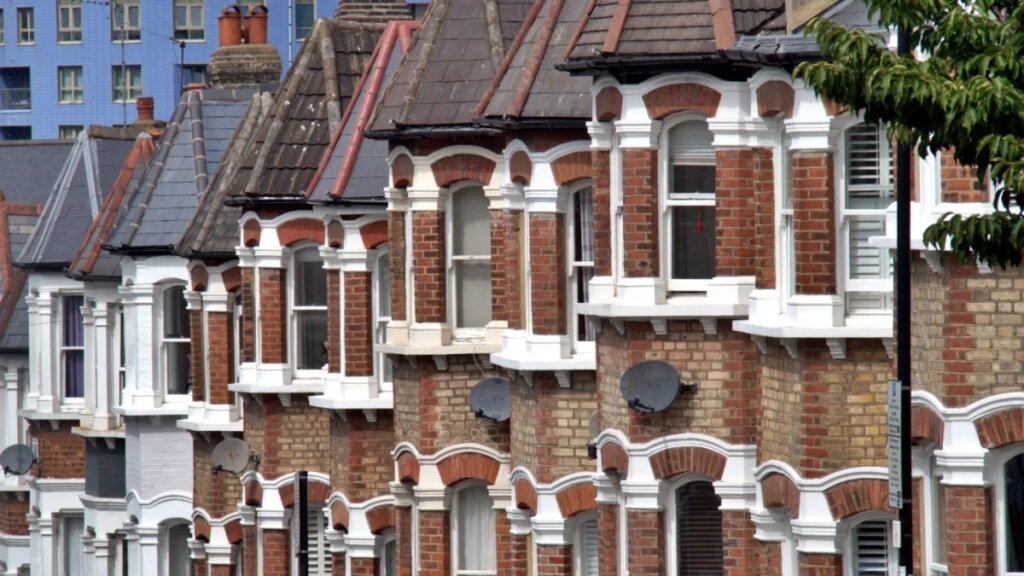
It represents an additional 1.3m households being dragged into paying higher mortgage rates than previously estimated by the central bank, as lenders are expected to pull cheaper mortgages for homeowners.
The findings from the Bank’s financial policy committee said the UK economic outlook has “deteriorated”, increasing pressure on UK households and businesses.
Rising mortgages a blow to Labour
Oil and gas prices have increased sharply since the conflict began between US-Israeli forces and Iran at the end of February, with equity markets also shaken by the significant volatility.
“The shock will weigh on growth, increase inflation and tighten financial conditions,” according to the report.
The report follows the decision by the BoE to hold the base rate of interest at 3.75 per cent last month in response to the US war in Iran, despite markets expecting a cut to the headline rate just days before the conflict began.
The report said average rates for two-year fixed-rate mortgages have increased by 0.8 percentage points while five-year fixed-rate mortgages have seen a 0.7 percentage point rise.
Current rates indicate that about 5.2 million UK mortgage holders could face an increase in their repayments by the final quarter of 2028. This compares with a prediction of 3.9 million from the Bank’s previous report before the start of the conflict in the Middle East.
But in a sign that the Bank would not hike rates in order to bear down on inflation, BoE Governor Andrew Bailey said markets were “getting ahead of themselves” when it came to future rises.
“We will have to, obviously, act on monetary policy if we think it’s appropriate to do so. But it strikes me, and it still strikes me today, that the most important thing to do is to tackle the source of the shock,” he told Reuters.
“Of course, we have to deal with the shocks that come our way. But our remit is very clear on this that … we have to do so in a way that … causes the least damage in terms of activity in the economy and in terms of jobs,” he added.
News of higher mortgage costs will be a bitter blow to the Labour Government, which has made levels of household disposable income a key measure of its success in power.
The timing will also be of concern to No 10, as households being locked into higher levels of borrowing by the end of 2028 will come just months before the next general election in 2029.
Cost of food shop also set to go up
It comes amid warnings that groceries will be far more expensive by the end of the year, with the Food and Drink Federation revising up its forecasts for food inflation to at least 9 per cent by the end of the year, up from previous estimates of 3 per cent.
The predication assumes the Strait of Hormuz will be reopened within the next two to three weeks and oil, gas and fertiliser facilities return to normal within a year.
The industry body had previously anticipated food inflation to “gradually ease” in 2026, as prices settled.
But the impact of the blockade of the Strait of Hormuz on production and supply chains has shifted expectations, with the FDF now expecting food inflation to be “at least” 9 per cent by the end of the year.
Dr Liliana Danila, Chief Economist at the FDF, said the sector was “already feeling the force of this geopolitical shock”.
“As one of the UK’s energy intensive industries, manufacturers are facing mounting energy bills, rising transport and packaging costs and disruption across key supply chains. These pressures are hitting simultaneously, and are a significant challenge for businesses to absorb,” she said.
Danila added that while forecasts are difficult to predict “given the scale and speed of these cost increases … it’s clear that food inflation is going to rise in the months ahead”.
Starmer pivots to the EU as Trump relations sour
The crisis has prompted Sir Keir Starmer to signal a major pivot towards the European Union following ongoing attacks from Donald Trump, as he seeks to forge closer economic ties with the bloc to better protect the UK from the economic turmoil ahead.
The Prime Minister said the “volatile” international situation caused by the US-Israeli conflict with Tehran meant Britain’s “long-term national interest requires closer partnership with our allies in Europe and with the European Union”.
Brexit “did deep damage to our economy”, Starmer said, adding that the “opportunities to strengthen our security and cut the cost of living are simply too big to ignore”.
The Prime Minister said this year’s summit with the EU will not just be used to “ratify existing commitments made at last year’s summit”.
He added: “We want to be more ambitious.
“Closer economic co-operation, closer security co-operation, a partnership that recognises our shared values, our shared interest and our shared future.
“A partnership for the dangerous world that we must navigate together, a world where this Government will be guided at all times by the interests of the British people.”